Bill Gates Owns More US Farmland Than Anyone Else. What Is He Hiding?

TL;DR
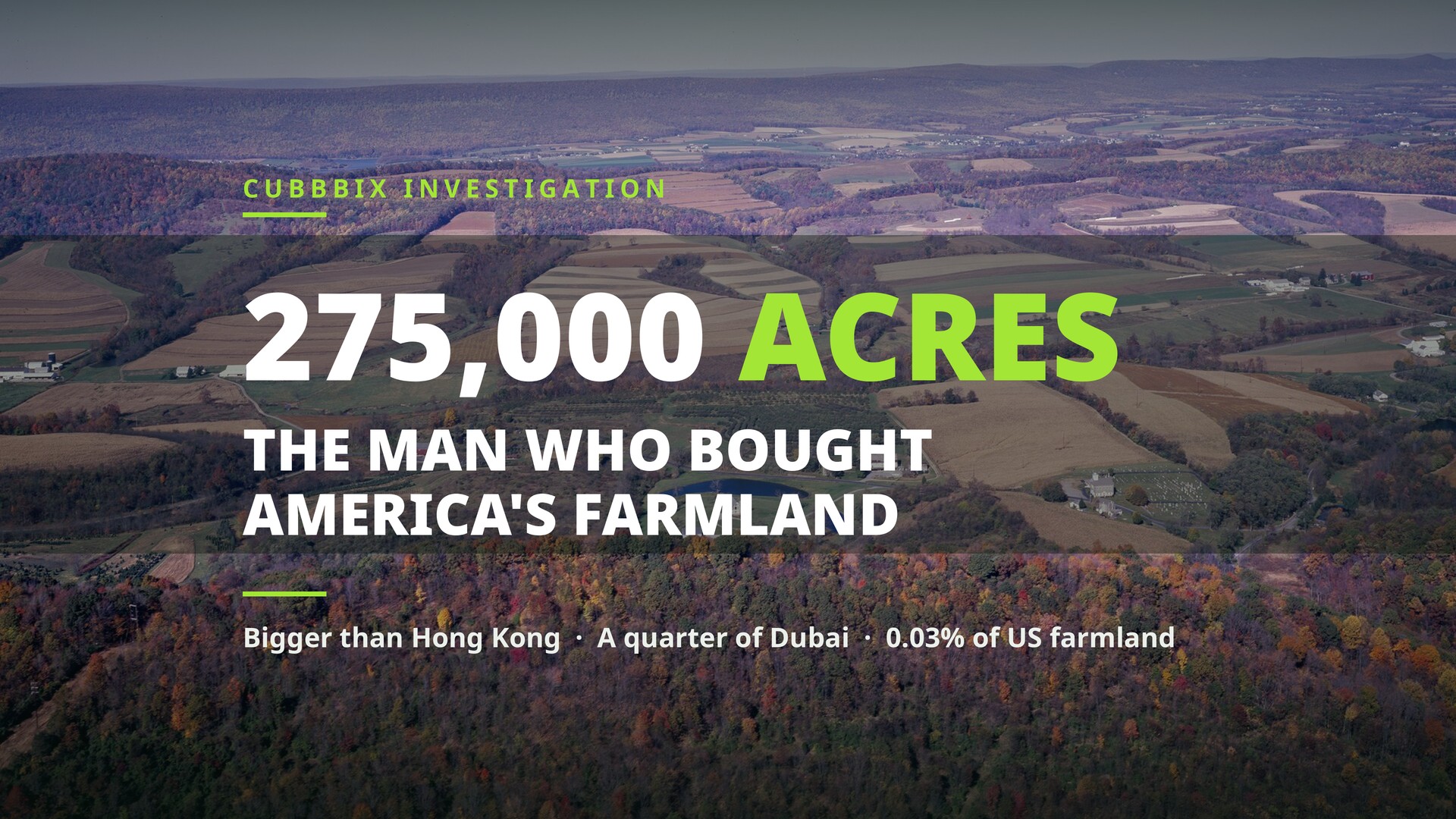
Bill Gates owns about 275,000 acres of American farmland, the largest private farmland holding in the United States. The theories say he is building a food monopoly. The numbers say his land is about the size of Hong Kong, a quarter of Dubai, and 0.03% of US farmland. This post tests every claim against the record.
Table of Contents
Bill Gates and the farmland: the short version
Bill Gates owns about 275,000 acres of American farmland, and he is the largest private farmland owner in the United States. That part is true, and it is the only part of the viral story that survives contact with the numbers. He is not the largest farmland owner in the world. His land is not 10 Dubais. It is about the size of Hong Kong, almost 19 Manhattans, and about a quarter of one Dubai.
The theories about what he is hiding have run for five years: that he wants to control the food supply, force Americans to eat synthetic meat, or engineer shortages. None of them has evidence behind it. What does have evidence behind it is smaller and less cinematic: a billionaire's investment firm buying a steady, inflation-proof asset through a web of quiet companies, and a man who said almost nothing about it until a magazine added up the deeds. This post tests every claim against the record, starting with the size of the land itself.
Figure 1: 275,000 acres is 1,113 square kilometres. That is almost 19 Manhattans, about the size of Hong Kong, and about a quarter of the Dubai emirate. Ten Dubais would be about 10.2 million acres, 37 times what Gates owns.
How much land, and where
The Land Report, the annual survey that tracks America's biggest private landowners from public records, credits Gates with about 275,000 acres in total, of which about 248,000 acres is farmland. The rest is transitional land, including about 25,750 acres near Phoenix. The holdings span 17 to 19 states, and the 2025 and 2026 editions of the survey rank him 43rd among all private landowners in the country. The farmland rank is first. The overall rank is not.
The biggest blocks sit in three states. Louisiana holds about 69,071 acres, mostly soybeans, corn, and cotton on river-fed ground. Arkansas holds about 47,000 acres. Nebraska holds about 20,000 acres. The rest, about 139,000 acres, spreads across the other states, from potato fields in Washington to citrus groves in Florida. Forbes put the landholdings at about $1.2 billion in 2023, a small slice of a fortune then estimated at about $111 billion.
Gates does not farm any of it himself. He leases the land to local farmers under structured agreements and collects rent while the land gains value. The farming on it is conventional: soybeans, corn, potatoes, and carrots grown by commercial farmers, not the experimental high-tech crops the theories describe.
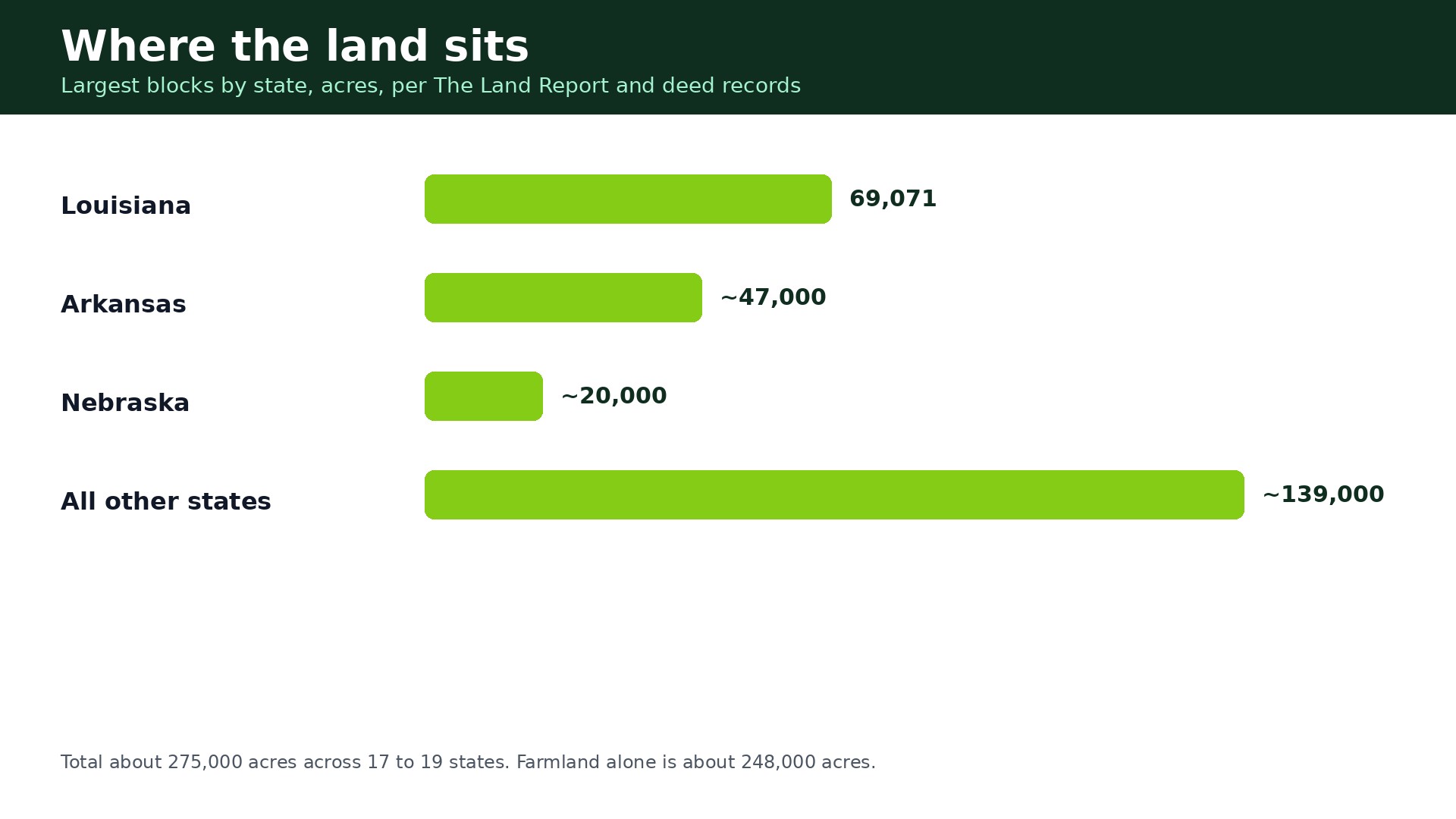
Figure 2: Louisiana holds the largest block at 69,071 acres. Arkansas and Nebraska follow. The rest spreads across 14 to 16 more states.
The world's largest? No. Not close.
The claim that Gates is the world's largest agricultural landowner fails by a wide margin. The largest private landholder on earth is almost certainly Gina Rinehart of Australia, who controls about 8 million hectares of cattle country through Hancock Agriculture, about 21 million acres, after selling close to 1.9 million hectares in 2022. At her peak, Australian land records put her above 9.2 million hectares. Her holdings are mostly pastoral leases, long-term rights granted by state governments, but she controls the land, runs the cattle, and can sell the leases.
The world's largest single farm is the Mudanjiang City Mega Farm in China, about 9 million hectares, or 22.5 million acres, of dairy farmland run by Zhongding Dairy Farming with Russia's Severny Bur. It houses more than 100,000 cows. Rinehart holds about 76 times as much land as Gates. The Mudanjiang farm holds about 82 times as much.
Even inside the United States, Gates is far from the biggest landowner. Stan Kroenke, the sports team owner, holds about 2.7 million acres and leads the Land Report's overall list. The Emmerson family holds more than 2.4 million acres of timberland. John Malone holds about 2.2 million acres. Gates's 275,000 acres put him 43rd. His rank is first only in cultivated crop acreage, which is a narrower title than the viral posts admit.
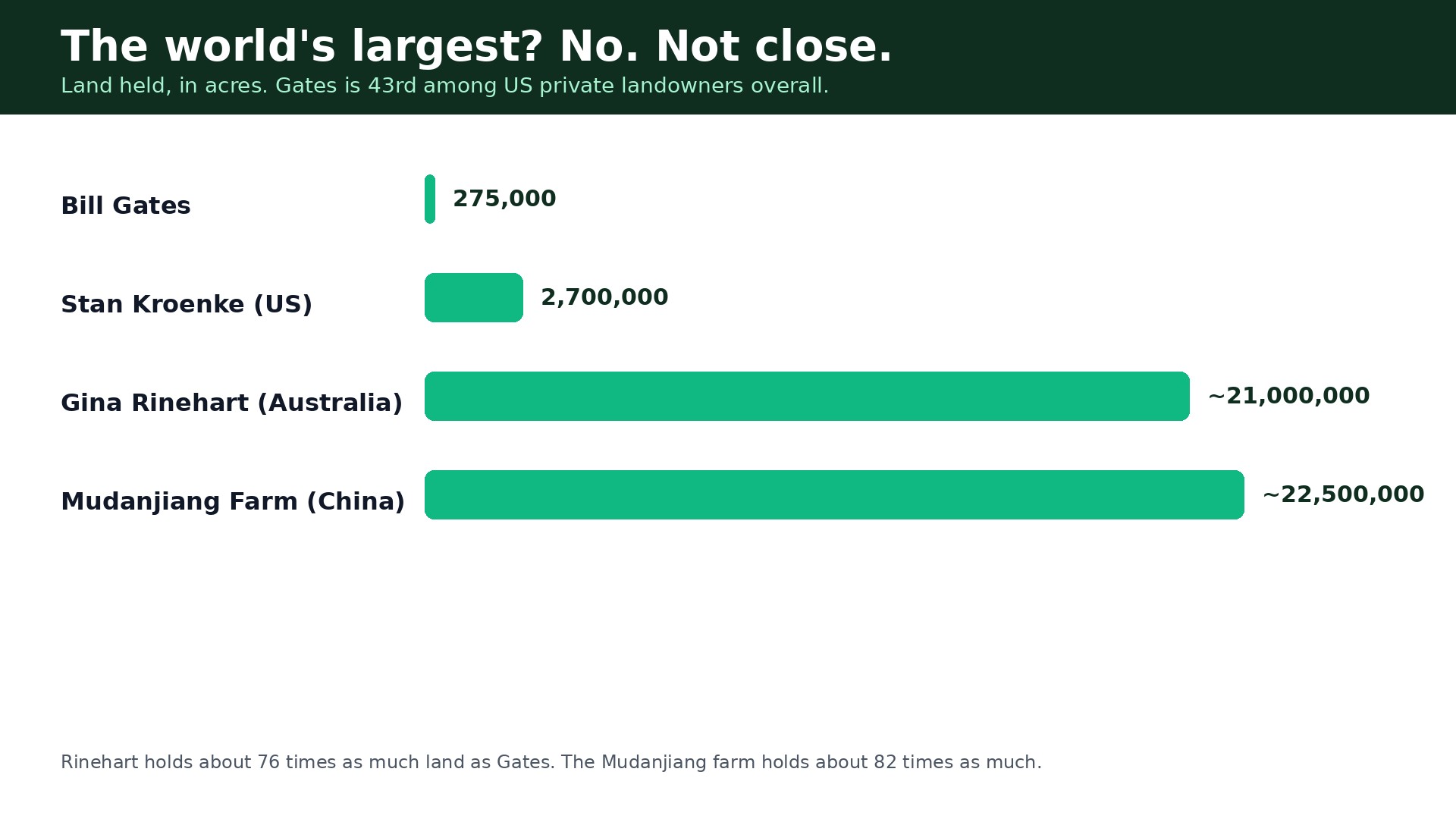
Figure 3: Gates's bar is a sliver next to the real giants. Rinehart holds about 76 times as much land, and the Mudanjiang farm about 82 times as much.
What the theories say
The theories started the moment the scale became public in 2021, and they have grown since. Online posts claim Gates is buying farmland to monopolize the food supply, to force Americans to eat synthetic meat, to cause artificial food shortages, or to push genetically modified crops across the world. Some go further and tie the land to depopulation, or to control of water. The posts share two features: they never name a document, a deed, or a witness, and they never do the arithmetic.
The synthetic meat claim has a thin thread to pull on. Gates has invested in alternative protein companies and has said publicly that rich countries should shift to synthetic beef. That is a real position, and it is on the record. It is not a land strategy. The farmland he owns grows soybeans, corn, potatoes, and carrots for ordinary markets, leased to ordinary farmers. No deed, no lease, and no filing ties the land to synthetic meat production.
The water claim has more substance than the rest, and it deserves a straight answer. In many Western US states, owning farmland includes rights to draw from aquifers or divert surface water. Water is the quiet value inside the dirt, and it grows more precious as droughts bite. That is a documented reason farmland buyers pay up. It is also a long way from proof of a plot to cut off a town's water. No report shows Gates's firms using water rights to deny anyone water.
What Gates says, and what the money says
Gates has answered the question twice in his own words. In a 2021 Reddit Ask Me Anything session, he said the decision was made by his investment team and added: "It is not connected to climate." He has also said he owns less than 1/4000 of US farmland. Both statements check out against the records. The purchases are not a Gates Foundation project. They belong to Gates personally, run through Cascade Investment LLC, his private investment firm based in Kirkland, Washington, run by portfolio manager Michael Larson. The Foundation's own agriculture spending, more than $3 billion, goes to small farmers in Africa and Asia, and it is a separate pot of money.
The money logic is plain, and it is the same logic every large fortune uses. Larson's mandate for decades has been to move Gates's wealth out of volatile Microsoft stock and into resilient assets that pay rent. Farmland fits that job: it tracks inflation, it pays steady cash rent from tenant farmers, its returns barely move with the stock market, and it carries tax breaks on property assessments, conservation easements, and irrigation equipment. The land also works as collateral. One report says his firms borrowed $700 million against the Nebraska acreage alone, which lets a billionaire pull out tax-free cash while the land keeps gaining value, a practice wealth managers call buy, borrow, die. It is a tax strategy, not a food strategy, and it is common among the rich.
The buying started in 2013 and ran through a web of regional companies, most visibly an entity called Cottonwood Ag Management. Two of the biggest tranches came in 2017, farmland from the Canada Pension Plan Investment Board, and in 2018, ground in Washington's Horse Heaven Hills, for more than $690 million combined. In 2025 a Gates-linked LLC added 8,080 acres for about $131 million. He is still buying.
The math that breaks the food-control theory
The United States has about 895 million acres of farmland. Gates's 275,000 acres are about 0.03% of it, roughly one acre in every 3,250. The Associated Press put it the same way in 2022 when the majority-ownership claim first went viral: the claim that he owns the majority of American farmland is false, and his share is less than 1% of the total. A man who owns 0.03% of the farmland cannot set food prices, cannot starve a country, and cannot force a diet on anyone. The theory needs him to own a share he does not own by a factor of about a thousand.
Scale is the whole test. His land is big enough to make him the largest private farmland owner in the country, and small enough to be a rounding error in the country's food supply. Both facts are true at once, and the theories only quote the first one.
The part that is actually secret
One part of the suspicion is fair. Gates bought the land in secret, in the practical sense. The purchases ran through Cascade and a spread of regional LLCs with local names, with no press release and no public announcement. Nobody outside the deeds knew the total until The Land Report added it up and published it in January 2021. That is how the story broke: not from a leak or a confession, but from a magazine counting property records.
Large land buyers use local entities for a plain reason: if sellers know a billionaire is buying, the price goes up. The secrecy was a buying tactic, and it worked. It also built the paranoia. When people found out a tech billionaire had quietly bought a quarter of a million acres through companies with forgettable names, the gap between what he owned and what he had said filled itself with theories. He has still never given a full public account of the holdings. The silence is real. The plot it supposedly hides is not, at least not in any record anyone has produced.
Confirmed, claimed, and false
| Confirmed | Claimed, no evidence | False |
|---|---|---|
| Gates owns about 275,000 acres of US farmland, the largest private farmland holding in the country (The Land Report). | He wants to control the food supply or force synthetic meat on Americans. No deed, lease, or filing supports it. | He is the world's largest agricultural landowner. Rinehart holds about 76 times as much land. |
| The land is about the size of Hong Kong, almost 19 Manhattans, and about a quarter of Dubai. | He plans to cause artificial food shortages or depopulation. No evidence has been produced. | His land could fit 10 Dubais inside it. Ten Dubais would be about 10.2 million acres, 37 times what he owns. |
| He bought through Cascade Investment and regional LLCs, quietly, since 2013. He leases the land to farmers and grows conventional crops. | The water rights are a plot to cut off towns. Water rights add value to the land, and no report shows them used to deny water to anyone. | He owns the majority of US farmland. His share is about 0.03% of 895 million acres (Associated Press, 2022). |
Frequently asked questions
Is Bill Gates the world's largest farmland owner?
No. He is the largest private farmland owner in the United States, with about 275,000 acres. Gina Rinehart of Australia controls about 8 million hectares of cattle country, about 21 million acres, and the Mudanjiang Mega Farm in China covers about 9 million hectares, about 22.5 million acres.
How big is his land compared to a city?
His 275,000 acres are 1,113 square kilometres. That is almost 19 Manhattans, about the size of Hong Kong, about 1.4 times New York City, and about a quarter of the Dubai emirate. Ten Dubais would be about 10.2 million acres.
Why is he buying farmland?
By his own account, his investment team made the call as a financial move: farmland tracks inflation, pays steady rent, and barely moves with the stock market. The purchases run through Cascade Investment, his private firm, not the Gates Foundation. In a 2021 Reddit session he said the decision was "not connected to climate".
Is he hiding something?
He kept the scale quiet. The land was bought through regional LLCs with no public announcement, and the total only became known when The Land Report added up the deeds in 2021. No record has shown a hidden plan behind the purchases. The secrecy was real. The plot it supposedly hides has no evidence.
Could he control the US food supply?
No. The United States has about 895 million acres of farmland. His 275,000 acres are about 0.03% of it, roughly one acre in every 3,250. That share cannot set prices or force a diet on anyone.
Sources: The Land Report 100 via IM Global Wealth, "America's Land Barons"; News-Nest, "Why Bill Gates Has Been Quietly Buying Up American Farmland"; Associated Press assessment via InvestGuiding, "Bill Gates owns a lot of American farmland, but not the majority"; Jamaica Homes, "The Land Barons"; LoveMoney, "The world's biggest private landowners"; TravelAsker, Dubai area 4,114 square kilometres. City areas are computed from the acreage and the published areas of Manhattan (59 square kilometres), Hong Kong (1,104), New York City (789), and Dubai (4,114). All accessed 10 November 2026.



Was this article helpful?
Comments
Loading comments...