How AI is Powering the 2026 FIFA World Cup: A Developer's Technical Breakdown

TL;DR
The 2026 FIFA World Cup is running AI at a scale never seen in sports: 16 optical tracking cameras per stadium, a 500Hz IMU sensor ball, AI-generated 3D player avatars for offside decisions, and a generative AI coaching tool for all 48 teams. Here is exactly how it works.
Table of Contents
The 2026 FIFA World Cup across the United States, Canada, and Mexico is the most AI-instrumented sports event in history. Three systems sit at its core: an enhanced Semi-Automated Offside Technology, the Adidas Trionda connected ball, and Football AI Pro, a generative AI coaching assistant deployed to all 48 teams. Here is how each one actually works.
Semi-Automated Offside Technology (SAOT): what changed from 2022
FIFA first deployed SAOT at the 2022 Qatar World Cup. The 2026 version is a meaningful upgrade in two areas: tracking accuracy and decision speed.
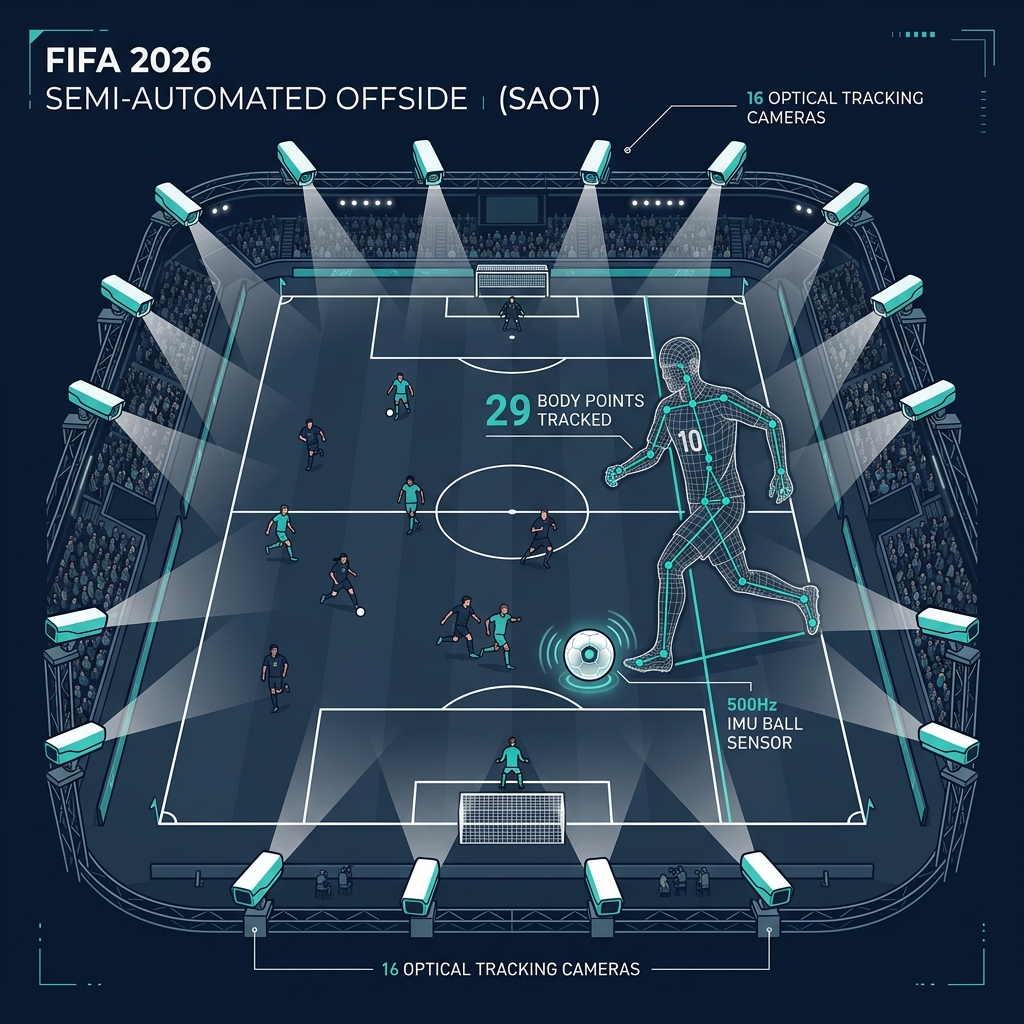
Each stadium uses 16 dedicated optical tracking cameras to monitor every player on the pitch. The system tracks 29 data points on each player's body multiple times per second, building a real-time 3D skeletal model. Before the tournament, every player undergoes a rapid digital body scan — taking about one second per player — to create an accurate 3D avatar that the system uses to improve tracking through crowded penalty-box situations where camera lines of sight would otherwise be obscured.
The key upgrade from 2022 is how decisions are communicated. In 2022, offside data went first to the VAR room, which then relayed it to match officials. In 2026, for clear positional offside situations, the system sends automated audio alerts directly to the assistant referee's earpiece. This eliminates a step in the chain and significantly reduces the time the game is stopped for review.
Human officials retain full authority. The system is designed as a decision-support tool. For complex situations — such as whether an offside-positioned player is actively interfering with play or obstructing the goalkeeper's line of sight — the final call stays with the match official after reviewing the AI-generated data. The 3D animation the system generates is also shown on stadium screens and integrated into the broadcast, so fans see the same reasoning the officials used.
The Adidas Trionda: the connected match ball
The official match ball for the 2026 World Cup is the Adidas Trionda, developed in partnership with real-time tracking specialist Kinexon. It is the latest generation of Adidas' Connected Ball Technology and has been significantly re-engineered compared to the Al Rihla used in Qatar.
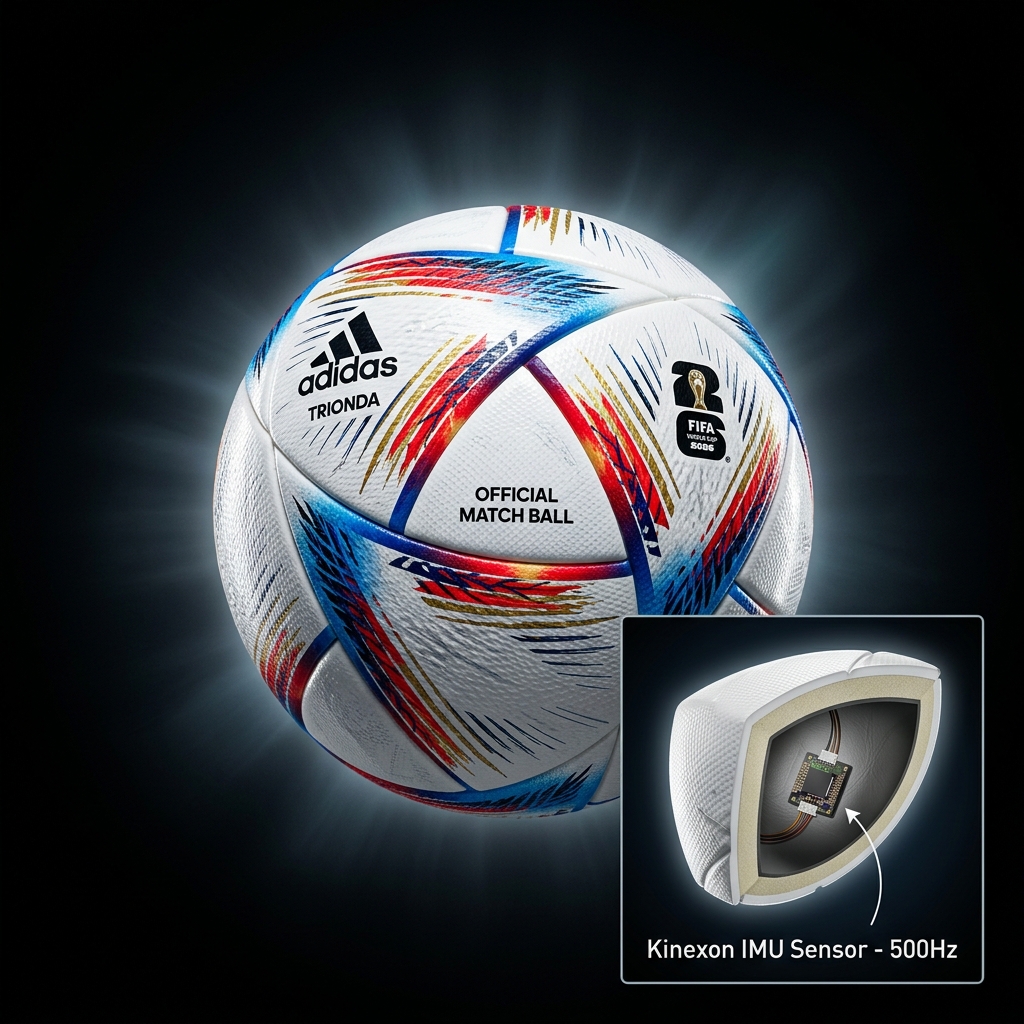
The key change is the sensor placement. The Al Rihla used a sensor suspended at the center of the ball by tension chords. The Trionda uses a side-mounted chip embedded directly within one of the ball's four main panels. To compensate for the off-center weight, counterbalance weights are built into the other three panels to maintain consistent flight stability.
The IMU sensor samples at 500Hz — 500 times per second — capturing the ball's acceleration, rotation, and 3D position. The critical output is the "kick point": the precise timestamp of when the ball leaves a player's foot. This is the legally relevant moment for offside determination, and having it from sensor data rather than video-estimated frame analysis removes ambiguity from close calls. The ball must be charged before each match as it contains electronic components.
Football AI Pro: the generative AI coaching tool
FIFA, in partnership with Lenovo, built Football AI Pro and deployed it to all 48 national teams competing at the 2026 World Cup. The stated goal is to level the analytical playing field: teams with smaller budgets and fewer data scientists get access to the same depth of tactical intelligence as the sport's wealthiest nations.
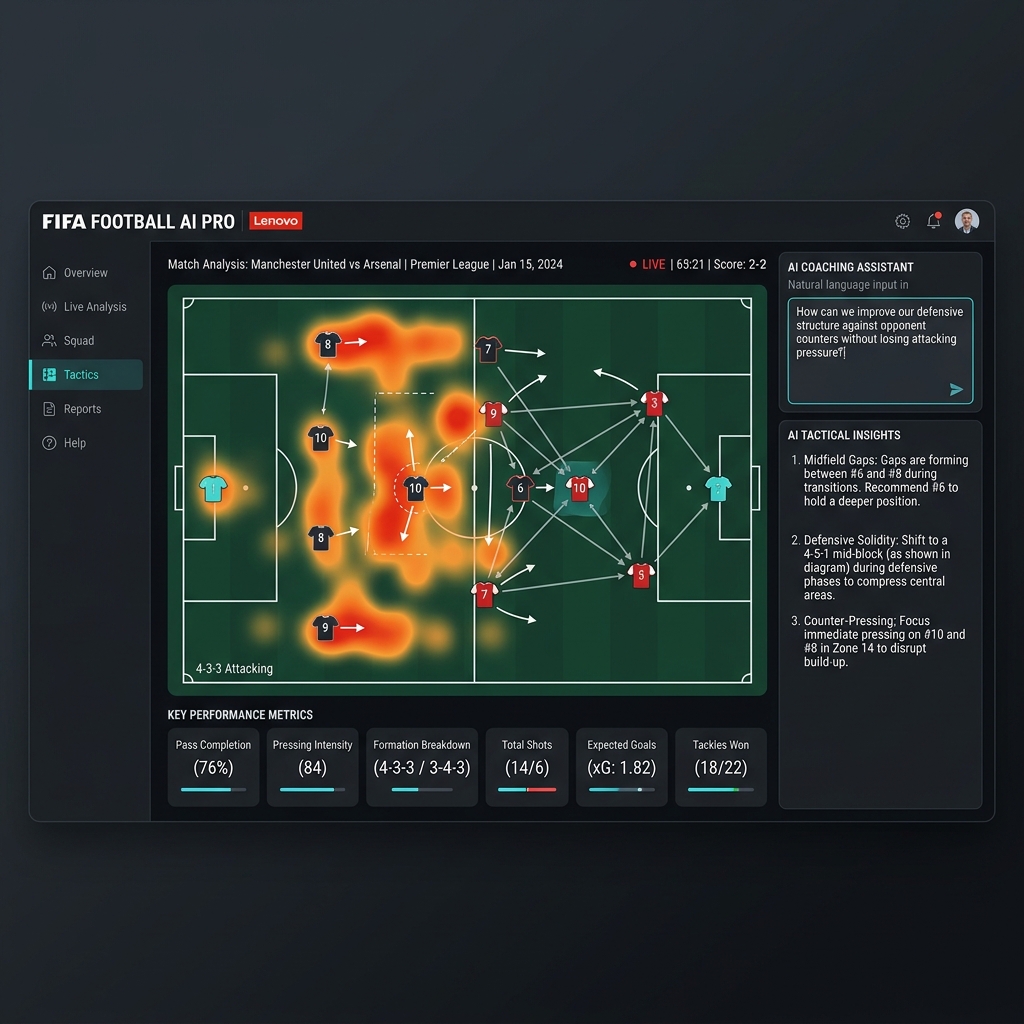
Football AI Pro works as a natural language interface over FIFA's proprietary match database — a repository covering over 2,000 metrics across thousands of matches. A coaching analyst can type a question like "Which formations has this opponent struggled against in high-pressing systems?" and receive an answer drawn directly from verified match data, delivered as text, video clips, graphs, or 3D animated replays.
The tool is used for pre-match preparation and post-match review, not live tactical changes during a match. It does not replace coaches or make decisions autonomously. It surfaces patterns and historical precedent; the coaching staff decides what to do with that information.
Key verified facts at a glance
- 16 optical tracking cameras per stadium for player body tracking
- 29 body data points tracked per player in real time
- 500Hz IMU sensor in the Adidas Trionda ball, developed with Kinexon
- 1-second player body scan pre-tournament to create 3D avatars for tracking
- Football AI Pro built with Lenovo, deployed to all 48 teams
- 2,000+ metrics queryable via natural language in Football AI Pro
- SAOT audio alerts now go directly to assistant referees' earpieces for clear calls
Lenovo stadium digital twins
Beyond the pitch, Lenovo's technology creates real-time virtual maps of tournament stadiums. These digital twins track crowd flow, security zones, and operational logistics, helping venue managers respond to crowd density issues or safety events before they escalate. It is the same category of technology used in smart building management, applied to the specific constraints of a stadium hosting 80,000 people.
References
- FIFA — "Semi-Automated Offside Technology." FIFA official documentation.
fifa.com/technical/football-technology/standards/saot - FIFA — "Football AI Pro powered by Lenovo." FIFA.com.
fifa.com - Adidas — "Trionda: The Official Match Ball of FIFA World Cup 2026." Adidas.com.
adidas.com - Forbes — "FIFA's Football AI Pro Aims To Level The Playing Field At The 2026 World Cup."
forbes.com - Design News — "How Adidas Trionda's IMU Sensor Works Inside the FIFA 2026 Ball."
designnews.com



Was this article helpful?
Comments
Loading comments...