Franco-Arabic converter: Arabizi to Arabic script, with its limits stated

TL;DR
Franco-Arabic (Arabizi) turns Arabic into Latin letters and digits: 2 for hamza, 3 for ayn, 7 for haa. Convert it to Arabic script and back, with whole-word matching for the short-vowel problem.
Table of Contents
Franco-Arabic in 30 seconds
Franco-Arabic, also called Arabizi or 3arabizi, is Arabic written with Latin letters and numbers. It appeared in the 1990s, when pagers, early phones and chat rooms could not display Arabic script, and it never went away: it is still the everyday writing of millions of WhatsApp chats, comments and gaming messages. The digits are the clever part. Latin letters cover the sounds English has, and digits cover the ones it does not: 2 for the hamza stop, 3 for ع, 5 for خ, 6 for ط, 7 for ح, 8 for ق, 9 for ص. The digits were picked by shape: 3 mirrors ع, 7 mirrors ح, and the rest follow the same visual logic.
The free Cubbbix Franco-Arabic Converter turns Arabizi into Arabic script and back, with the full mapping table printed on the page, including the primed digits 3', 6', 9' and 7' for غ, ظ, ض and خ. It also prints its limits, because a converter that hides them mistranslates quietly. Short vowels are the hard part, so frequent words are matched whole first: salam becomes سلام, not سلم, and mar7aba becomes مرحبا. Real numbers in a chat look identical to digit letters, so a year or a price will convert into letters unless you restore it by hand.
Figure 1: Latin letters for the sounds English has, digits for the ones it does not.
Why letter rules alone fail
A pure letter converter drops single short vowels, and that breaks the commonest words. Salam, written with two a's, becomes سلم under letter rules, because the middle a is a long vowel that the rules drop. Mar7aba survives only if the final a is kept. The fix used here is the one real converters use: match frequent words whole before falling back to letter rules. Salam, mar7aba, shukran, 3ayez, 3andi and dozens more are matched as words, and everything else follows the letter table. The result is not perfect, and the page says so: check words where a short vowel should be a long one, and fix them by hand.
Going back has the mirror problem. Arabic script does not write short vowels, so the strict reverse of سلام is slam, not salam. The readable reverse mode adds an a between consonants, giving salam, mar7aba and 3andi, which reads like chat. It is an approximation: real chat vowels vary by person and region, so treat the reverse output as a draft. Dialects vary too: Egyptians write ج as g, Levantines as j, and Moroccans use different vowels, so one converter cannot match every region, and the page does not claim otherwise.
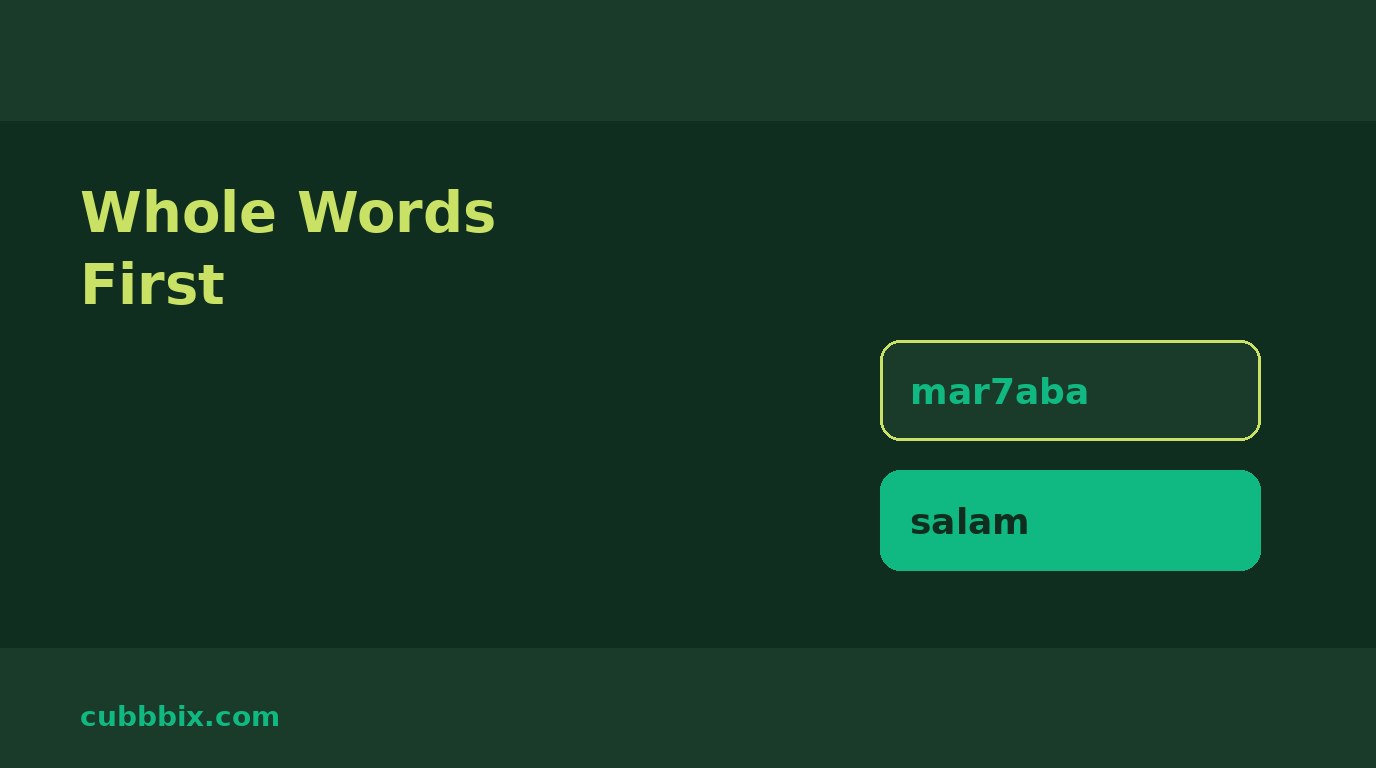
Figure 2: Frequent words are matched whole, so salam becomes سلام and not سلم.
The 8 problem
Most regions use 8 for ق, and this converter does the same, with غ written as gh or 3'. Some writers use 8 for غ instead, so a غ written as 8 will mistranslate here. That is not a bug to patch quietly: it is a property of an unstandardized system, and the honest response is to print the mapping, name the conflict, and let the reader check. The same honesty applies to real numbers: a price of 50 in a chat will convert as if it were letters, because digit letters and real numbers are the same characters. Re-check any real numbers in the output before sending it on.
Arabizi is a script converter's problem, not a translator's: this tool converts letters, not meaning. It will not turn an Arabic sentence into English, and it will not explain a dialect phrase. What it does is let someone read a chat in the script they read best, and let a learner see how the chat they already write maps onto the Arabic letters they are learning.
Figure 3: 8 varies by region, and real numbers look like digit letters. Check both before sending.
Questions people ask
What is Franco-Arabic (Arabizi)?
Arabic written with Latin letters and numbers, used since the 1990s when devices did not support Arabic script. Digits stand for sounds with no Latin letter: 2 for ء, 3 for ع, 5 for خ, 6 for ط, 7 for ح, 8 for ق, 9 for ص.
Why does salam become سلام here but سلم elsewhere?
Because this converter matches frequent words whole before applying letter rules. Letter rules drop single short vowels, and the middle a in salam is a long vowel, so a pure letter converter outputs سلم.
Does this tool translate Arabic into English?
No. It converts the script only, from Arabizi letters to Arabic letters and back. It does not translate meaning into any language.


Was this article helpful?
Comments
Loading comments...