How Much Does a Yard of Topsoil Weigh? Dry vs Wet, With the Math


TL;DR
One cubic yard of topsoil weighs 2,000 to 2,200 pounds dry and 2,600 to 3,000 pounds wet. This guide shows the weight table, the volume formula, and a worked pickup truck example.
Table of Contents
How much does a yard of topsoil weigh: the short version
One cubic yard of topsoil weighs about 2,000 to 2,200 pounds when it is dry and screened, and up to about 3,000 pounds when it is wet. A cubic yard is a volume, 27 cubic feet, a cube 3 feet on each side. The weight moves with moisture, so a yard has no single exact weight. This post shows the arithmetic step by step, with a weight table and a worked example, so you can check every number yourself.
The dry figure is the one most suppliers use when they quote by the ton: about 1 US ton per yard. The wet figure is the one that matters when you load a truck or push a wheelbarrow, because wet soil can weigh 30 to 50 percent more than the same soil dry. Plan for the wet number, and the dry load will feel easy.
Figure 1: One cubic yard of topsoil weighs 2,000 to 2,200 lb dry and 2,600 to 3,000 lb wet. Moisture is the whole story.
What a yard of topsoil is
A yard means one cubic yard. That is 27 cubic feet, or a cube 3 feet long, 3 feet wide, and 3 feet tall. Suppliers sell topsoil by the cubic yard, and they haul it by weight, so you need both numbers: the volume you order and the weight your truck and your back must carry. The bridge between them is density, weight per unit of volume.
Density is where the moisture comes in. Dry screened topsoil runs about 74 to 81 pounds per cubic foot. Multiply by 27 cubic feet and you get 2,000 to 2,200 pounds per yard. Wet soil runs about 96 to 111 pounds per cubic foot, which gives 2,600 to 3,000 pounds per yard. The soil is the same. The water in it is what changes.
Weight table: dry, damp, and wet
The table below gives the weight of one cubic yard of screened topsoil in each condition, plus the per-bag conversion. The density ranges come from the NR Tech Studio topsoil density guide and the BuildRefs soil weight calculator, both checked in November 2026. Real soil varies by about 15 percent with clay content, organic matter, and how tightly it is packed, so treat these as planning figures and weigh your own load for exact numbers.
| Condition | Per cubic foot | Per cubic yard | US tons |
|---|---|---|---|
| Dry, screened, loose | 74 to 81 lb | 2,000 to 2,200 lb | 1.0 to 1.1 |
| Damp, as delivered | 81 to 96 lb | 2,200 to 2,600 lb | 1.1 to 1.3 |
| Wet, rain-soaked | 96 to 111 lb | 2,600 to 3,000 lb | 1.3 to 1.5 |
| Wet, compacted (worst case) | Up to 126 lb | Up to 3,400 lb | Up to 1.7 |
How many bags equal one yard
Bags are sold by volume, so the count depends on the bag size printed on the label. A 0.75 cubic foot bag takes 36 bags to fill 27 cubic feet: 27 divided by 0.75 equals 36. A 1 cubic foot bag takes 27 bags, and a 1.5 cubic foot bag takes 18. Some 40 pound bags hold about 0.5 cubic feet, and those take 54 bags per yard: 27 divided by 0.5 equals 54, and 54 bags at 40 pounds each is 2,160 pounds, which matches the dry yard weight in the table above.
Bags cost far more than bulk soil. At $3 to $5 per 0.75 cubic foot bag, a yard in bags runs $108 to $180, against $25 to $70 for a bulk yard of screened topsoil. Buy bags for a small job under one yard. Order bulk once you pass one yard.
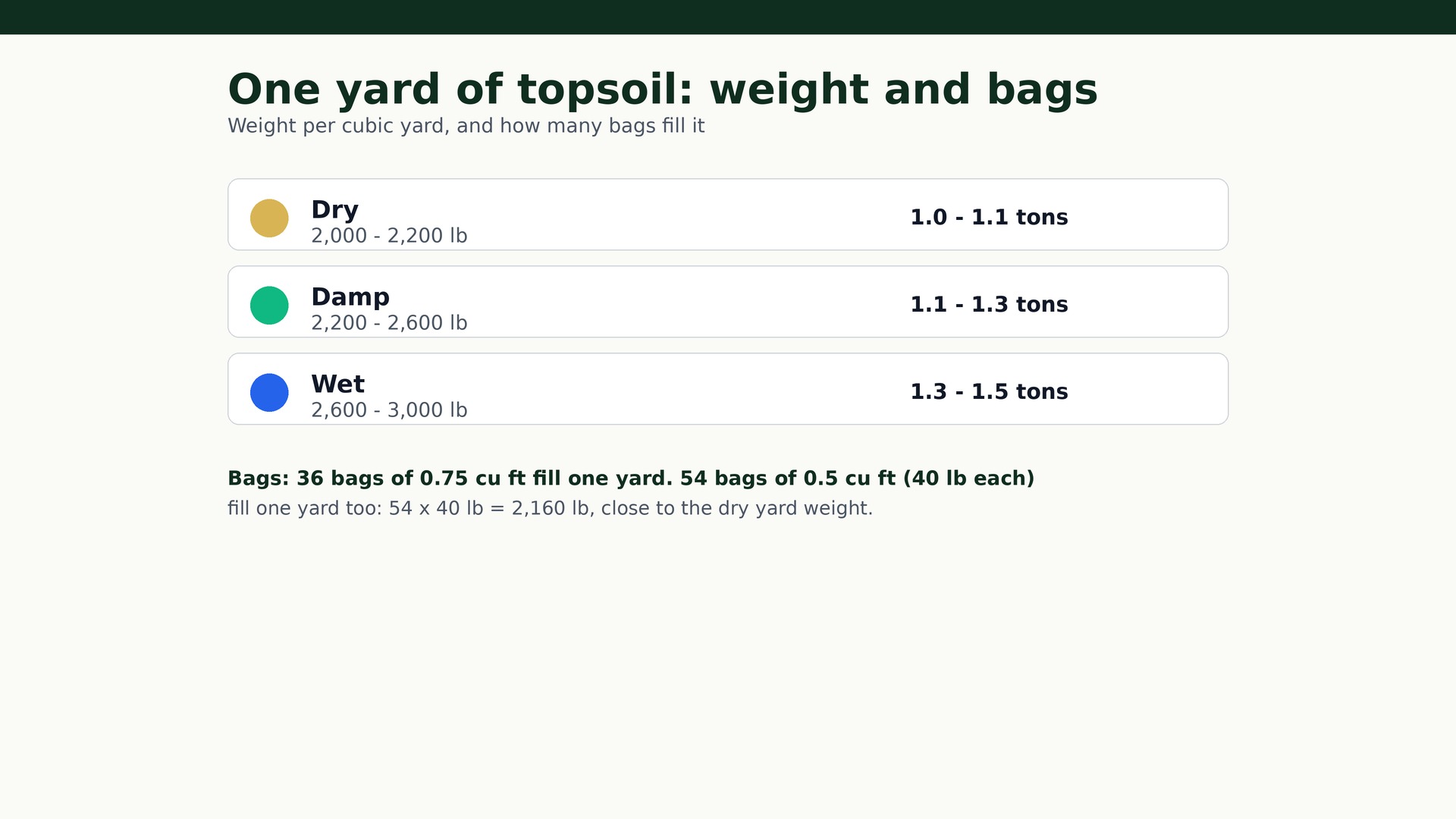
Figure 2: The weight table as a chart, with the bag count: 36 bags of 0.75 cubic feet, or 54 bags of 0.5 cubic feet, fill one cubic yard.
The math, step by step
Three formulas cover every topsoil job. First, volume: length in feet times width in feet times depth in inches, divided by 324, gives cubic yards. The 324 comes from 27 cubic feet per yard times 12 inches per foot. Second, weight: cubic yards times density in pounds per yard gives pounds. Third, coverage: one cubic yard spread 1 inch deep covers 324 square feet, since 27 cubic feet times 12 inches per foot equals 324. Spread 3 inches deep, the same yard covers 108 square feet.
Moisture is the swing factor in the second formula. BuildRefs puts the dry-to-wet swing at 20 to 35 percent, and the NR Tech Studio guide puts it at 30 to 50 percent for saturated soil. A yard that weighs 2,000 pounds dry weighs 2,600 to 3,000 pounds wet. That is 600 to 1,000 extra pounds of water in the same volume of soil.
Worked example: a pickup truck bed
Take a full-size pickup with a 4 foot by 8 foot bed, loaded 6 inches deep. Volume first: 4 times 8 times 6, divided by 324, equals 0.59 cubic yards. Dry weight next: 0.59 times 2,000 pounds per yard equals about 1,185 pounds. Wet weight: 0.59 times 2,800 pounds per yard equals about 1,660 pounds. The bed holds about 2 cubic yards by volume, but weight is the real limit. A half-ton pickup is rated for about 1,500 to 2,000 pounds of payload, so one full dry yard at 2,000 pounds already fills it, and one wet yard at 2,600 to 3,000 pounds is over the limit.
The same math works for a wheelbarrow. A standard wheelbarrow holds about 3 cubic feet, so one cubic yard takes about 9 loads: 27 divided by 3 equals 9. Each load of damp soil weighs about 240 to 290 pounds, since 3 cubic feet times 81 to 96 pounds per cubic foot gives 243 to 288 pounds. That is why a yard of soil feels like a long afternoon even before the spreading starts.
Worked example: a raised bed
Take a standard 4 foot by 8 foot raised bed, filled 12 inches deep. Volume: 4 times 8 times 12, divided by 324, equals 1.19 cubic yards. Round up to 1.2 yards. Dry weight: 1.2 times 2,000 equals 2,400 pounds. Damp weight: 1.2 times 2,400 equals 2,880 pounds. That is more than one pickup load for a half-ton truck, so order a delivery or make two trips. Add 10 percent for settling and spillage, and order 1.3 yards.
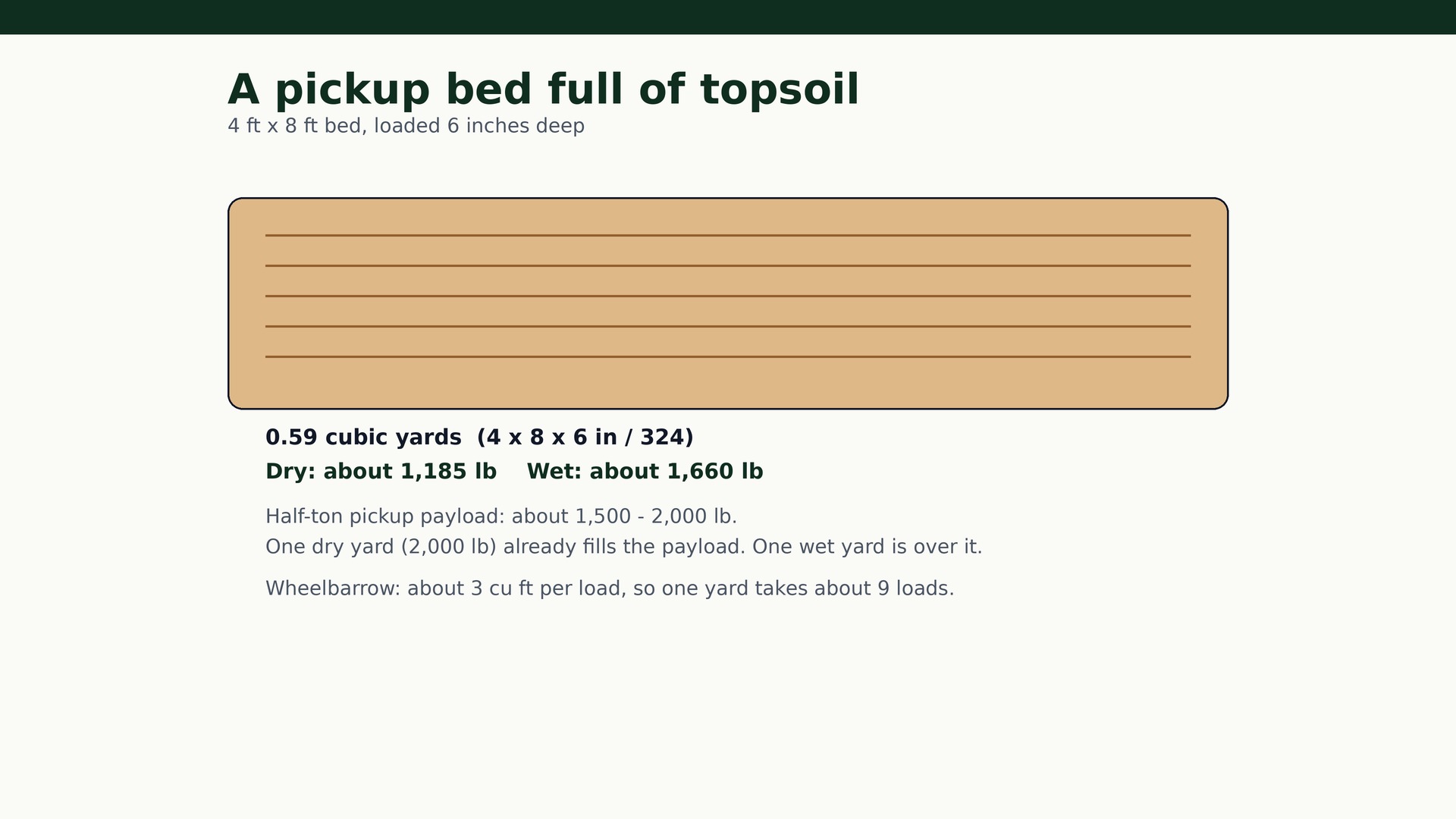
Figure 3: A 4 by 8 foot bed loaded 6 inches deep holds 0.59 cubic yards: about 1,185 lb dry, about 1,660 lb wet. A half-ton truck payload is about 1,500 to 2,000 lb.
Ordering without a surprise
Order on a dry day if you can. Wet soil weighs up to a third more per yard, costs the same per yard when sold by volume, and is harder to spread and level. If your supplier sells by the ton instead of by the yard, ask whether the quoted weight is for dry or damp soil, because a ton of wet soil is less soil than a ton of dry soil. Ask the supplier for the density they use, and run the volume formula yourself before the truck arrives.
Check the truck payload plate before you load a pickup. The bed fits about 2 cubic yards by volume, and the weight limit is what stops you first. One yard of damp topsoil is already a full load for most half-ton trucks. Two yards is a delivery job, and a small dump truck carries about 5 cubic yards while a large one carries 10 or more.
Frequently asked questions
How much does a yard of topsoil weigh?
About 2,000 to 2,200 pounds dry and screened, 2,200 to 2,600 pounds damp as delivered, and 2,600 to 3,000 pounds wet after rain. A cubic yard is 27 cubic feet, and water is what moves the weight.
How many 40 lb bags of topsoil equal one cubic yard?
It depends on the bag volume printed on the label. A 0.75 cubic foot bag takes 36 bags per yard. A 40 pound bag that holds about 0.5 cubic feet takes 54 bags, and 54 times 40 pounds is 2,160 pounds, close to the dry yard weight.
Will a cubic yard of topsoil fit in my pickup truck?
A full-size bed holds about 2 cubic yards by volume, but weight is the limit. One dry yard weighs about 2,000 pounds, and a half-ton pickup is rated for about 1,500 to 2,000 pounds of payload. Check your truck payload plate before loading.
How much area does one yard of topsoil cover?
One cubic yard spread 1 inch deep covers 324 square feet. At 3 inches deep it covers 108 square feet, and at 6 inches deep it covers 54 square feet. Use length times width times depth in inches, divided by 324, to get cubic yards.
Why does wet topsoil weigh so much more?
Water fills the gaps between soil particles without pushing much soil out. A yard can gain 600 to 1,000 pounds of water after rain, a 30 to 50 percent increase over its dry weight.
Sources: BuildRefs soil weight calculator (dry topsoil about 2,000 lb per cubic yard, wet 2,400 to 2,800 lb, moisture adds 20 to 35 percent); NR Tech Studio topsoil density guide (dry 1,800 to 2,200 lb, moist 2,200 to 2,600 lb, wet 2,600 to 3,000 lb per cubic yard); Bulk Material Calculator topsoil guide (about 1.1 tons dry, up to 1.4 to 1.5 tons wet); Material Calculator (dry 2,200 lb, wet 3,000 to 3,400 lb); HomeYardMath topsoil calculator (about 2,100 lb dry, up to 2,700 lb after rain); EarthEasy soil calculator (bag sizes: 0.75 cubic foot bag, 36 per yard; 1 cubic foot bag, 27 per yard); RJ Calculator dirt guide (half-ton pickup payload about 1,500 to 2,000 lb; wheelbarrow about 3 cubic feet per load); Green Ry Enthusiast yard of soil guide (bulk screened topsoil $25 to $70 per cubic yard; full-size pickup bed about 2 cubic yards by volume). All accessed 14 November 2026. Weights are planning figures. Real topsoil varies by about 15 percent with moisture, clay content, and compaction.
More from the Blog



Was this article helpful?
Comments
Loading comments...