Ocean Currents Map: The 10 Major Currents Explained


TL;DR
A world map of the 10 major ocean currents, with warm and cold currents, the five great gyres, and what each current does to the climate of the coast it passes.
Table of Contents
Ocean currents: the short version
An ocean current is a steady flow of sea water moving in one direction, like a river inside the ocean. The 10 major currents are listed below by name, warm and cold, each in its own ocean.
Currents matter because they move heat. Warm water from the equator travels toward the poles, and cold water from the poles travels toward the equator. That moving heat sets the climate of the coasts each current passes, and it decides where the fish are.
Figure 1: The 10 major ocean currents work like rivers in the sea. Warm currents carry heat toward the poles, cold currents carry it back toward the equator.
What is an ocean current
Winds push the top layer of the sea. Steady winds, blowing the same way for months, drag the water with them. The Earth's spin then bends the moving water, to the right in the Northern Hemisphere and to the left in the Southern Hemisphere. The result is a set of huge loops, called gyres, one in each ocean basin. Five of them dominate the map: the North and South Atlantic gyres, the North and South Pacific gyres, and the Indian Ocean gyre.
The loops turn clockwise north of the equator and anticlockwise south of it. That one rule explains the whole map. On the west side of each ocean, the loop carries warm water from the equator toward the poles. On the east side, it carries cold water from high latitudes back toward the equator. The Gulf Stream, the Kuroshio, the Brazil Current, the Agulhas Current, and the East Australian Current are the warm western sides. The Canary, California, Benguela, Humboldt, and West Australian currents are the cold eastern sides.
The 10 major currents on the map
Each current below is listed with its ocean, whether it carries warm or cold water, the way it flows, and what it does to the coast it passes.
| Current | Ocean | Warm or cold | What it does |
|---|---|---|---|
| Gulf Stream | North Atlantic | Warm | Flows north along the US east coast, then east across the Atlantic. Warms Florida and the US east coast. |
| North Atlantic Drift | North Atlantic | Warm | The Gulf Stream's continuation toward Europe. Keeps the UK and Norway far warmer than their latitude. |
| Labrador Current | North Atlantic | Cold | Flows south along Canada's east coast. Meets the Gulf Stream near Newfoundland and cools the coast. |
| Kuroshio | North Pacific | Warm | Flows north along the east coast of Japan. Warms Japan and feeds into the North Pacific flow toward North America. |
| California Current | North Pacific | Cold | Flows south along the US west coast. Cools California and brings fog to San Francisco. |
| Peru Current (Humboldt) | South Pacific | Cold | Flows north along the west coast of South America. Cools the coast and feeds one of the world's richest fisheries. |
| Brazil Current | South Atlantic | Warm | Flows south along Brazil's east coast, warming it as it goes. |
| Agulhas Current | Indian Ocean | Warm | Flows south along Africa's south-east coast, then turns east around the Cape of Good Hope. |
| East Australian Current | South Pacific | Warm | Flows south along Australia's east coast, warming it. |
| Antarctic Circumpolar Current | Southern Ocean | Cold | Flows east around Antarctica without stopping. The largest current on earth by the amount of water it moves. |
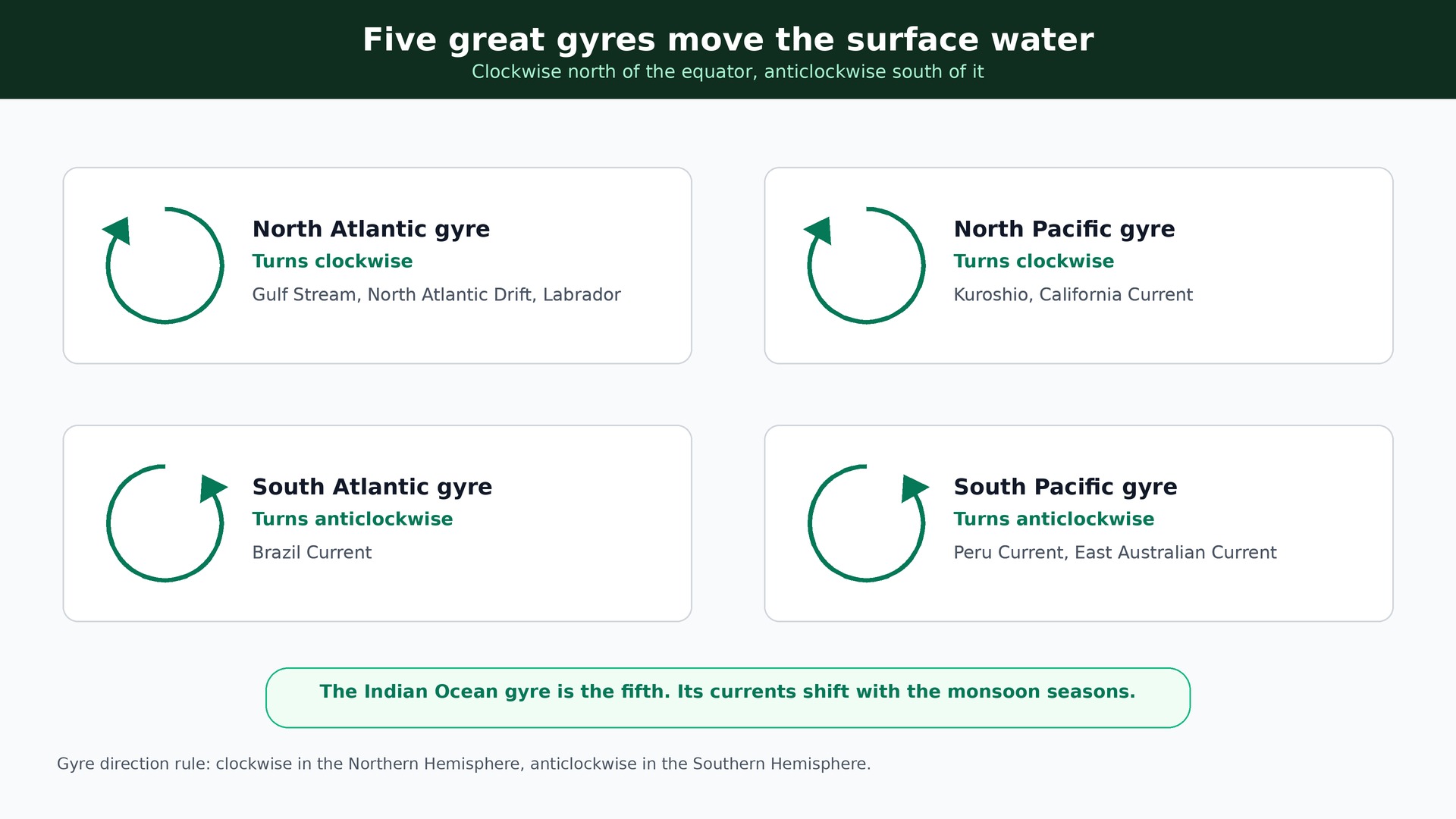
Figure 2: The five great gyres. Northern gyres turn clockwise. Southern gyres turn anticlockwise.
Warm currents vs cold currents
A current is called warm or cold by comparing it with the water around it. Warm currents start near the equator and carry that heat toward the poles. Cold currents start near the poles, or rise from deep water, and carry cold water toward the equator.
The effect on land is plain. A warm current makes the coast it passes milder and wetter than the latitude alone would give. London sits at the same latitude as Calgary, yet London's winters are far milder, because the North Atlantic Drift brings warm water to Britain's shores. A cold current does the opposite. It cools the coast, dries the air, and often brings fog. The cold Peru Current helps explain the dry Atacama Desert on South America's west coast, one of the driest places on earth.
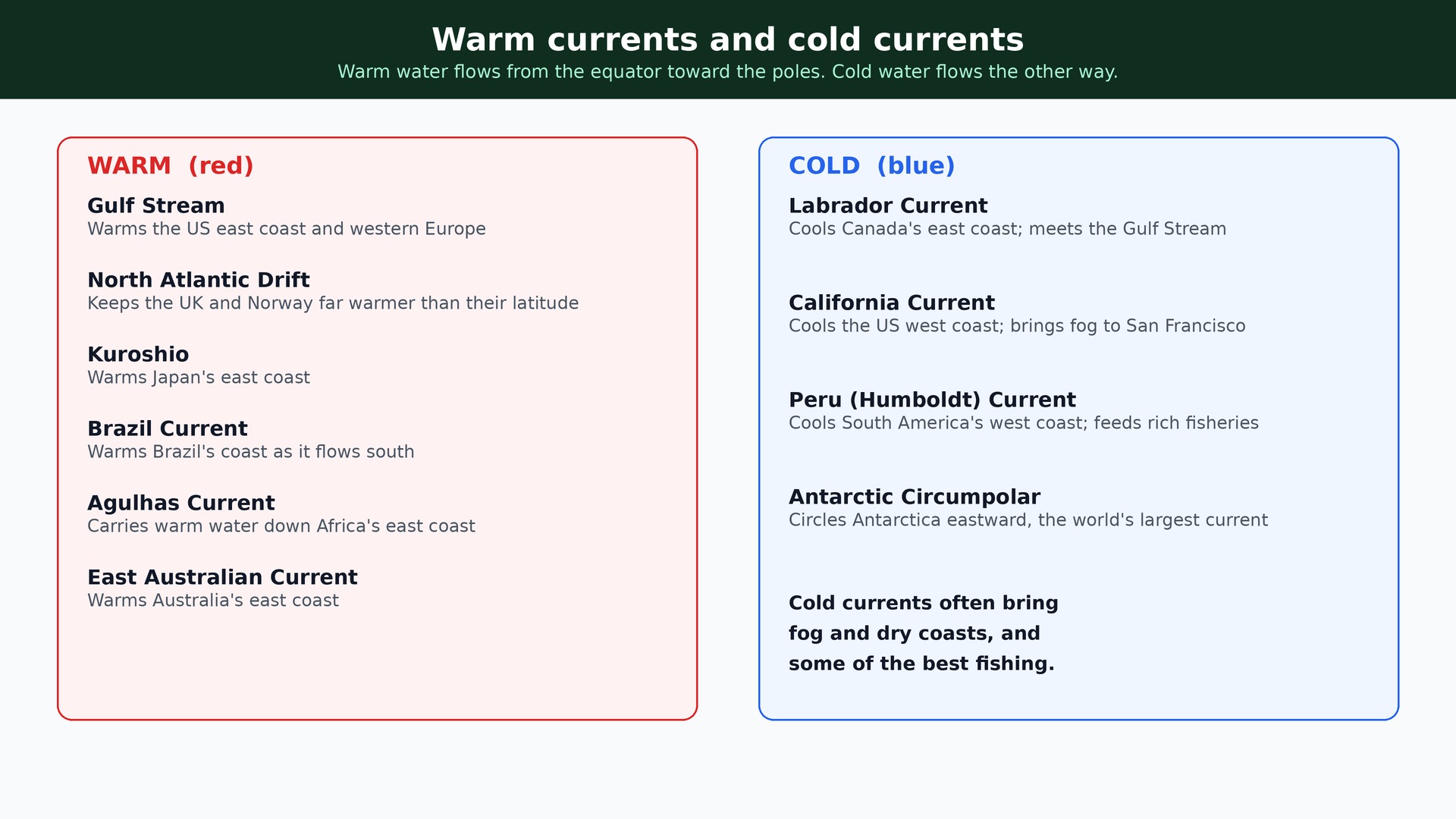
Figure 3: Warm currents and cold currents. Warm water flows from the equator toward the poles. Cold water flows the other way.
Why ocean currents matter
Currents set the climate of whole coastlines. Western Europe is warm for its latitude because of the Gulf Stream and the North Atlantic Drift. The west coast of the United States is cool for its latitude because of the California Current. The same rule holds in the south: the Brazil Current warms Brazil's coast, while the Peru Current cools Chile and Peru.
Currents also feed people. Cold currents pull deep water up to the surface, and that water is rich in nutrients. Tiny sea life feeds on the nutrients, fish feed on the tiny life, and fishing boats follow the fish. The Peru Current supports one of the largest fisheries in the world. The same cold water that makes the coast dry makes the sea rich.
Ships use currents too. A ship sailing with the Gulf Stream from the Americas to Europe rides a flow that runs up to 5 miles per hour in places, and captains have used it since the 1700s. Sailing against it costs fuel and time.
Sources: IASNOVA ocean currents map and study guide, for the five gyres, the warm western side and cold eastern side rule, and the current list; ClearIAS ocean currents guide, for the Gulf Stream, Labrador Current, Kuroshio, and North Atlantic Drift directions; Florida Atlantic University ocean currents lesson, for the warm and cold current list and the climate effects on the US coasts.
Frequently asked questions
What is an ocean current?
A steady flow of sea water moving in one direction. Winds push the surface water, and the Earth's spin bends the flow into large loops called gyres. The Gulf Stream is the best-known example.
Which is the largest ocean current?
The Antarctic Circumpolar Current, which flows east around Antarctica. It is the only current that circles the whole earth without hitting land, and it moves more water than any other current.
Is the Gulf Stream warm or cold?
Warm. It carries warm water from the Gulf of Mexico and the Caribbean north along the US east coast, then east across the Atlantic as the North Atlantic Drift. It warms the US east coast and western Europe.
Why are gyres clockwise in the north and anticlockwise in the south?
The Earth's spin bends moving water to the right in the Northern Hemisphere and to the left in the Southern Hemisphere. That bend turns each ocean's flow into a loop, and the loop turns one way north of the equator and the other way south of it.
How do ocean currents affect the weather?
Warm currents warm the air above them and bring mild, wet weather to the coasts they pass. Cold currents cool the air and often bring fog and dry weather. The Gulf Stream is the reason western Europe is far warmer than other places at the same latitude.
More from the Blog
How Much Does a Rhinoplasty Cost? US Prices, Breakdown, and a Worked Total
Surah Waqiah PDF: Full Text in Arabic with English Translation
How Much Does a CT Scan Cost? US Prices by Scan Type
What Companies Are in the Consumer Services Field? 25 Big Names



Was this article helpful?
Comments
Loading comments...