Saudi License Plate Letters: The Full Arabic-to-Latin Chart (17 Letters)

TL;DR
Only 17 Arabic letters appear on Saudi plates, each with one fixed Latin partner: ح is J, ص is X, ع is E, م is Z. The full chart, why the pairs look wrong, and how to convert either direction.
Table of Contents
Which Arabic letters appear on Saudi number plates?
1. Only 17 letters are used
Saudi plates use ا ب ح د ر س ص ط ع ق ك ل م ن هـ و ى. The rest of the Arabic alphabet is excluded so plates stay unambiguous.
2. Each letter has one fixed Latin partner
ح is J, ص is X, ع is E, م is Z. The mapping is a fixed code table, not a pronunciation guide.
3. Two scripts since 2007
Plates show the Arabic row on top and the Latin row below, so Saudi-registered cars can be identified abroad.
4. Four numerals, two numeral systems
Standard plates carry four zero-padded numerals, printed once as Eastern Arabic numerals and once as Western numerals.
You can convert any Saudi plate between the two scripts in seconds with the Saudi Plate Converter, which applies this exact 17-letter table in both directions and shows the result character by character.
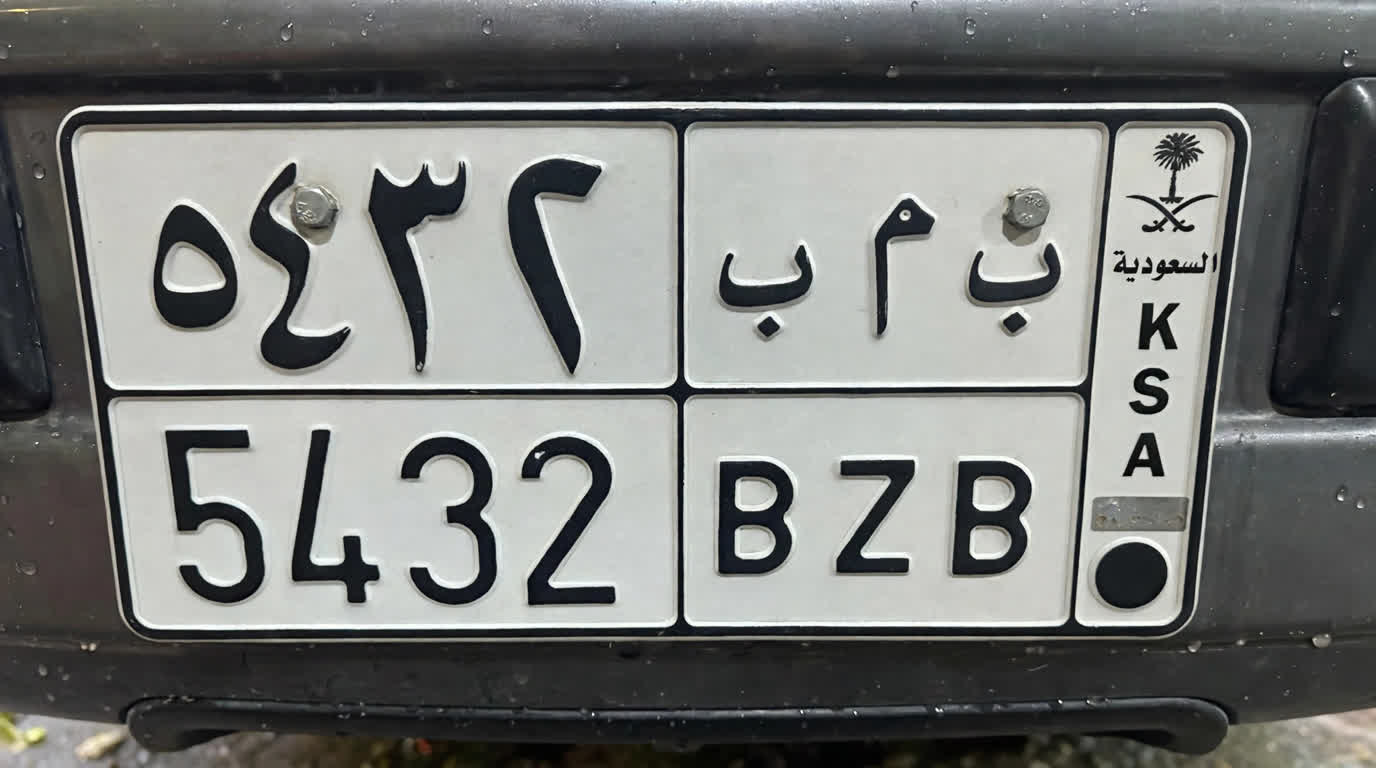
Every Saudi number plate carries the same registration twice. The top row is Arabic: three letters and up to four numerals in black on white. The bottom row repeats it in the Latin alphabet with Western numerals. Since 2007, that dual layout has been the standard, and it is what lets a Saudi-registered car drive in Europe without changing its plates.
The part that surprises most people is the letter mapping. It is not transliteration. ح does not become H. It becomes J. ص becomes X, ع becomes E, م becomes Z, and the final ى becomes V. The table is a fixed visual code built to keep every plate unmistakable, and only 17 letters are allowed on it at all. Here is the full chart, then why it works the way it does.
Figure 1: A Saudi plate carries the registration in Arabic on top and Latin below, with the emblem strip on the right.
The full 17-letter chart
This is the complete mapping used on Saudi registration plates. Left column: the Arabic letter as it appears on the plate. Right column: the Latin letter printed beneath it.
| Arabic | Latin | Arabic | Latin |
|---|---|---|---|
| ا | A | ق | G |
| ب | B | ك | K |
| ح | J | ل | L |
| د | D | م | Z |
| ر | R | ن | N |
| س | S | هـ | H |
| ص | X | و | U |
| ط | T | ى | V |
| ع | E |
The numerals convert too. Eastern Arabic numerals ٠ ١ ٢ ٣ ٤ ٥ ٦ ٧ ٨ ٩ on the Arabic row map to 0 1 2 3 4 5 6 7 8 9 on the Latin row. Standard plates always show four numerals, padded with leading zeros when needed. Older or personalised registrations can show fewer.
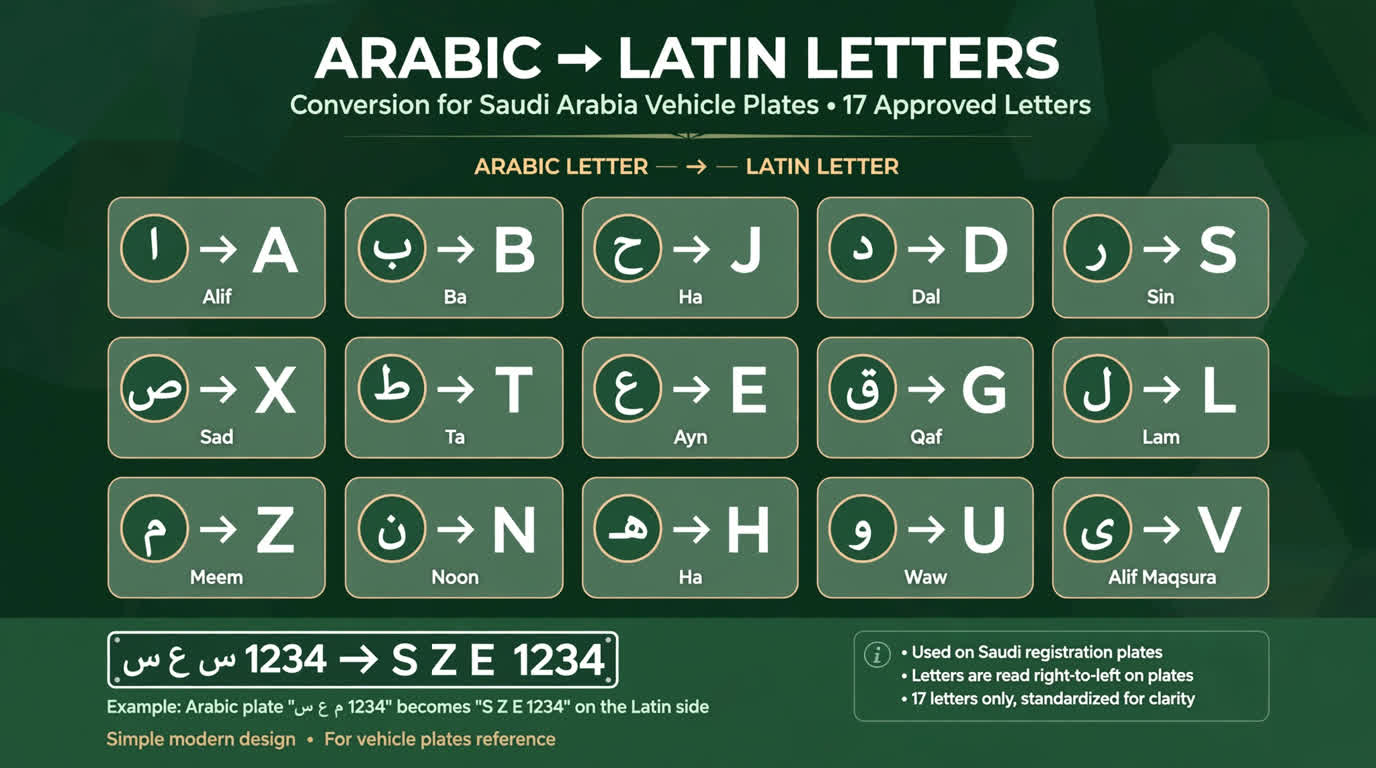
Figure 2: The 17 permitted letters and their fixed Latin partners, side by side.
Why the pairs look wrong
The mapping was designed as an identifier code, not as a way to write Arabic sounds in Latin letters. The priority was keeping every plate visually distinct, for humans and for cameras. Letters that could be confused with each other or with numerals were handled by assignment: ح got J so that it could never be mixed up with the numeral shapes, ص got X, ع got E, and م got Z.
The same logic explains the letters that are missing. ج is the most noticeable absence: it is the letter most people expect to see as J, but ح already holds that slot, and keeping both would create collisions. The table trades phonetic sense for zero ambiguity, which is exactly what a registration system needs.
How to read a plate left to right
The Arabic row reads right to left, like all Arabic text. The Latin row reads left to right. Here is the quirk: the official translation between the rows runs left to right even on the Arabic side. That means the letter order can look flipped when you compare the two rows. The converter on this page shows the conversion character by character, in typing order, so you can see exactly which letter lands where.
The numerals are simpler. Both rows show the same number; only the numeral shapes change. Eastern Arabic ٥٤٣٢ on top is 5432 below. If you see a plate where the two rows show different numbers, one of the rows is worn, replaced, or not genuine.

Figure 3: The dual-script plate format has been standard in Saudi Arabia since 2007.
Convert any plate in seconds
Type or paste the plate in either script into the Saudi Plate Converter. It detects the script automatically: Arabic goes to Latin, Latin goes to Arabic, and the numerals convert between the two numeral systems at the same time. You get the converted plate plus a character-by-character breakdown.
If you paste a Latin letter that is not one of the 17, like C, F or O, the tool flags it instead of guessing. That warning is useful: a Latin string with those letters is not a valid Saudi plate string. One more boundary to keep in mind: converting the script proves nothing about the plate being registered. Owner and registration checks go through Absher and the traffic department only.
Frequently asked questions
Why is there no ج on Saudi plates?
Because ح already maps to J, and keeping both letters would put two similar shapes on the same fixed table. The 17-letter set was chosen to avoid exactly these collisions, so ج was left out entirely.
Do the Latin letters on a Saudi plate show pronunciation?
No. The Latin row is an identifier code, not a transliteration of sounds. ص becomes X and ع becomes E, which tells you the table prioritises distinct characters over phonetics. Never read a plate's Latin letters aloud as Arabic.
How many digits are on a standard Saudi plate?
Four, zero-padded, shown twice: once in Eastern Arabic numerals on the Arabic row and once in Western numerals on the Latin row. Earlier or personalised registrations can carry fewer digits.
Can I convert a plate photo with this tool?
Not directly. The converter takes typed or pasted text. Read the characters off the plate, type them in, and the tool returns the other script with a per-character breakdown you can verify against the plate.


Was this article helpful?
Comments
Loading comments...