Sora is Dead: What Happened and What Are the Best AI Video Alternatives in 2026?

TL;DR
OpenAI cancelled its standalone Sora consumer app. Discover why they pulled the plug and what the top alternatives are in 2026.
Table of Contents
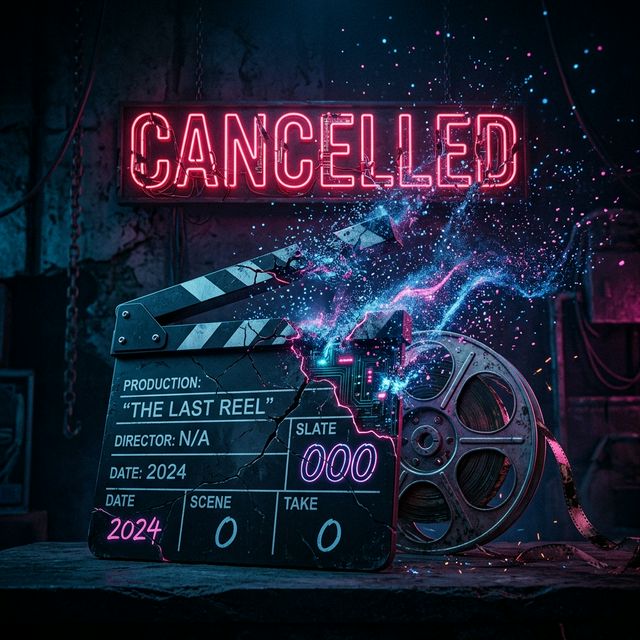
A visual conceptualization of the end of OpenAI's Sora consumer application.
It feels like yesterday when OpenAI released the first mind-bending preview clips of Sora. Videos of stylish women walking down neon-lit Tokyo streets, hyper-realistic wooly mammoths traversing snowy plains, and flawless drone shots of historical settings captured the internet's collective imagination. The promise was nothing short of revolutionary: a text-to-video generator capable of understanding physical dynamics, object permanence, and cinematic continuity over long generations. Creators across industries—from indie filmmakers and marketers to major Hollywood studios—braced for an earthquake that would reshape the landscape of digital video production entirely.
Yet, here we are in late March 2026, navigating a remarkably different reality. Rather than standing atop the mountain of generative AI video tools, OpenAI has officially pulled the plug. The standalone Sora consumer application, alongside its developer API access, is being permanently discontinued. For many creators who built their upcoming roadmaps around Sora's public release, the abrupt announcement has caused shockwaves.
However, the death of Sora doesn't equate to the death of AI video generation. In many ways, the cancellation simply clears the stage for an explosive ecosystem of specialized, highly capable tools that have eclipsed Sora's initial promise. This article dives deep into exactly why Sora died, how the ecosystem reacted, and what the best, most powerful AI video options are right now.
Why Did OpenAI Kill Sora?
To understand how a highly-anticipated, industry-defining product from the world's leading AI company can simply vanish, we have to look behind the curtain of generative video mechanics. Generating high-resolution, temporally consistent video is not just computationally expensive—it is astronomically so. While generating a beautiful still image or writing a lengthy essay via ChatGPT requires relatively minor compute load, rendering realistic video requires massive server clusters operating for minutes at a time per user query.
1. The Revenue vs. Compute Paradigm
OpenAI reportedly discovered that the operational costs of maintaining Sora for the general consumer market significantly outweighed the potential subscription revenue. A standard $20 or even $50 monthly subscription simply could not cover the intense compute cycles required to constantly generate long-form, high-fidelity video on demand.
2. Strategic Realignment Towards AGI
As OpenAI prepares for a highly anticipated IPO, the company is radically streamlining its focus. In 2026, the artificial intelligence "arms race" has definitively shifted toward reasoning models, agentic workflows, and the broader pursuit of Artificial General Intelligence (AGI) and robotics. Sora, functionally speaking, became a resource-draining "side quest." By shutting down the public app, OpenAI frees up immense compute clusters to train the next generation of massive text and reasoning models. The underlying world-simulation technology of Sora isn't completely dead—it will be absorbed internally to train robotic and spatial models.
3. The Disney Deal Fallout
For months, rumors swirled regarding a massive, $1 billion licensing partnership between OpenAI and The Walt Disney Company. This deal would have allowed authorized users to generate videos using protected IP, such as Marvel or Star Wars characters. When OpenAI determined that the consumer product was environmentally and financially unsustainable, that landmark partnership silently dissolved, eliminating one of the main commercial cornerstones that justified Sora's continued development.
4. Fierce Market Competition
When Sora was first teased, it was leagues ahead of competitors like early iterations of Runway or Pika. But the delay in releasing it directly to consumers gave the competition a lifeline. By the time 2026 arrived, the market had caught up. Multiple specialized platforms had not only replicated Sora's quality but had built tools that were better suited for actual filmmaking pipelines rather than just parlor tricks. OpenAI found itself launching an incredibly expensive product into an unexpectedly saturated, heavily optimized market.
Professional editing workspaces in 2026 rely heavily on specialized, multi-screen AI video tools.
The 2026 Video Landscape: Specialization Over Generalization
With Sora exiting the arena, the market has settled into a state of deep specialization. Creators in 2026 are realizing that asking one massive foundational model to handle every possible use case—from realistic physics and character consistency to native audio and cinematic editing—was a flawed approach.
Instead, the modern workflow involves combining the unique strengths of various specialized AI video platforms. Professional filmmakers, marketers, and YouTubers are curating "toolbelts" depending on their immediate need. They utilize one tool for breathtaking environmental establishment shots, another for complex human motion, and a completely different tool for stitching scenes together seamlessly.
If you are looking for the best alternatives left standing, these are the undeniable heavyweights of 2026.
The Top Sora Alternatives to Use Today
1. Google Veo 3.1: The King of 4K and Native Audio
If your project demands absolute maximum fidelity, Google Veo 3.1 is unmatched. Released with deep integration into Google’s massive compute infrastructure, Veo completely blew past the industry standard by offering true 4K output at 60 frames per second.
Perhaps more impressively, Veo 3.1 is currently one of the only commercial models capable of complex audio synthesis built directly into the video generation pass. Rather than using an external tool to layer foley, dialogue, and atmospheric noise, Veo generates the video and synchronized ambient audio simultaneously. If you need a hyper-realistic establishing shot of a bustling city that *sounds* as good as it looks, Veo is the clear leader.
2. Runway Gen-4.5: The Filmmaker’s Choice
While other models might focus on generating beautiful isolated clips, Runway Gen-4.5 focuses on the *process* of filmmaking. It is widely regarded as the ultimate tool for directors, editors, and visual effects artists because it prioritizes workflow integration and granular control.
Runway excels at features that professionals desperately need: multi-shot context, advanced camera pathing control, inpainting, and sophisticated timeline editing. It allows you to seamlessly blend traditional camera footage with AI-generated assets, mapping lighting and stylistic aesthetics flawlessly. If you aren't just generating a video, but actively editing a cinematic story, Runway remains the undisputed industry standard.
3. Kling AI 3.0: The Champion of Physics and Motion
A recurring issue with first-generation video models was unpredictable physics—limbs passing through tables, materials behaving erratically, or gravity feeling artificially floaty. Kling AI 3.0, developed with incredibly deep investments into physics-aware modeling, entirely solved this problem.
Kling is the premier platform for realistic movement. Whether it’s a high-speed chase, a complicated martial arts sequence, or the subtle shifting of fabric blowing in the wind, Kling understands how object masses interact in a 3D space. Content creators specializing in sports, dynamic action cinematography, and complex character interactions default to Kling AI almost exclusively.
4. Seedance 2.0: Solving the "Identity Drift" Problem
Prior to 2026, narrative storytelling in AI video suffered from "identity drift"—the frustrating tendency for a character to slightly change their facial features, clothing, or overall appearance from shot to shot. Seedance 2.0 has practically eradicated this issue with its proprietary "Identity Lock" architecture.
By allowing creators to upload reference sheets or lock specific character seed data deeply into the generation pipeline, Seedance ensures that the main protagonist of scene 1 looks identical to the protagonist of scene 50. This has made it the primary backbone for independent AI filmmakers producing short films, commercials, and continuous episodic content on platforms like YouTube.
AI filmmaking moves forward with deeply specialized tools capable of simulating entire worlds within the lens.
Conclusion: A Healthier Ecosystem
In retrospect, the death of OpenAI’s Sora is probably the best thing that could have happened to the generative video industry. The immense shadow cast by Sora’s initial announcement suppressed investment and paralyzed competitors. Its exit has liberated the market, resulting in a vibrant, highly competitive ecosystem where innovation is skyrocketing.
We are no longer waiting for a single monolithic algorithm to build the future of film. Instead, we have specialized, accessible, and deeply optimized tools that empower creators to do their best work right now. Sora might be dead, but the golden age of AI video generation is just beginning.

Was this article helpful?
Comments
Loading comments...