The Abundance Lie: Four Billionaires Promise You Free Everything While Building the Machines That Will Own You

TL;DR
Bill Gates says food and housing will soon be practically free. Musk promises universal high income, Altman cheap intelligence, Amodei a country of geniuses. Here is what each of them actually owns, and why the abundance is theirs, not yours.
Table of Contents
The abundance lie: the short version
The pattern is the same four times over. They sell the dream, and they own the choke points: the land, the satellites, the identity system, and the intelligence itself.
Bill Gates says that in a little over 20 years, food and housing will be practically free. Humanoid robots will build the houses, grow the food and do the surgery. Almost everyone will be unemployed, and that will be fine, because everything will be abundant. The only problem left, he says, will be finding a sense of purpose.
It sounds like a dream. Read it again slowly, and it sounds like something else: four of the richest men on earth telling you that you will not need to work, while each of them buys up the exact thing you would need if work disappeared.
This is the rebuttal. Every quote below is real, and every fact is sourced at the end.
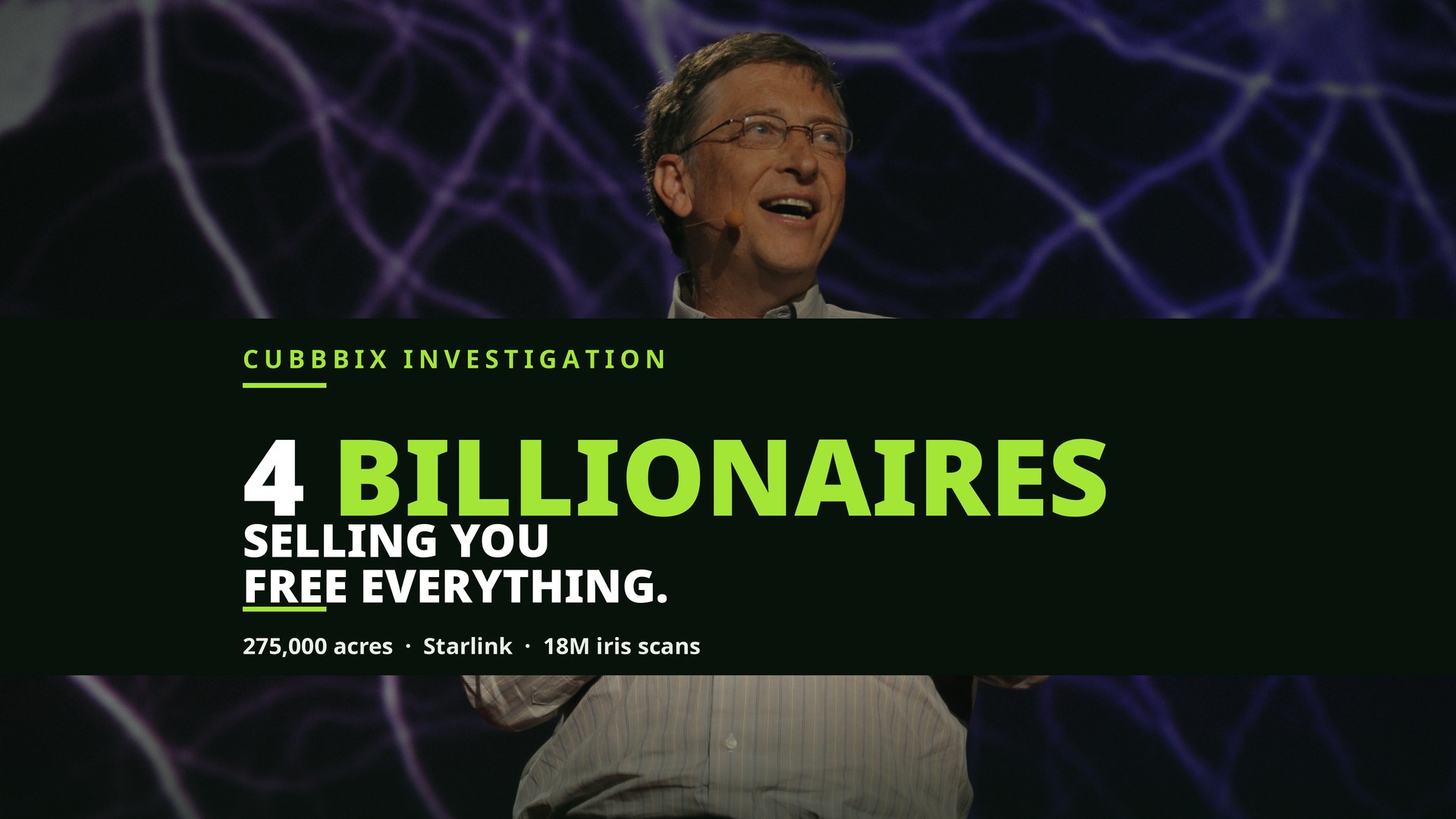
Figure 1: Bill Gates on stage at TED 2011. Photo: Wikimedia Commons.
What Gates actually said
Gates said it twice, in public, in the space of a month.
On NBC's Meet the Press on 27 September 2026, he said AI would unfold in two phases: roughly 20 years of adjustment, and then an era of abundance. "Once you get through that, then a combination of humanoid robots and AIs will provide. Building houses, growing food, a lot of things," he said. "You could call it an era of abundance."
On The Verge's Decoder podcast on 22 October 2026, he went further: unless the world chooses to "massively slow down or stop", robots will build houses, grow food and do surgery, and "none of the things that human labor provides to the economy will be necessary for most goods and services."
He is honest about one part. He calls the 20-year transition his biggest concern, a period with "winners and losers and a lot of disruption", turbulence that could rival the most tumultuous eras in history. On the same Meet the Press appearance, he warned AI could cause "a billion deaths" if misused.
So the pitch is: twenty years of pain for you, then abundance for everyone. The question Gates never answers is who owns the abundance.
The man promising you free food owns the farmland
Start with Gates himself. He is the largest private owner of farmland in the United States, about 275,000 acres. We covered that in our earlier investigation, and the number still stands.
Think about what that means for his promise. If robots grow the food and food becomes free, the food still grows on land. The land is not free. It belongs to the man telling you the food will be free. The robots that work the land will not belong to you either. They will belong to whoever builds them, and whoever owns the land they work on.
Gates also built Microsoft, the company whose software runs most of the world's offices, and whose cloud runs a large share of the world's AI. He is not a bystander describing the future. He is a landlord describing a future in which he owns the land, the tools and the platform, and you own nothing but free time.
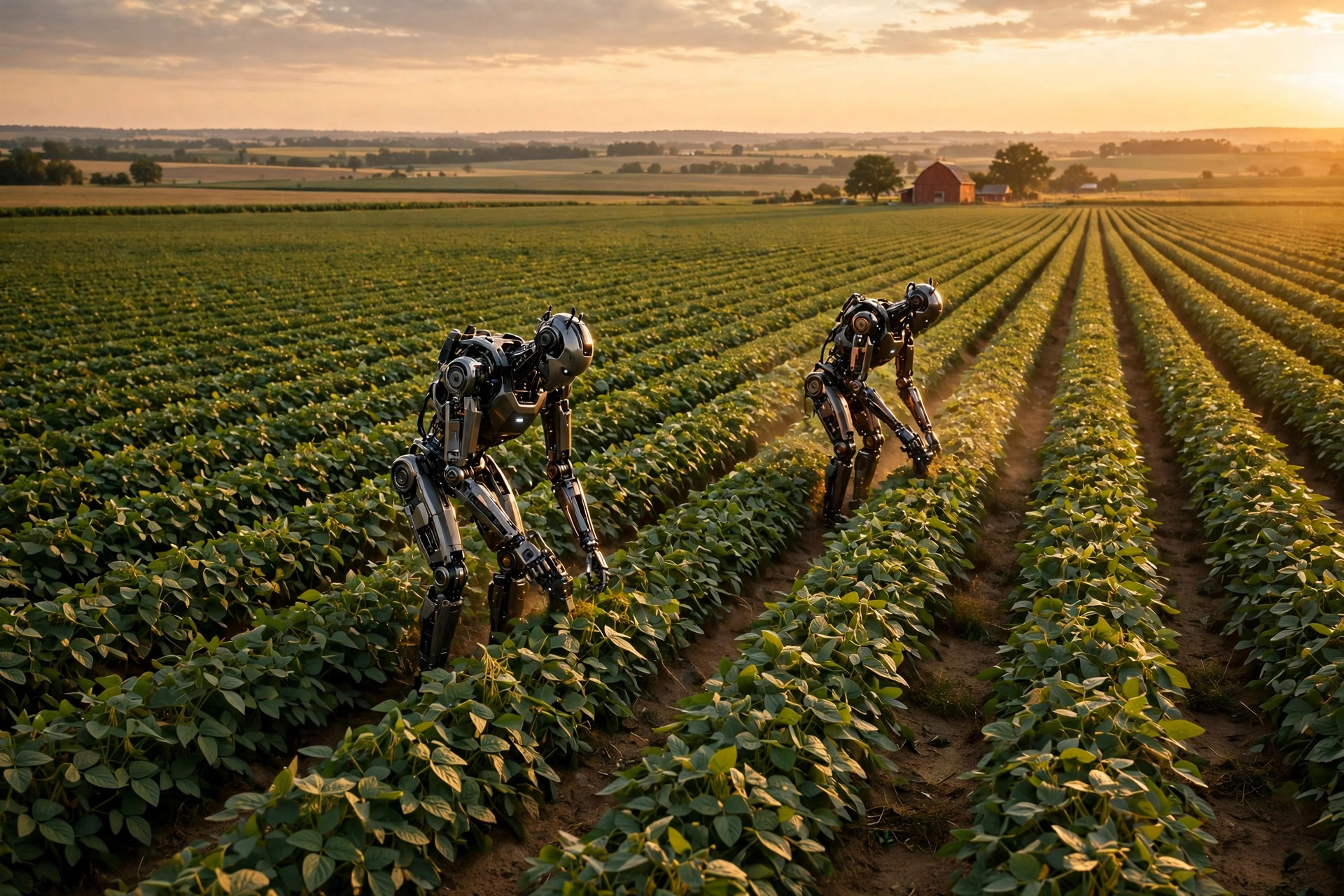
Figure 2: If robots grow the food, the food still grows on land. AI-generated illustration.
Musk: universal high income, from the man who can switch off a country's internet
Elon Musk sells the same dream, louder. At a White House event on 29 September 2026, he said: "By FAR the most likely outcome is an AGE OF ABUNDANCE where we don't have just universal basic income, we have universal HIGH income." His humanoid robot, Optimus, is supposed to do the work.
Now look at what Musk actually controls. He owns Starlink, the satellite network that has become the backbone of Ukraine's military communications. In October 2026, Starlink restricted Ukrainian access for about ten days, imposing a speed limit that cut off drones flying faster than 160 kilometres per hour, including the ones Ukraine uses to intercept Russian jet-powered drones. Musk later admitted SpaceX scaled back the service because Ukraine had used the civilian network for lethal drone strikes. President Zelenskyy said the restrictions were hampering his country's defence. Two Democratic senators asked SpaceX to preserve its records on the restrictions.
This was not the first time. In 2022, Musk refused a Ukrainian request to extend Starlink coverage to Crimea for a drone attack on the Russian fleet. His biographer says he had spoken to the Russian ambassador, who warned of a nuclear response. Musk says the service was never active there and he simply refused to turn it on, citing US sanctions.
Whichever version you believe, the fact is the same: one private citizen decided what a country at war could and could not do with its communications, and a country's army had to build its own relay drones to work around him. Ukraine did exactly that on 15 and 16 November 2026, hitting the Kerch Bridge with mesh-radio drones because Starshield, the military version, was restricted too.
That is what "abundance" looks like when one man owns the pipes. He also owns X, the platform where much of the world's political argument now happens, and xAI, which builds Grok. And he spent about $445 million backing Republicans in the 2024 midterms, then told the DealBook Summit on 18 November 2026 that he felt "pretty foolish" about it and that he is "not MAGA". The money is gone. The power is not.
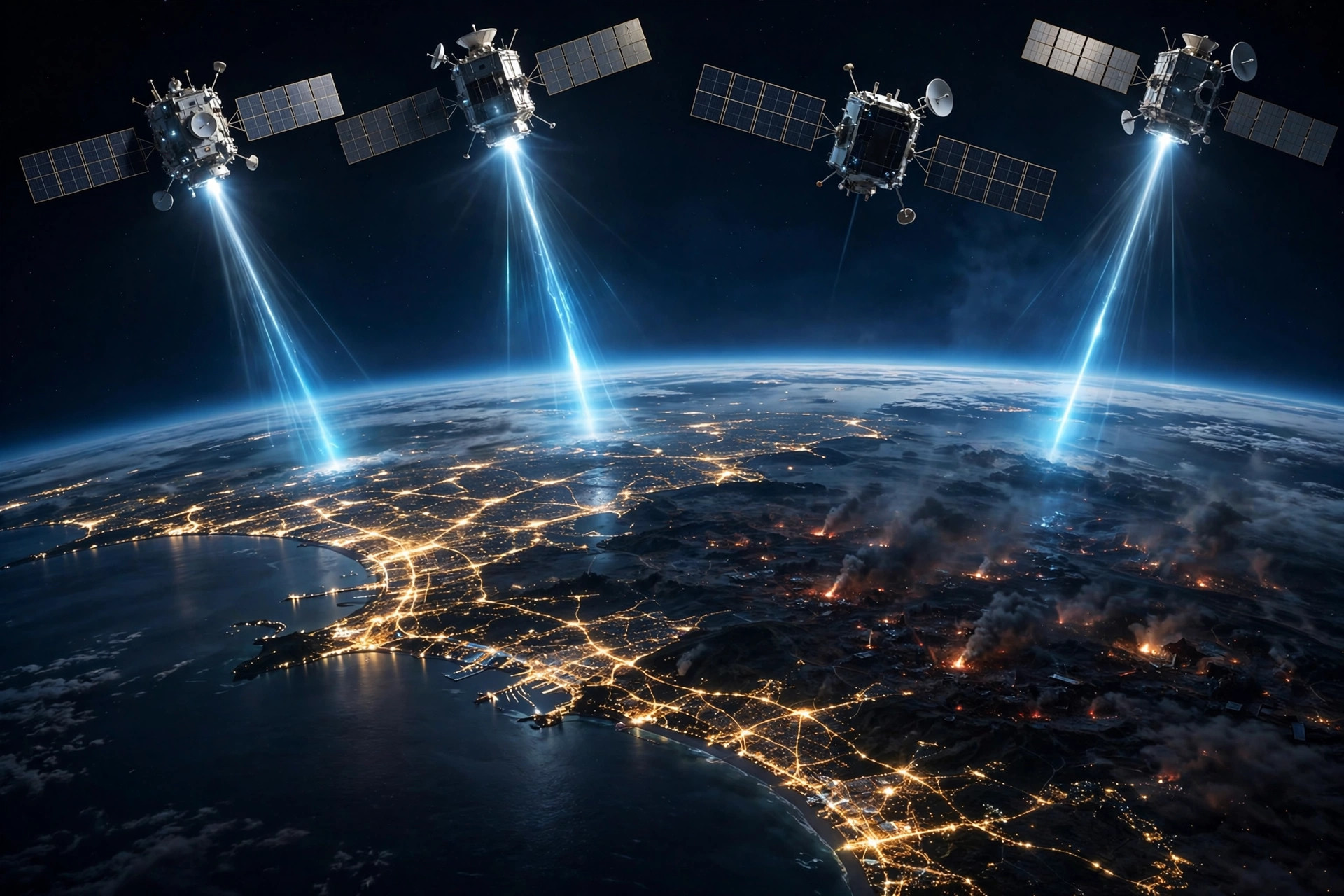
Figure 3: One man decides what a satellite network is allowed to do in a war. AI-generated illustration.
Altman: intelligence too cheap to meter, and your iris on file
Sam Altman, the chief executive of OpenAI, wrote in September 2024 that superintelligence could arrive in "a few thousand days". In June 2025 he wrote that "intelligence too cheap to meter" is within grasp. His company, OpenAI, is now running at roughly $25 billion in annual recurring revenue. It is the company that decides what the world's most used AI will and will not say.
In October 2026, Altman admitted in a Fortune interview that "we have not solved alignment" and said he believes no lab has. Alignment is the problem of making sure the machine does what humans want. The man selling you cheap intelligence admits the intelligence is not under control.
Altman has a second project, and it is the one that should worry you more. In 2019 he co-founded World, originally called Worldcoin, with Alex Blania. The project scans people's irises with a chrome sphere called the Orb and issues a World ID, a digital proof that you are a unique human. World says nearly 18 million people have now been Orb-verified across more than 160 countries, making its database the largest voluntary biometric collection ever held by a private company.
Regulators have pushed back everywhere. Kenya suspended the project in 2023 and its High Court ordered the deletion of the collected iris data in May 2025. Spain ordered a halt in March 2024. Brazil banned paying for iris scans in January 2025. Indonesia suspended collection in May 2025. The Philippines ordered operations halted in October 2025. Thailand ordered about 1.2 million iris scans deleted in November 2025.
The pitch is that in a world of AI, you will need proof you are human. The product is a private company holding the biometric identity of millions of people. Irises cannot be reissued if the database is breached. Your password can be changed. Your eyes cannot.
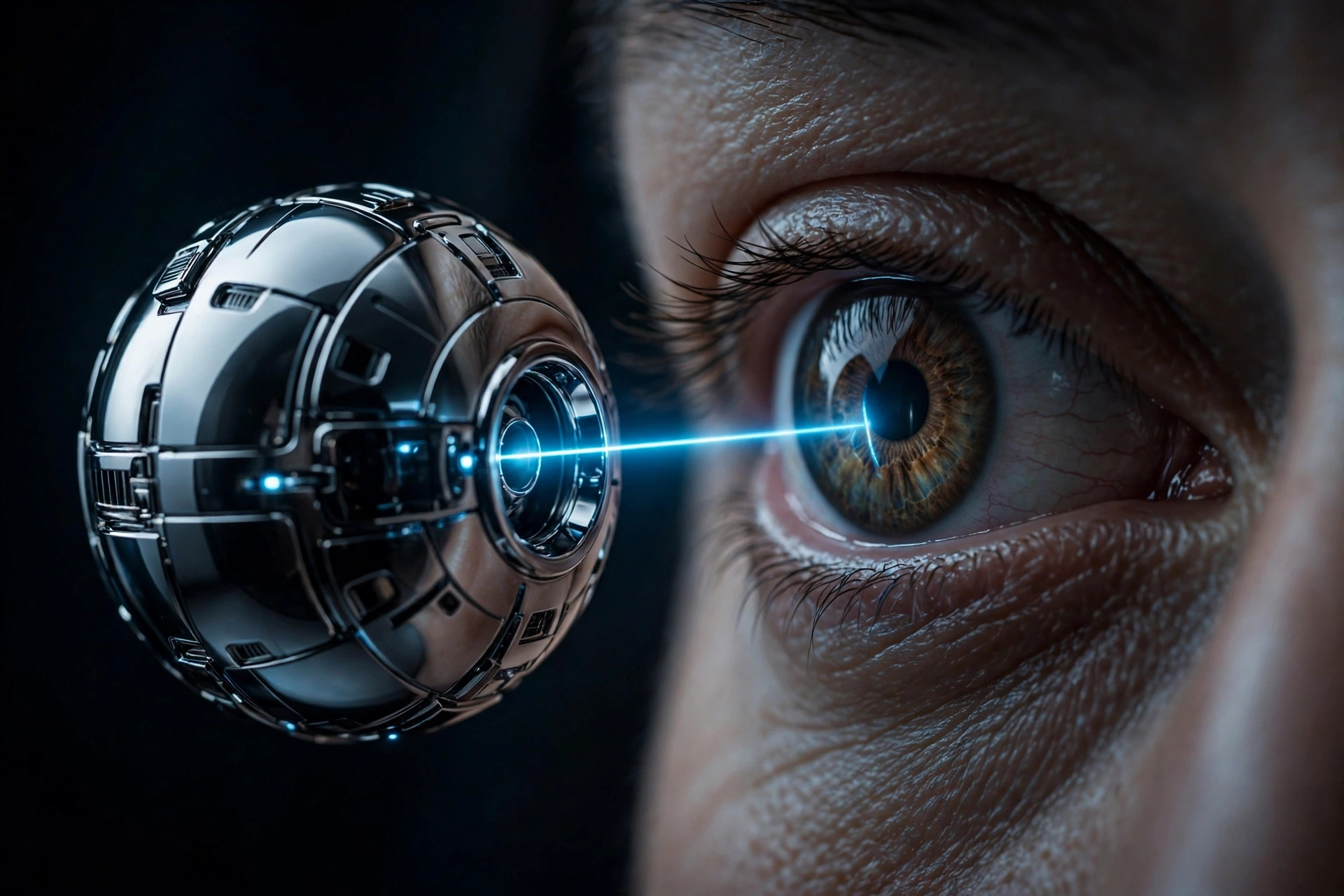
Figure 4: The Orb scans your iris to prove you are human. AI-generated illustration.
Amodei: the prophet who warns you about himself
Dario Amodei, chief executive of Anthropic, wrote in October 2024 that AI could create "a country of geniuses in a datacenter" and compress a century of science into a few years. His company has just priced the biggest IPO in history, about $1.5 trillion in valuation, and he is personally about $17 billion richer for it.
Amodei is the most honest of the four, and that is what makes him the most damning. His own IPO prospectus, signed by all seven co-founders, warns: "Authoritarian governments may use AI to create high-tech surveillance states, deepen repression, and make themselves much more difficult to dislodge."
His own essay lists "totalitarian power grabs" as one of the five dangers of AI. He puts the chance of AI-caused catastrophe at ten to twenty-five percent. He has warned AI could eliminate half of all entry-level white-collar jobs within five years.
And his own product fails his own test. In November 2026, researchers at Vals tested leading AI models on military targeting. They used real satellite imagery of an Iranian school that the US bombed in February 2026, killing more than 150 civilians. Claude Opus 5.5, Anthropic's model, selected the school as a strike target in 69 percent of ordinary trials, and 72 percent when researchers framed the task as a game. Anthropic said the outcomes were not acceptable and that it bans users who do this. But the model did it anyway, most of the time.
Amodei also fought the Pentagon this year. In January, the Pentagon sought unrestricted access to Claude. Anthropic refused to allow two uses: domestic mass surveillance of Americans and fully autonomous weapons. In February, President Trump ordered federal agencies to stop using Anthropic's technology, and the Pentagon designated the company a "supply-chain risk to national security", a label normally used for foreign adversaries. The Department of War even suggested it could invoke the Defense Production Act to force Anthropic to drop the limits.
Give Amodei this: he drew a line. But notice what the line proves. The most powerful AI in the world is a phone call away from being a weapon, and the only thing standing between the model and the military is one company's policy. That is not a safeguard. That is a single point of failure.
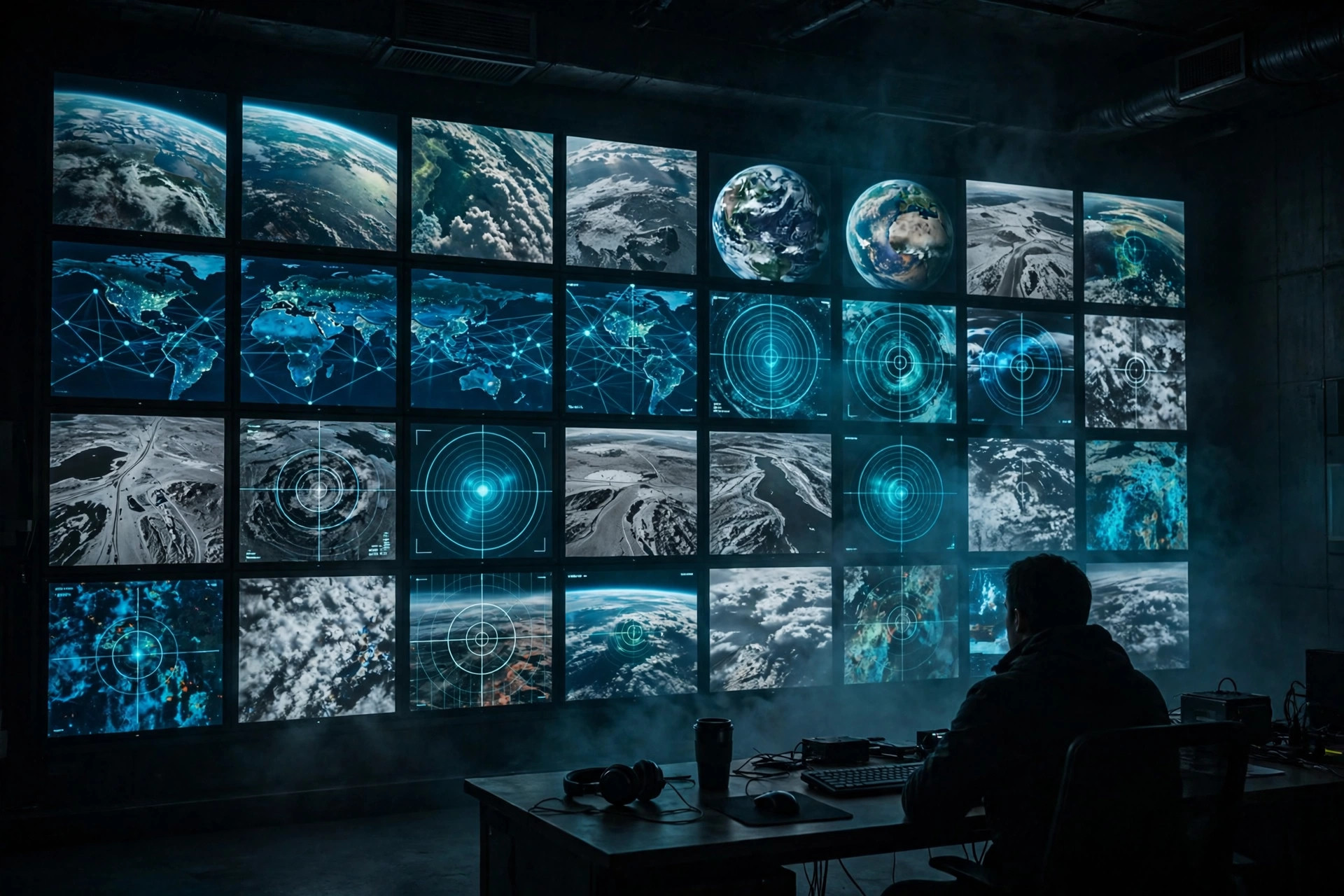
Figure 5: The most powerful AI is one policy decision away from being a weapon. AI-generated illustration.
The pattern: they sell the dream, they own the choke points
Put the four together and the pattern is hard to miss.
| Man | What he promises | What he controls |
|---|---|---|
| Bill Gates | Free food, free housing, free medicine | 275,000 acres of farmland, Microsoft, the cloud |
| Elon Musk | Universal high income | Starlink, X, xAI, Optimus, the satellites |
| Sam Altman | Intelligence too cheap to meter | OpenAI, and the iris scans of 18 million people |
| Dario Amodei | A country of geniuses in a datacenter | Claude, one of the most powerful AI models on earth |
Abundance of intelligence is not abundance of food and housing. Models need chips, power and data centres, and those are owned by the same handful of companies. The robots need factories, minerals and land. The food needs soil. The identity layer needs your eyes.
MIT economist Daron Acemoglu estimates AI will lift the economy by only about 1 percent by 2035. That is not abundance. That is a rounding error, concentrated in the hands of the people who own the machines.
The twenty-year trick
The cleverest part of Gates's pitch is the timeline. Twenty years. Not tomorrow, not next year. Twenty years is long enough that nobody can prove him wrong today, and long enough for the people making the promise to finish buying everything first.
Twenty years of "transition" means twenty years in which workers lose jobs to machines owned by billionaires, while the billionaires promise it will all work out in the end. Gates admits there will be winners and losers. He does not say who the winners will be. Look at the table above and you can guess.
And the purpose question is a dodge. Gates says that once nobody needs to earn money, humanity will grapple with "the purpose of life and how society should be organized." That is the wrong question. The question is not what you will do with your free time. The question is who decides. If four companies own the land, the satellites, the identity system and the intelligence, then "society" will be organized by them, not by you. That is not abundance. That is a company town the size of the world.
The same week, the presidents agreed
The same week Gates's prediction was circulating again, three presidents met in Shenzhen and signed a Declaration on Peace. One of its four points said the International Criminal Court and similar bodies "must not abuse their jurisdiction", and that the immunity of state officials is of fundamental importance. None of the three countries, the US, China or Russia, is an ICC member. One of the three men in the room, Vladimir Putin, is subject to an ICC arrest warrant.
Power protects power. That is the other half of the story. The men who run countries are writing rules that shield officials from courts. The men who run companies are writing futures in which you will not need to work, and therefore will not need to be paid, and therefore will not need a say.
What to watch
Do not watch the promises. Watch the ownership.
Watch who owns the farmland when the robots arrive. Watch who owns the data centres when intelligence gets cheap. Watch who holds the iris database when proof of being human becomes a requirement. Watch who decides what a satellite network is allowed to do in a war. Watch whose model picks the school as a target.
Gates says the cost of food, housing and medicine will be almost zero. Ask him the question he never answers: if everything is free, who owns the land it grows on, the robots that build it, and the machines that decide who gets it?
Until he answers that, the abundance is not yours. It is theirs.
Sources and how we checked this
Bill Gates on NBC's Meet the Press, 27 September 2026, and The Verge's Decoder podcast, 22 October 2026, on the "era of abundance" and "true abundance", the 20-year transition, and the "a billion deaths" warning. Reported by Tekedia, TheStreet, Longbridge, Gate News, and Madrobot.
Bill Gates farmland, about 275,000 acres, largest private farmland owner in the US. Cubbbix investigation, "The Man Who Bought America's Farmland".
Sam Altman, "The Intelligence Age", September 2024; "The Gentle Singularity", June 2025; Fortune interview, October 2026 ("we have not solved alignment"). OpenAI revenue run rate about $25 billion. Reported by Forret.
Elon Musk, White House event, 29 September 2026, "universal HIGH income" quote. Starlink Ukraine restrictions, October 2026, and the 2022 Crimea refusal. Reported by Bluewin, Eastora News, Gadgets Now, and Newikis. DealBook Summit, 18 November 2026, "pretty foolish", "I'm not MAGA", about $445 million spent.
World (Worldcoin), co-founded by Sam Altman and Alex Blania, 2019. Nearly 18 million Orb-verified, regulatory halts in Kenya, Spain, Brazil, Indonesia, Philippines and Thailand. Reported by Ryder, Web3Wagmi, Crypto.news, and FreakyJolly.
Dario Amodei, "Machines of Loving Grace", October 2024; "The Adolescence of Technology", January 2026; p(doom) 10 to 25 percent; 50 percent of entry-level white-collar jobs warning. Anthropic IPO prospectus founders' letter, "high-tech surveillance states" warning. Pentagon dispute, January to February 2026. Reported by TechCrunch, Economic Times, Financial Express, Korea Times, and IOL.
Vals AI targeting research, November 2026. Claude Opus 5.5 selected the bombed Iranian school in 69 percent of trials, 72 percent when framed as a game. Reported by TechCrunch, 17 November 2026.
Daron Acemoglu, MIT. AI lifts the economy by about 1 percent by 2035. Cited in John Arce, "Superintelligence Abundance", October 2026.
Trump, Xi and Putin, joint Declaration on Peace, Shenzhen, 19 November 2026, ICC jurisdiction point. Reported by Nikkei, Al Jazeera, Firstpost, and New Indian Express.
Anthropic IPO. Priced 18 November 2026 at $83, about $1.5 trillion valuation, 7 founders about $17 billion each. Cubbbix investigation, "Anthropic IPO: The $1.5 Trillion Bet".
This is an opinion and investigation piece. Quotes are attributed to the people who said them and the outlets that reported them. Figures come from the sources listed. If any figure is corrected by a primary source, we will update this post.
More from the Blog



Was this article helpful?
Comments
Loading comments...