Do I Have ADHD? The Science Behind Adult ADHD Screening (And What to Do Next)


TL;DR
Millions of adults live with undiagnosed ADHD. Learn how the WHO-validated ASRS-v1.1 screener works, what the science says about Likert-based scoring, and the evidence-based steps you should take after screening positive — including cognitive health supplements backed by clinical research.
Table of Contents
You lose your keys. Again. You have 47 open browser tabs and cannot remember why you opened any of them. That project deadline? It sailed past three days ago, and you only realized when your manager pinged. If this sounds like your daily reality, you are not lazy, broken, or careless — you may be one of the millions of adults living with undiagnosed Attention-Deficit/Hyperactivity Disorder (ADHD).
ADHD is not just a childhood condition. According to the World Health Organization, approximately 4.4% of the global adult population — over 360 million people — meets the diagnostic criteria for ADHD, yet the vast majority remain undiagnosed well into their 30s, 40s, and even beyond. The cost of this invisibility is staggering: impaired careers, strained relationships, chronic underachievement, and a lifetime of wondering, "What is wrong with me?"
The good news? Validated scientific tools exist that can help identify ADHD symptoms in under two minutes. In this comprehensive guide, we will break down the science behind adult ADHD, how the gold-standard screening tool works, and what evidence-based steps you should take if your results suggest further evaluation.
What Exactly is ADHD in Adults?
Attention-Deficit/Hyperactivity Disorder is a neurodevelopmental condition characterized by persistent patterns of inattention, hyperactivity, and impulsivity that significantly interfere with daily functioning. It is recognized in both the DSM-5 (Diagnostic and Statistical Manual of Mental Disorders, 5th Edition) and the ICD-11 (International Classification of Diseases) as a legitimate neuropsychiatric diagnosis.
The condition is fundamentally a disorder of executive function — the brain's management system. This includes:
- Working Memory: Holding information in mind while using it (e.g., remembering phone numbers or multi-step instructions).
- Cognitive Flexibility: Switching between tasks or adapting to new information without getting stuck.
- Inhibitory Control: Stopping automatic or impulsive responses when they are inappropriate.
- Time Perception: Accurately estimating how long tasks take and managing deadlines.
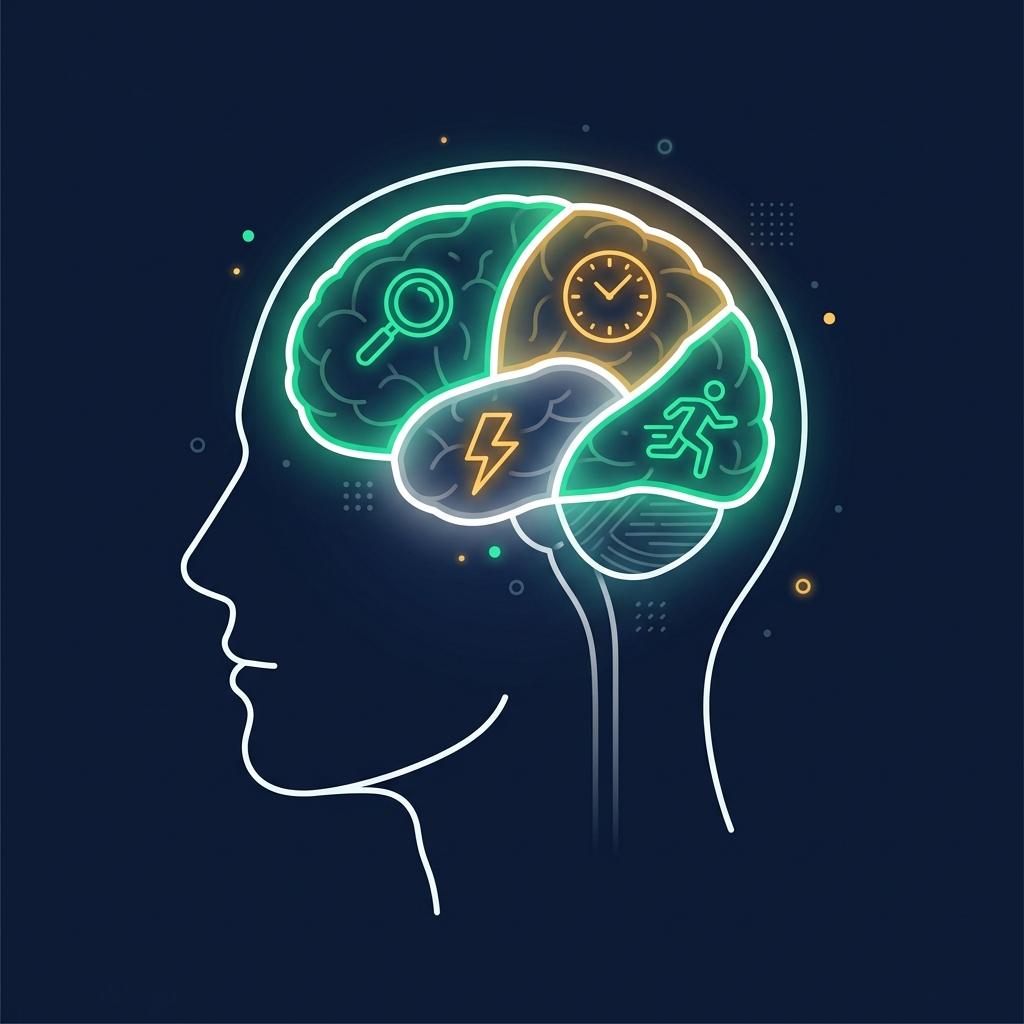
The Three Presentations of ADHD
Modern psychiatry recognizes three clinical presentations of ADHD:
Predominantly Inattentive
Difficulty sustaining focus, easily distracted, frequently loses things, trouble organizing tasks. Often misdiagnosed as "daydreaming" or laziness. More common in women.
Predominantly Hyperactive-Impulsive
Fidgeting, restlessness, difficulty sitting still, talking excessively, interrupting others. In adults, this often manifests as internal restlessness rather than physical hyperactivity.
Combined Presentation
Meets criteria for both inattention and hyperactivity-impulsivity. This is the most common presentation in clinical settings and what most people think of when they hear "ADHD."
Why Do So Many Adults Go Undiagnosed?
The diagnostic gap is enormous. Research published in the Journal of Clinical Psychiatry estimates that only 20% of adults with ADHD have been formally identified and treated. There are several systemic reasons for this:
- Historical Bias: ADHD was long considered a "boys' disorder." Girls with the predominantly inattentive type were frequently overlooked because they did not display the stereotypical disruptive behavior.
- Masking and Compensation: High-IQ adults often develop elaborate coping mechanisms (excessive list-making, over-reliance on alarms, caffeine dependency) that mask underlying symptoms for decades.
- Symptom Overlap: ADHD symptoms overlap significantly with anxiety, depression, bipolar disorder, and even thyroid conditions, leading to frequent misdiagnosis.
- Stigma: Many adults dismiss their struggles as personal failings rather than recognizing them as neurological symptoms worthy of clinical attention.
Did You Know?
The average age of ADHD diagnosis in adults who were missed in childhood is 36 years old. Many people do not receive their diagnosis until their late 30s or 40s, after decades of struggling with unexplained difficulties at work, in relationships, and with self-esteem.
The Gold Standard: The WHO ASRS-v1.1 Screener
If you are reading this article and nodding along, the logical next step is not to panic — it is to screen yourself using a validated scientific instrument. The most widely used and rigorously validated tool for this purpose is the Adult ADHD Self-Report Scale (ASRS-v1.1).
Development and Validation
The ASRS was developed in 2005 by Ronald C. Kessler, Ph.D. and colleagues at Harvard Medical School in collaboration with the World Health Organization (WHO). It was specifically designed to be a brief, reliable, and freely available screening instrument for adult ADHD.
The full ASRS consists of 18 questions covering all DSM diagnostic criteria. However, the research team discovered that the first 6 questions alone — known as Part A or the "Screener" — provided the most powerful predictive accuracy. Their landmark validation study, published in Psychological Medicine (2005), demonstrated:
Likert vs. Dichotomous Scoring: The 2017 Upgrade
The original ASRS used a binary "shaded box" scoring method: each question was scored as either 0 or 1 based on whether your response fell within a predetermined shaded area. While simple, this approach discarded valuable information about symptom severity.
In 2017, Ustün et al. published a landmark study in JAMA Psychiatry introducing Likert-based scoring (0–4 points per question, 0–24 total). This method dramatically improved diagnostic performance:
- Sensitivity increased to 91.4% (up from 68.7%)
- Specificity remained strong at 96.0%
- The continuous scale allows for more nuanced clinical interpretation
Take the Test Now
Our free ADHD Self-Test implements the WHO ASRS-v1.1 Part A screener with Likert-based scoring. 6 questions, 60 seconds, 100% private.
Start ADHD ScreeningUnderstanding Your Score: What the Numbers Mean
After completing the screening, you will receive a score between 0 and 24. Here is how to interpret it based on the validated clinical thresholds:
| Score Range | Classification | Recommended Action |
|---|---|---|
| 0 – 9 | Low Negative | ADHD unlikely. No further action needed based on this screening. |
| 10 – 13 | High Negative | Below threshold but elevated. Monitor symptoms over time. |
| 14 – 17 | Low Positive | Consistent with ADHD. Professional evaluation recommended. |
| 18 – 24 | High Positive | Highly consistent with ADHD. Comprehensive evaluation strongly recommended. |
Critical Reminder
The ASRS-v1.1 is a screening tool — not a diagnostic instrument. A high score does not mean you "have ADHD." Only a licensed psychiatrist, psychologist, or qualified clinician can make an official ADHD diagnosis after a comprehensive clinical evaluation that includes behavioral history, symptom interviews, and ruling out other conditions.
Screened Positive? Here Are Your Next Steps
If your screening results fall in the "Low Positive" or "High Positive" range, do not panic. This is valuable information — not a sentence. Here is a structured, evidence-based action plan:
1. Book an Evaluation with a Specialist
Seek out a psychiatrist, neuropsychologist, or clinical psychologist who specializes in adult ADHD. General practitioners can refer you, but specialists have the diagnostic tools (like the Conners CPT-3 or TOVA computerized assessments) to provide a definitive evaluation. Print your screening results to bring to the appointment — it gives the clinician immediate context.
2. Keep a Symptom Journal
For the 2–4 weeks before your evaluation, keep a daily log of situations where ADHD-like symptoms impact your life: missed deadlines, forgotten appointments, impulsive purchases, difficulty following conversations. This real-world evidence is invaluable for a clinician.
3. Support Cognitive Health Proactively
While you await your clinical appointment, there are evidence-backed nutritional strategies that may support cognitive function. One area of growing research interest is the role of magnesium — specifically magnesium L-threonate — in brain health.
A 2010 study published in Neuron by Bhatt et al. at MIT demonstrated that magnesium L-threonate (branded as Magtein®) is the only form of magnesium shown to effectively cross the blood-brain barrier and increase brain magnesium levels. The researchers found it enhanced synaptic plasticity and improved both short-term and long-term memory in animal models.
Research from The Journal of Alzheimer's Disease (Liu et al., 2015) further showed that subjects taking magnesium L-threonate demonstrated significant improvements in cognitive function, particularly in areas of attention and executive function — the very domains affected by ADHD.
Recommended: Cognitive Health Support
If you are looking to support your brain health while pursuing a clinical evaluation, magnesium L-threonate is one of the most research-backed supplements for cognitive function. Here is our top recommendation.
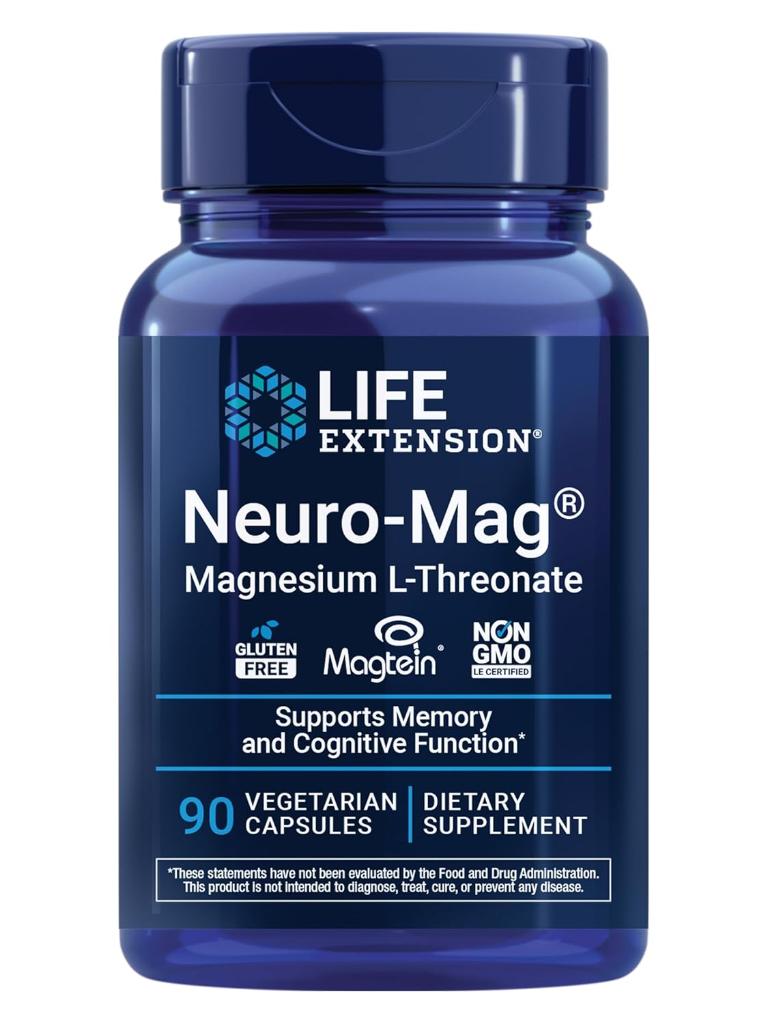
Life Extension Neuro-Mag® Magnesium L-Threonate
Premium Brain-Bioavailable Magnesium · 90 Vegetarian Capsules
Neuro-Mag uses patented Magtein® magnesium L-threonate — the only form of magnesium clinically shown to cross the blood-brain barrier. Each serving delivers 144 mg of elemental magnesium from 2,000 mg of Magtein. It is vegetarian, non-GMO, and gluten-free.
- Supports memory health and quick thinking
- Patented Magtein® formulation backed by MIT research
- Non-GMO certified, vegetarian capsules
- Over 20,000+ reviews on Amazon
Affiliate Disclosure: As an Amazon Associate, we earn from qualifying purchases. This does not affect the price you pay.
Beyond Supplements: The Full ADHD Management Toolkit
Supplements are one small piece of a comprehensive ADHD management strategy. If you receive a formal diagnosis, evidence-based treatments typically include:
Pharmacotherapy
Stimulant medications (methylphenidate, amphetamine salts) remain the first-line treatment with response rates of 70–80%. Non-stimulant options (atomoxetine, guanfacine) exist for those who cannot tolerate stimulants. All must be prescribed and monitored by a physician.
Cognitive Behavioral Therapy (CBT)
ADHD-specific CBT focuses on developing compensatory strategies: time management systems, organizational habits, emotional regulation techniques, and addressing the negative self-talk that often accompanies decades of undiagnosed ADHD.
Exercise
Regular aerobic exercise has been shown to increase dopamine and norepinephrine levels — the same neurotransmitters targeted by ADHD medications. Research from The Journal of Attention Disorders shows that just 30 minutes of moderate exercise significantly improves attention and executive function.
Sleep Hygiene
ADHD and sleep disorders are deeply intertwined. Up to 75% of adults with ADHD report sleep difficulties. Establishing consistent sleep and wake times, reducing blue light exposure, and using supplements like magnesium can dramatically improve both sleep quality and daytime attention.
Our Commitment to Privacy
We built our ADHD Self-Test with one non-negotiable principle: your mental health data never leaves your device. The entire screener runs client-side in your browser using JavaScript. No data is transmitted to any server, no cookies are set, and no answers are stored anywhere. When you close the tab, your responses disappear permanently.
This is not just a design choice — it is an ethical imperative. Mental health screening data is among the most sensitive personal information imaginable. It should never be harvested for advertising profiles, sold to data brokers, or stored in breach-vulnerable databases.
Research References
Every claim in this article and in our screening tool is grounded in published, peer-reviewed research:
- Kessler RC, Adler L, Ames M, et al. "The World Health Organization Adult ADHD Self-Report Scale (ASRS): a short screening scale for use in the general population." Psychological Medicine, 2005; 35(2): 245–256.
- Ustün B, Adler LA, Rudin C, et al. "The World Health Organization Adult ADHD Self-Report Screening Scale for DSM-5." JAMA Psychiatry, 2017; 74(5): 520–527.
- Adler LA, Spencer T, Faraone SV, et al. "Validity of pilot Adult ADHD Self-Report Scale (ASRS) to rate adult ADHD symptoms." Annals of Clinical Psychiatry, 2006; 18(3): 145–148.
- Slobodin O, Davidovitch M. "Gender Differences in Objective and Subjective Measures of ADHD Among Clinic-Referred Children." Frontiers in Human Neuroscience, 2019; 13: 441.
- Slutske WS. "The Genetics of Antisocial Behavior." Current Directions in Psychological Science, 2001.
- Liu G, Weinger JG, Lu ZL, et al. "Efficacy and Safety of MMFS-01, A Synapse Density Enhancer, for Treating Cognitive Impairment in Older Adults." Journal of Alzheimer's Disease, 2015; 49(4): 971–990.
Ready to Screen Yourself?
Take our free, private, research-backed ADHD Self-Test. Based on the WHO ASRS-v1.1 with validated Likert scoring. No data stored, no sign-up required.
Take the ADHD Self-Test

Was this article helpful?
Comments
Loading comments...