Image Search Techniques: The Definitive Guide to Finding Any Image Online (2026)


TL;DR
Master the 5 core image search techniques — from keyword-based and reverse image search to visual similarity, color-based, and facial recognition. Discover the best tools like Google Images, LensGo AI, TinEye, and more.
Table of Contents
In the last decade, the value of visual content has grown exponentially. Images dominate the internet as one of the strongest tools of communication. From social media feeds to digital shopping, visuals enable users to gain knowledge, interact effectively, and make decisions quickly. In the fast-moving world of the internet, having the ability to find images quickly has become a main priority. This is exactly why image search techniques are so vital.
Instead of depending solely on text, users can search through images directly. Whether you are a marketer, a student, or a photographer, being familiar with image search techniques can enhance accuracy, save time, and improve decision-making.
In this detailed guide, let us understand what image search techniques are, how they operate behind the scenes, the effective tools available today, and how you can successfully utilize such techniques in real-world use cases.
Try Our Reverse Image Search App
Download the Cubbbix Reverse Image Finder on Google Play — search by image, find duplicates, and verify authenticity on the go.
Get it on Google PlayUnderstanding Image Search
Image search is a method that provides users with the ability to obtain pictures associated with an item, a certain area, or a visual feel. Users do not only input keywords — they can also upload a photo and get images that are closely related. The engine assesses the provided image and returns similar or exact matches.
It becomes useful when there is confusion regarding images. For example, you may use image search to locate the original creator of a photo, identify an image online, or confirm whether an image has been edited. Digital marketing, journalism, UGC content creation, and eCommerce are fields where this method is significant because visual context and authenticity are crucial.
Image search has evolved dramatically from basic keyword matching. It now involves machine learning methods to recognize context, composition, and image semantics. The process of searching images has been made not only quicker but significantly smarter.
How Image Search Operates?
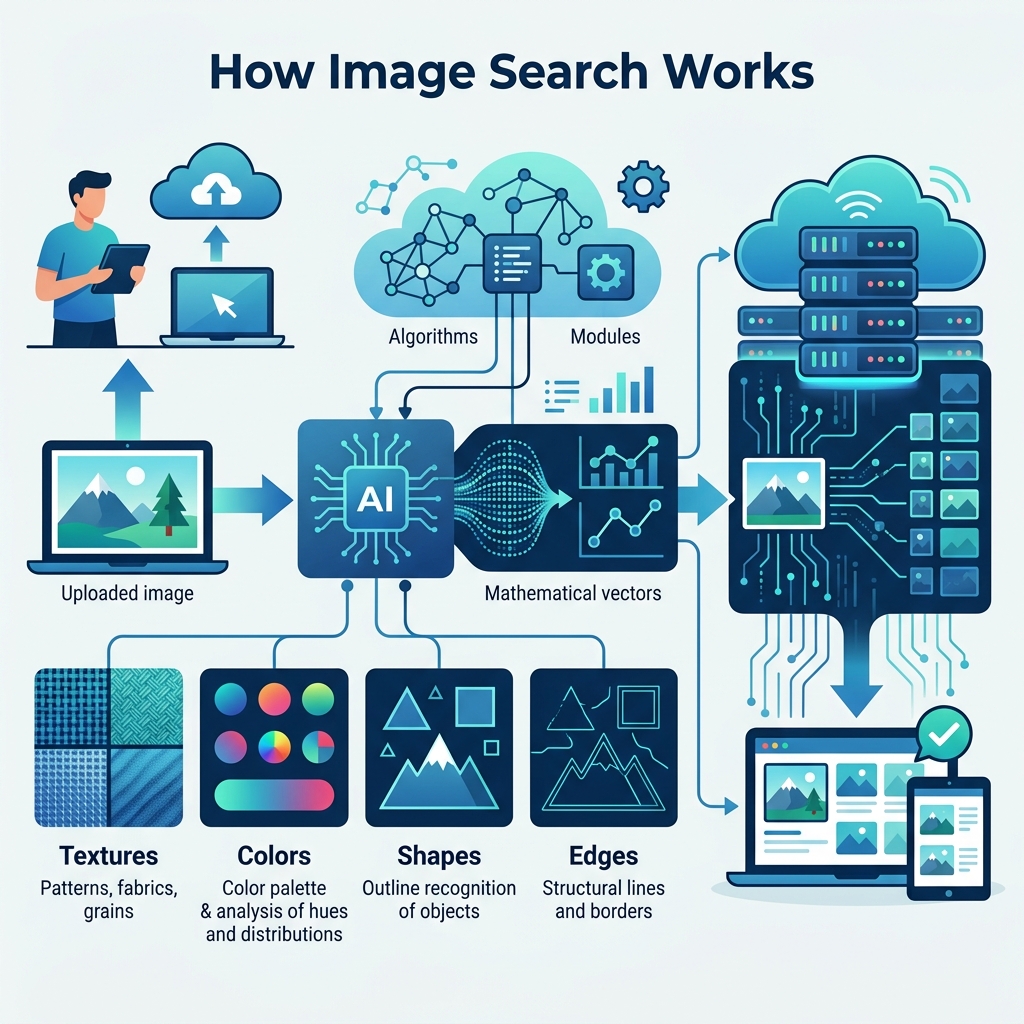
AI complexities, computer vision, and machine learning play an important role in image search techniques. Once a keyword or image is provided by the user, the system begins to break the image into small elements.
These elements can be textures, colors, shapes, or edges — the fundamental building blocks of a digital image.
Such features in the query image are then matched by an algorithm with elements of the same sort, forming a collection of billions of images that are stored and indexed. The system actively searches for patterns, matches, and correlations to return the most relevant results.
In keyword-based search, the system utilizes metadata like tags, image titles, and text associated with the image. In visual searches, deep learning and pixel-level analysis are the methods used to determine what is in the image.
Example: If an image of a red handbag is submitted, the system accurately determines the shape, color, and design pattern. It then locates similar handbags from other websites or online shops. Similarly, if you upload a picture of a landmark, the algorithm identifies the location and provides travel details.
What Are the Different Types of Image Search Techniques?
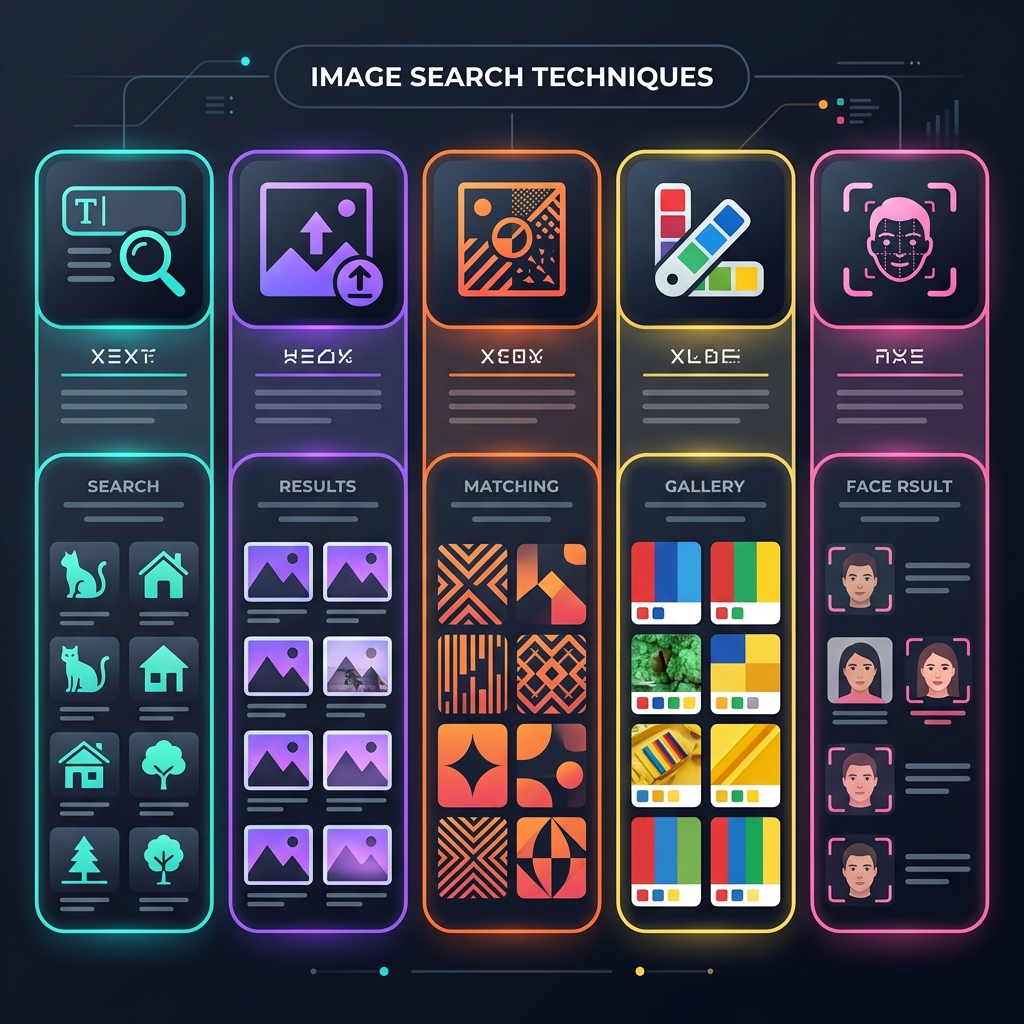
1. Keyword-based Search of Images
This is the most accessible and simplest method. Users input descriptive words in a search engine, and the system returns images related to the input. The method relies heavily on metadata — captions, titles, and alt text.
Keyword-based searches are perfect for getting general pictures such as business icons, natural scenes, or promotional images. For instance, typing "sunset over mountains" produces a large volume of matching results. This method is most suitable for daily use when you can generate clear text regarding what you want.
2. Reverse Image Search
In reverse image search, users upload an image instead of providing a text query. The search engine recognizes images that either match or are very similar to the input, wherever they appear on the web. This method is mainly used to confirm authenticity, identify plagiarism, or find the source of an image.
If a photo has been copied or utilized unethically, reverse searching showcases all other locations where it can be discovered online. It can also aid in recognizing manipulated visuals or fake news.
3. Visual Similarity Search
The key difference: reverse search locates exact matches, while visual similarity search finds aesthetically similar images. It locates pictures with the same texture, layout, or pattern. This method is ideal for fashion, interior design, and eCommerce where visual appeal drives decisions.
If you like a piece of furniture or a clothing item, visual similarity search helps you find alternatives with the same color or pattern. It closes the gap between discovery and inspiration.
4. Pattern and Color-based Search
This method focuses on patterns and color palettes. Advertisers, designers, and brand managers who maintain top standards are the most common users. If you are leading a brand campaign implementing specific colors, this method is invaluable for locating images that align with your palette.
Design platforms and search engines generally come with color filters that help match gradients and tones. They are also useful in creative industries where visual coherence plays a key role.
5. Facial and Object Recognition Search
Facial and object recognition have greatly contributed to image search accuracy. Such systems can recognize logos, faces, objects, and even handwriting in pictures. Media houses, law enforcement agencies, and social media platforms are the main beneficiaries. Some publicly available facial search websites include lenso.ai or eyematch.ai.
For example, facial recognition validates whether individuals in different photos are the same person. Object detection identifies animals, vehicles, or household items. These searches have become more detailed and dynamic than ever before.
When Can You Use Each of These Search Techniques?
| Technique | Best For |
|---|---|
| Keyword-based Search | General overview or when you require concept visuals |
| Reverse Image Search | Finding copies, locating the image source, or verifying authenticity |
| Visual Similarity Search | Design tasks where aesthetics and style are the key requirements |
| Pattern & Color-based | Ensuring visual consistency or retaining brand identity |
| Facial & Object Recognition | Law enforcement, identification, or media analysis |
Users can achieve greater accuracy by combining these methods. For instance, a marketer can use a keyword search for ideas, then apply reverse search to find the source before using the image. Understanding each method's strength leads to time saving and better outcomes.
Best 6 Tools for Image Search
1. Google Images — The Simplest Tool for Reverse and Keyword Search
Google Images remains one of the main platforms for reverse image and keyword-based searches. The smart algorithms and large databases of Google deliver accurate results in the majority of cases. Any user can copy and paste a link, upload an image, or type words in the search bar. The visual recognition system finds the closest match and can even give suggestions. Reliable and quick, it provides top solutions for both professional and personal purposes.
2. LensGo AI — The Best Option for AI-driven Reverse Image Search and Face Search
You will not find a better solution than LensGo AI for reverse image search. Unlike Google, it gives you a ranked list of the best possible matches. It enables you to find where your images appear online, find potentially stolen content, and check whether a person is fraudulent. LensGo AI also detects how many duplicates of a specific image exist.
The alert feature notifies you whenever an uploaded image matches yours online. With sorting and filtering options, you can fine-tune and narrow your search even further.
3. TinEye — The Right Option for Image Origins and Duplicates
TinEye is a useful reverse image search tool that is effective in finding duplicates, even if images have been morphed. Photographers, journalists, and brands are its main users who want to be notified when their visuals are utilized without permission. TinEye has a vast image database and can return pictures that have been resized or edited. It is useful for confirming image authenticity and addressing copyright issues.
4. Bing Visual Search — Right for Object Identification and Shopping
Bing Visual Search makes searching enjoyable. Users may highlight a specific element of a picture, and the system locates similar objects or images. This feature is used by online shoppers searching for matching or related items. Bing's image search is integrated with Microsoft Edge, providing a quick and useful way to perform visual lookups without changing tabs.
5. Pinterest — Ideal for Fashion, Lifestyle, and Decor Ideas
Pinterest is a main tool for artists and serves as the primary visual inspiration source. It allows users to take a picture, upload it, and find similar pictures across the platform. Whether you need fashion, home decor, or recipe ideas, Pinterest Lens always provides trendy and relevant results. Lifestyle enthusiasts and content creators find this tool invaluable for converting routine images into new sources of inspiration.
6. Yandex Images — Good Option in Reverse Image Recognition
Yandex is a Russian-based search engine with strong image recognition capabilities. It is very effective in locating the closest matches of objects, faces, and landmarks. Numerous users utilize Yandex for confirming results obtained from Bing or Google, as Yandex finds details that others sometimes miss. Its advanced recognition algorithms make it a feasible alternative for exhaustive searches.
Bonus: Shutterstock — Right Option for Image Tracking and Copyright Protection
Shutterstock is not just a stock photo platform. It provides a robust reverse search feature for registered users, enabling creators to secure their original work. For photographers and companies, Shutterstock supports monitoring the how and where of online licensed visuals — facilitating the responsible utilization of images.
Search Images On the Go
Our Reverse Image Finder app lets you search by image, find duplicates, and verify authenticity — right from your Android device.
Download on Google PlayRight Practices for Effective Image Searching
- Use High-Resolution ImagesTop-resolution images must be utilized since cropped or low-quality visuals can make results inaccurate. For businesses, especially in eCommerce, using the right tools like a reliable product photography app helps create consistent, high-quality visuals that improve discoverability and conversion rates.
- Use Specific, Descriptive KeywordsInstead of using generic keywords like "shoes," try "black leather running shoes" for far more accurate results.
- Try Multiple Search PlatformsWhile Google is great for general tasks, TinEye is ideal for finding image copies, and Pinterest is recommended for creative discovery. Using diverse tools leads to more comprehensive outcomes.
- Leverage Filter OptionsMost search engines let you arrange results by color, size, publication rights, or usage rights. This ensures you focus on images that are legally available and relevant.
- Search EthicallyAdhere to copyrights and utilize images only within the restrictions of licensing agreements. This protects you from legal issues and supports content creators.
Common Mistakes to Avoid
Watch Out For These Pitfalls
- Using edited or low-quality images: This confuses search engines. Resizing or cropping modifies image features, minimizing match possibilities.
- Over-reliance on one search engine: Each tool uses distinct indexing. Using more than one tool yields better results.
- Ignoring search filters: Not using filters negatively impacts result quality.
- Not checking image rights: Always verify rights before sharing or downloading images.
- Keyword stuffing: Too many non-related terms create chaotic output. Keep queries simple and straightforward.
What Are the Practical Applications of Image Search?
Online Shopping & eCommerce
Find products, compare prices, and discover alternatives by simply uploading a product photo.
Media Verification & Journalism
Verify the authenticity of images circulating in news and social media to combat misinformation.
Marketing & Graphic Design
Find inspiration, check brand consistency, and locate high-quality assets for campaigns.
Academic Research & Education
Locate source materials, verify visual data, and find reference images for academic work.
Security & Law Enforcement
Facial recognition and object detection assist in investigations and public safety.
Brand Tracking & Protection
Monitor unauthorized usage of brand assets, logos, and proprietary imagery across the web.
Future of Image Search Techniques

The future of image search depends on AI-based multimodal capabilities where users can integrate voice, images, and text for highly precise results. Augmented reality tools will allow visual searches in real-time by directing a camera at any object. Emerging technologies such as on-device processing will advance privacy, while context recognition and emotion analysis will ensure results become smarter.
Video frame indexing will go beyond static images. As these technologies mature, image search will evolve into a smoother and more innovative bridge between the digital and physical worlds, helping users across various industries.
Conclusion
Image search techniques have transformed how we interact with visual content online. From keyword-based searches for casual browsing to sophisticated facial recognition, each method serves specific applications across diverse industries. Platforms like LensGo AI, Google Images, and TinEye ensure effective and accessible solutions for verifying, finding, and securing visual content.
Success hinges on selecting the right technique for your task and utilizing high-quality images with accurate search terms. As technology advances, these methods will evolve consistently, making visual searches faster, smarter, and more accurate for both professional and personal use cases.
Take Image Search Mobile
Our Cubbbix Reverse Image Finder app brings the power of AI-driven reverse image search to your Android device. Search by image, detect duplicates, and verify authenticity — all for free.
Get the App on Google PlayFAQs About Image Search Techniques
Q. What is reverse image search?
Reverse image search enables users to upload an image instead of providing text to find precise or similar matches across the web. It helps in verifying authenticity, recognizing plagiarism, or locating the original source of an image.
Q. Which tool is best for finding stolen or duplicated images?
LensGo AI and TinEye are the best choices for detecting duplicates or stolen content. LensGo AI provides notification features while TinEye effectively finds modified versions of images.
Q. How does visual similarity search differ from reverse image search?
While reverse search looks for exact matches, visual similarity search finds images that look aesthetically similar with comparable layouts, textures, or patterns — making it ideal for design and fashion applications.
Q. What are the different types of image search techniques?
The core types include keyword-based search, reverse image search, visual similarity search, color and pattern-based search, and facial and object recognition search.
Q. When should I use keyword-based image search?
Use keyword-based search when you require concept images or visuals and can describe what you want using descriptive text. It is ideal for general browsing and gathering visual ideas.



Was this article helpful?
Comments
Loading comments...