Batch watermark photos the right way: size by percentage, not by pixels

TL;DR
Stamp text or a logo across many photos at once, with position, size, opacity and margin controls that scale with each photo. Download singly or as a ZIP.
Table of Contents
Watermark many photos in 30 seconds
Open Cubbbix Batch Watermark.
A fixed 48 pixel watermark is huge on an 800 pixel phone shot and invisible on a 6000 pixel camera photo. The fix is one division, applied per photo: size by percentage of width, not by pixels. At 8% of width, the text is 64 pixels tall on an 800 pixel photo and 480 pixels tall on a 6000 pixel photo, the same relative size in both. The margin scales the same way: 3% of width is 24 pixels on the small photo and 180 on the large one, so the mark sits the same distance from the edge in relative terms. The free Cubbbix Batch Watermark stamps many photos at once on exactly that rule, with position, opacity and margin controls, and downloads each photo or all of them as a ZIP.
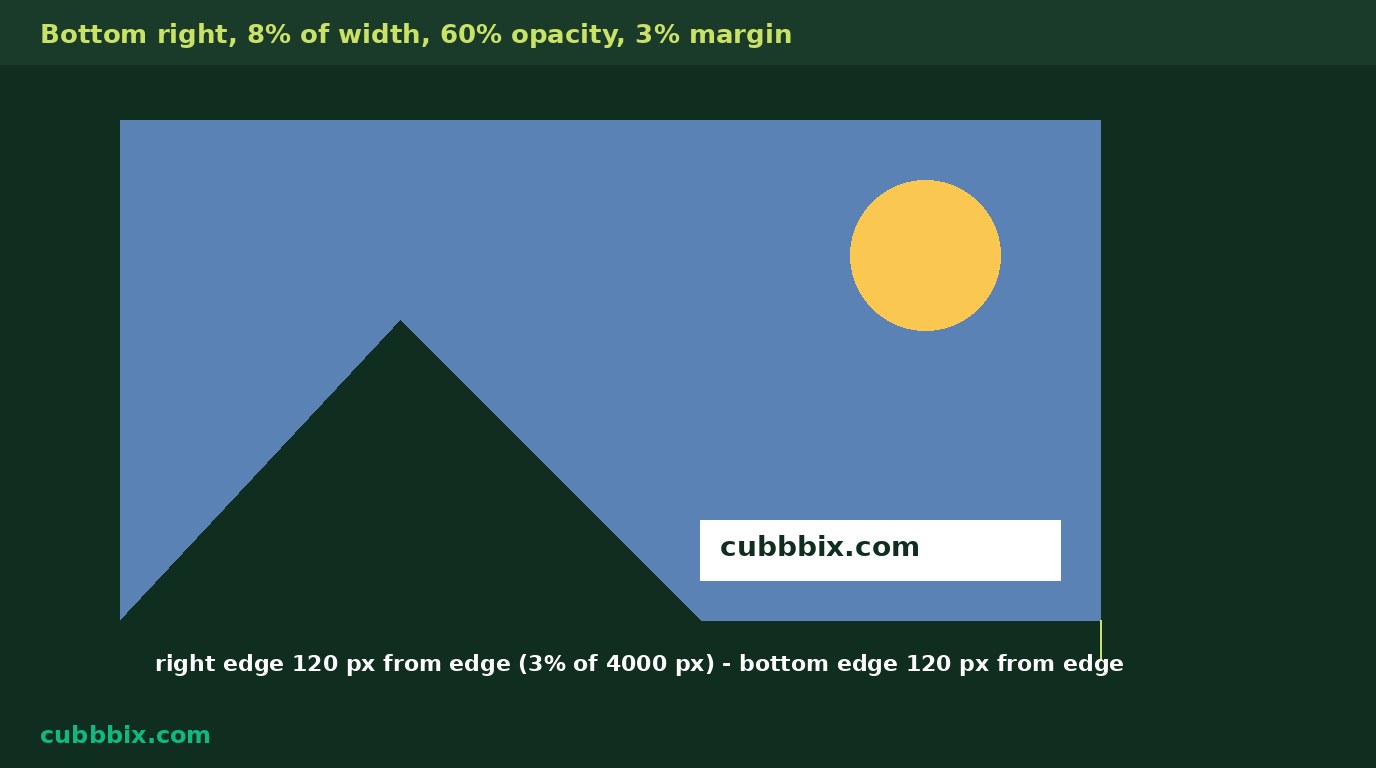
Position is a nine-point grid, and the maths for each point is the same: start from the corner or centre anchor, add the margin, and subtract the mark's own width or height where the anchor is a right or bottom edge. Bottom right on a 4000 by 3000 photo with an 8% mark, 320 pixels tall and roughly 1500 wide for a short brand name, and a 3% margin of 120 pixels, puts the mark's right edge at 3880 and its bottom edge at 2880. Centre ignores the margin, because a centred mark with a margin is not centred. Opacity is a blend: 60% means the mark's pixels are 60% mark and 40% photo underneath.
Figure 1: Bottom right, 8% of width, 60% opacity, 3% margin. On a 4000 pixel wide photo the mark is 320 pixels tall and its right edge sits 120 pixels from the edge.
Why the defaults are 8%, bottom right, 60%
Below 30% opacity the mark fades into busy photos, and at 100% it covers whatever sits under it. 60% is visible in a feed without hiding the subject. Bottom right is the default because most photos have their subject left of centre or centred, and a bottom corner is the least likely spot to cover a face, but it is only a default: check one photo first, at phone size, not only on a large screen, because a mark that reads on a monitor can vanish on a phone. If a logo image is loaded, it replaces the text, because stamping both doubles the clutter and halves the readability of each. Use a PNG with a clear background for logos, or the logo's background box will show on the photo.
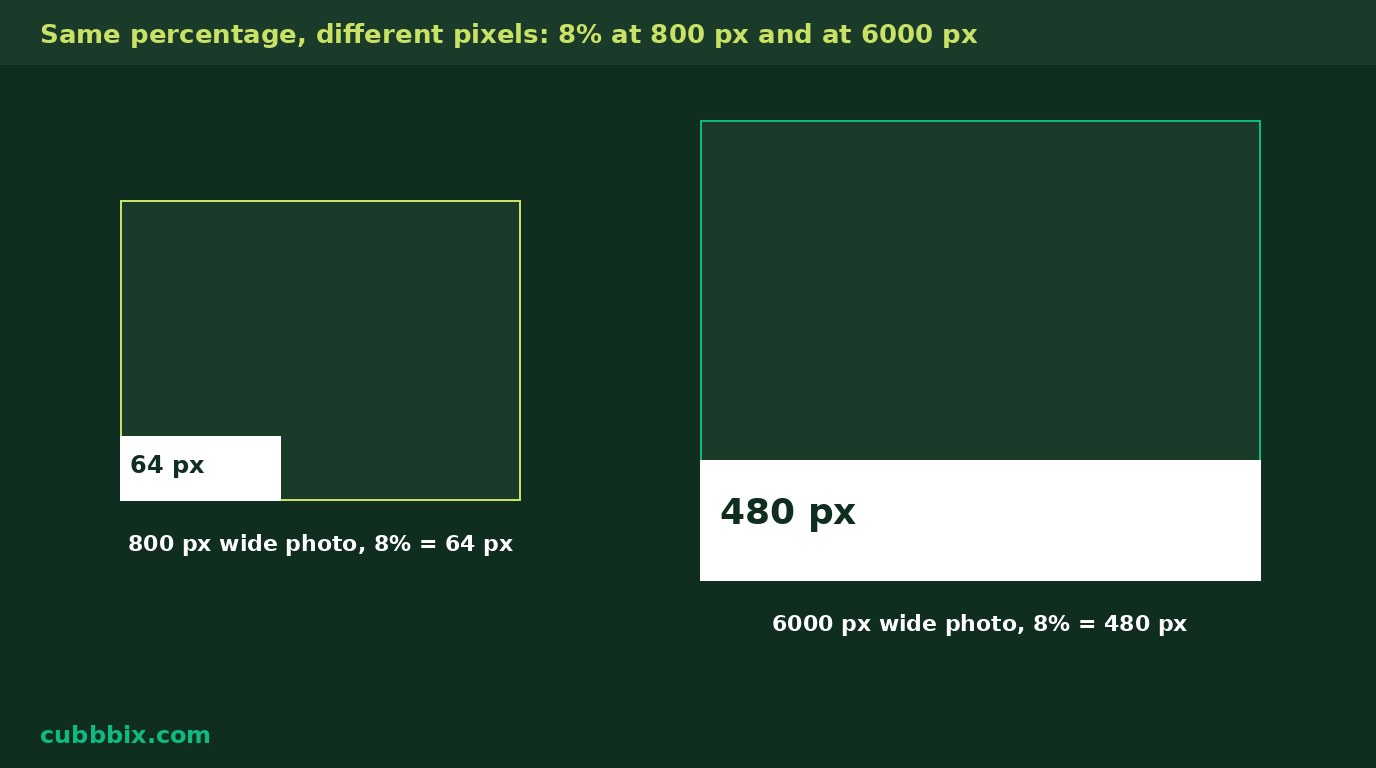
Figure 2: Same percentage, different pixels. 8% is 64 pixels on an 800 pixel photo and 480 pixels on a 6000 pixel photo. Fixed pixels would fail one of the two.
What a watermark can and cannot do
A corner mark stops casual screenshots and reposts from looking clean, and it credits the maker wherever the photo travels. It does not stop cropping, painting over, or automated removal, and a centre mark large enough to stop those also ruins the photo for honest viewers. That trade-off is why the defaults sit in a corner at a readable size instead of across the middle. A court or a platform takedown, not a watermark, is what enforces ownership. Treat the mark as credit and friction, not as protection, keep the unwatermarked originals safe yourself, and keep PNG originals if the photo itself has clear areas, because JPG output drops them.
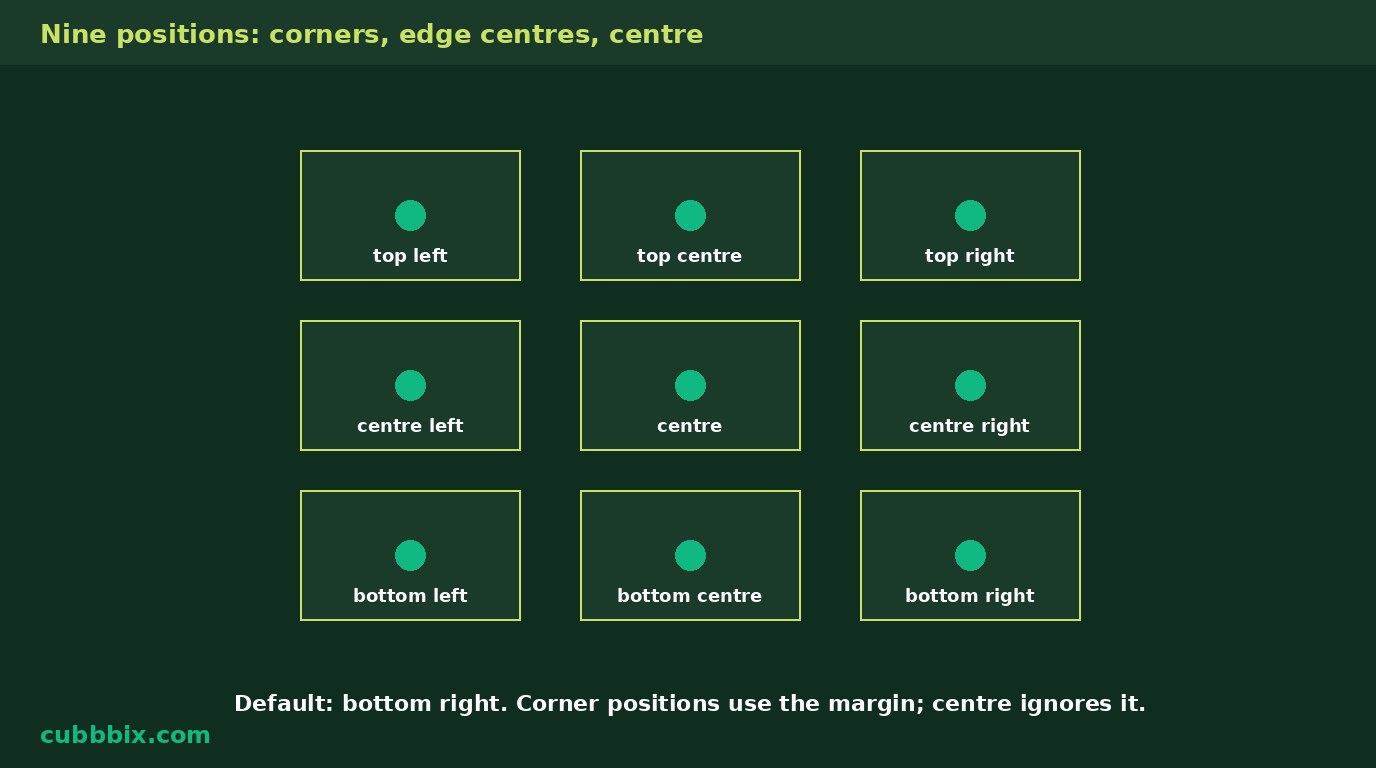
Figure 3: Nine positions: four corners, four edge centres, and centre. Corner positions use the margin; centre ignores it, because a centred mark with a margin is not centred.
Questions people ask
How does the watermark size scale across photos?
By percentage of each photo's width, not by fixed pixels. At 8% of width, the text is 64 pixels on an 800 pixel photo and 480 pixels on a 6000 pixel photo: the same relative size in both.
Does a watermark stop photo theft?
No, not fully. It deters casual reuse and credits you wherever the photo travels, but a corner mark can be cropped out and any mark can be painted over. Treat it as credit and friction, not as protection.
Are my photos uploaded anywhere?
No. Stamping runs in your browser. Nothing leaves your device, and the originals are never changed.


Was this article helpful?
Comments
Loading comments...