How many calories do you need a day, and how do macros split them

TL;DR
Estimate daily calories with the Mifflin-St Jeor equation and split them into protein, carbs and fat. Editable activity, deficit and macro split.
Table of Contents
Your daily calories in 30 seconds
A calorie target has two steps, and most calculators hide the first one. Step one estimates what your body burns at complete rest, called basal metabolic rate. Step two multiplies that by an activity factor to get your total daily burn, the maintenance figure. The free Cubbbix Calorie & Macro Calculator shows both steps, and then splits the target into protein, carbs and fat in grams, with every adjustable figure in the open so you can change it and watch the answer move.
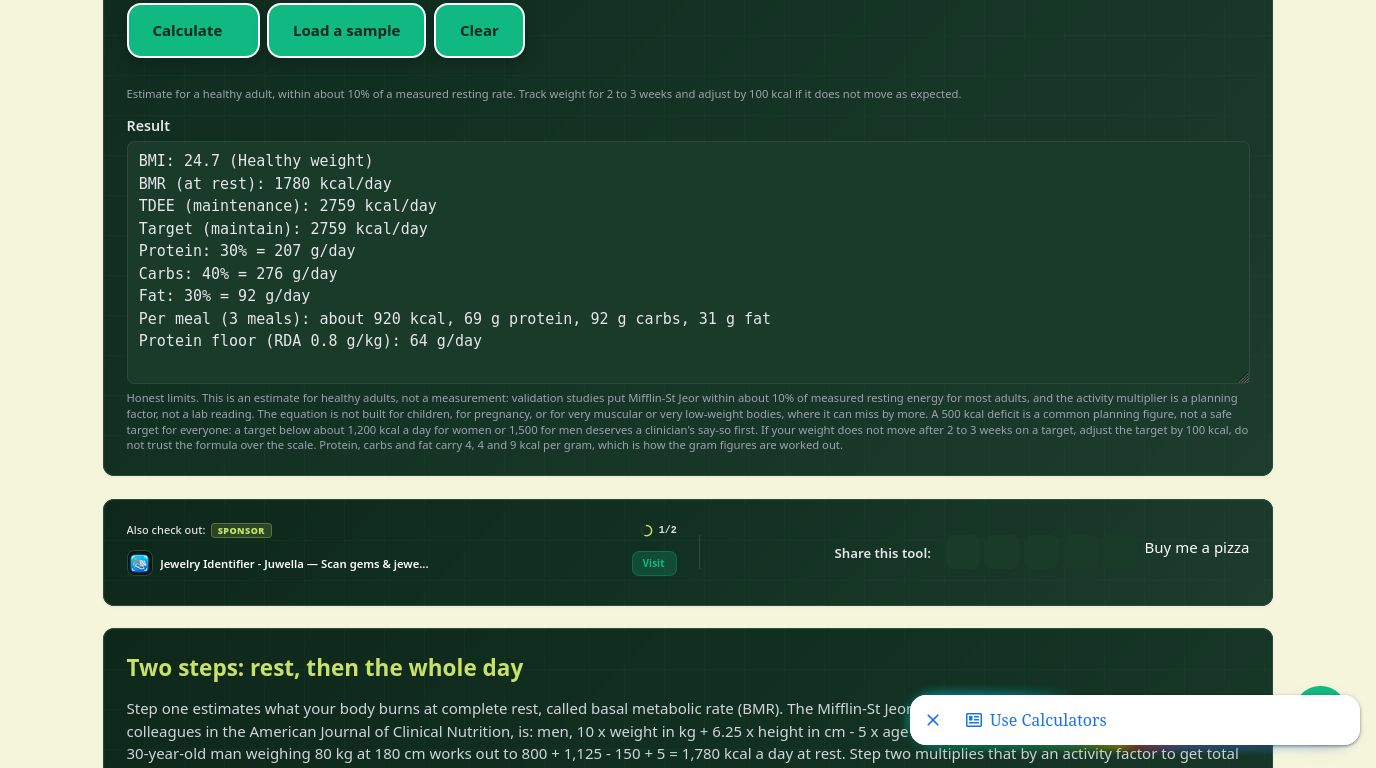
The resting figure uses the Mifflin-St Jeor equation, published in 1990: men, 10 x weight in kg + 6.25 x height in cm - 5 x age + 5; women, the same with - 161 at the end. A 30-year-old man weighing 80 kg at 180 cm works out to 1,780 kcal a day at rest, and at moderately active that becomes 2,759 kcal a day to hold his weight. The equation is the one the Academy of Nutrition and Dietetics recommends for healthy adults, and validation studies put it within about 10% of a measured resting rate for most adults. That 10% is the honest error bar, and it is why the page tells you to track your weight for 2 to 3 weeks and adjust by 100 kcal, instead of trusting the formula over the scale.
Figure 1: Resting burn times an activity factor gives the maintenance figure. The activity pick moves the answer most.
The activity pick moves the answer most
The activity multiplier runs from 1.2 for sedentary to 1.9 for extra active, a 60% spread, which is over 1,000 kcal for most adults. Pick the level that matches your whole week, not your hardest workout: three sessions a week is moderately active, and a desk job with no training is sedentary even if you walk to the shop. Overstating activity is the most common reason a maintenance figure comes out too high, and then a deficit that looks like 500 kcal is really no deficit at all.
The goal then shifts the target by an amount you choose, defaulting to 500 kcal. That figure is the standard planning number for about 0.5 kg a week, because a kilogram of body fat stores roughly 7,700 kcal. It is a planning figure, not a safe target for everyone: a target below about 1,200 kcal a day for women or 1,500 for men deserves a clinician's say-so first, and the page refuses targets below 800 kcal outright.
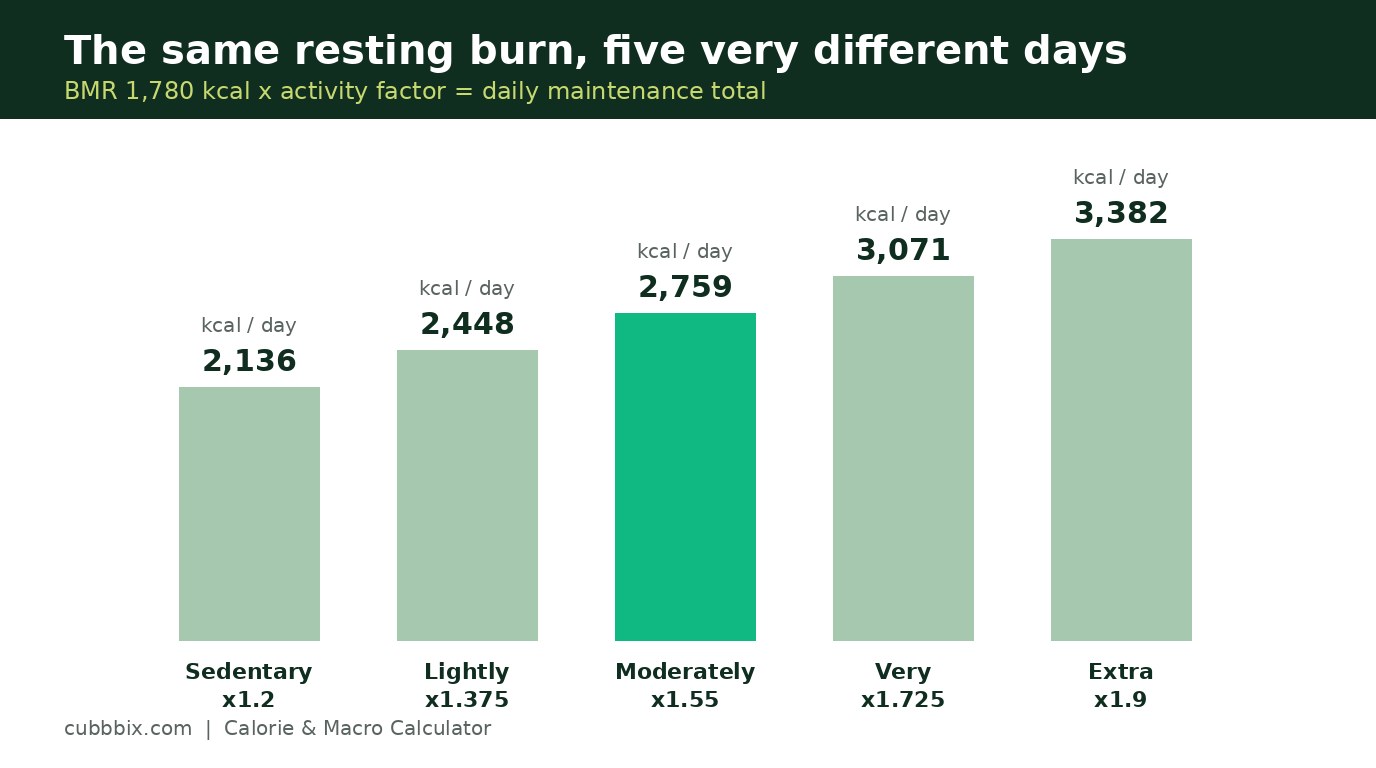
Figure 2: The same resting burn gives very different daily totals. Pick the level that matches your whole week.
The macro split divides the same calories three ways
Protein and carbs carry 4 kcal per gram, fat carries 9, so the gram figures follow from the target and the split you pick. At 2,759 kcal with a 30% protein share, that is 828 kcal, or 207 g of protein. The default split is 30% protein, 40% carbs, 30% fat, with higher-protein and higher-carb presets and a custom mode where you type your own three percentages. If they do not add to 100, the page scales them proportionally and says so, instead of silently dropping calories.
A split does not change the total, and no split is a medical recommendation. The US dietary reference ranges put protein at 10 to 35% of energy, carbs at 45 to 65% and fat at 20 to 35%, and the protein floor for adults is 0.8 g per kg of body weight a day. The page shows that floor next to your split, so you can see whether a low-protein preset still clears it for your weight.
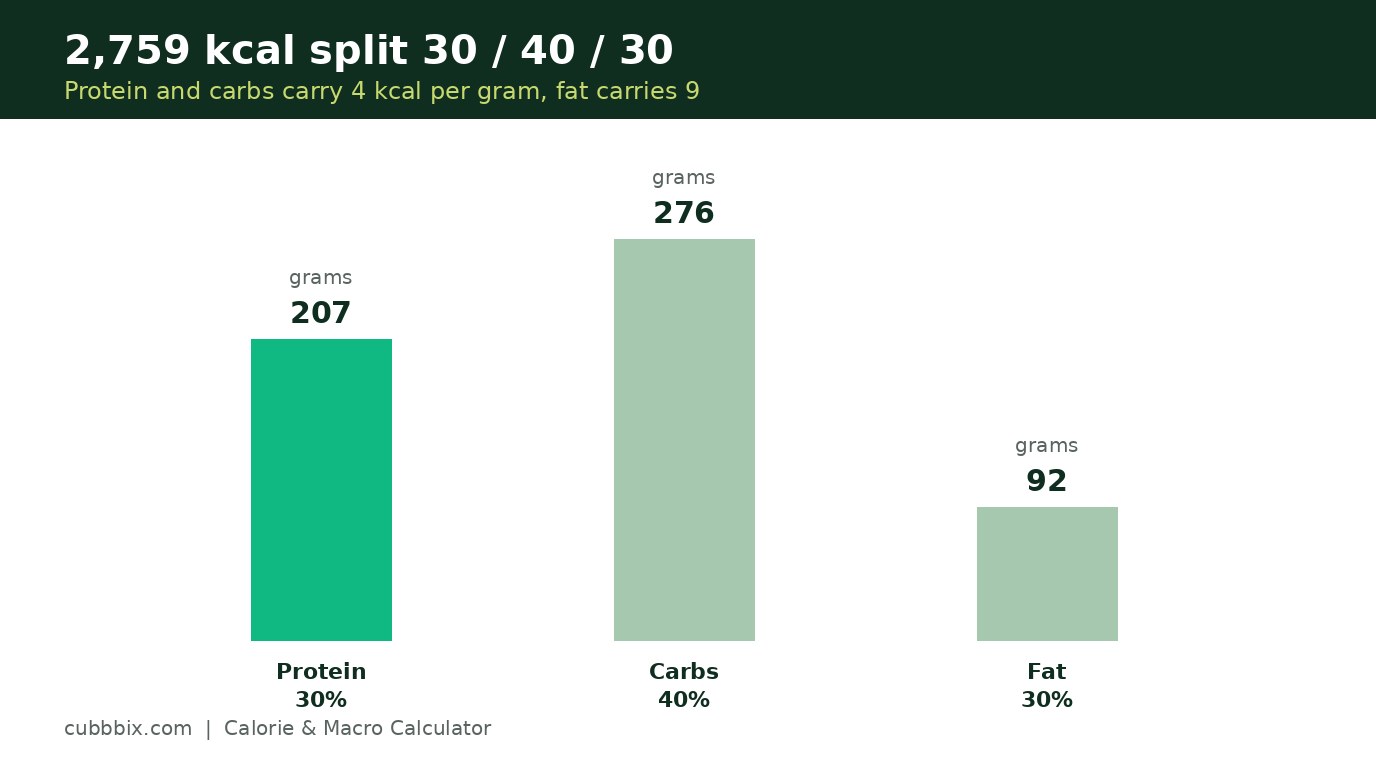
Figure 3: Protein and carbs carry 4 kcal per gram, fat carries 9. The grams follow from the split, not the other way round.
Questions people ask
What is the difference between BMR and TDEE?
BMR is what you burn at complete rest. TDEE is BMR multiplied by an activity factor, and it is the maintenance figure: eat at it and your weight should hold steady.
How accurate is the estimate?
Within about 10% of a measured resting rate for most healthy adults, plus the activity multiplier's own error. It is not built for children, pregnancy, or very muscular or very low-weight bodies.
Is my data uploaded anywhere?
No. The calculation runs in your browser. Nothing leaves your device.


Was this article helpful?
Comments
Loading comments...