How to build a medicine dose schedule you can actually follow

TL;DR
Build a dose schedule from a first dose time and the interval on your label, with a taken checklist you can copy or print. No medical advice.
Table of Contents
A dose schedule in 30 seconds
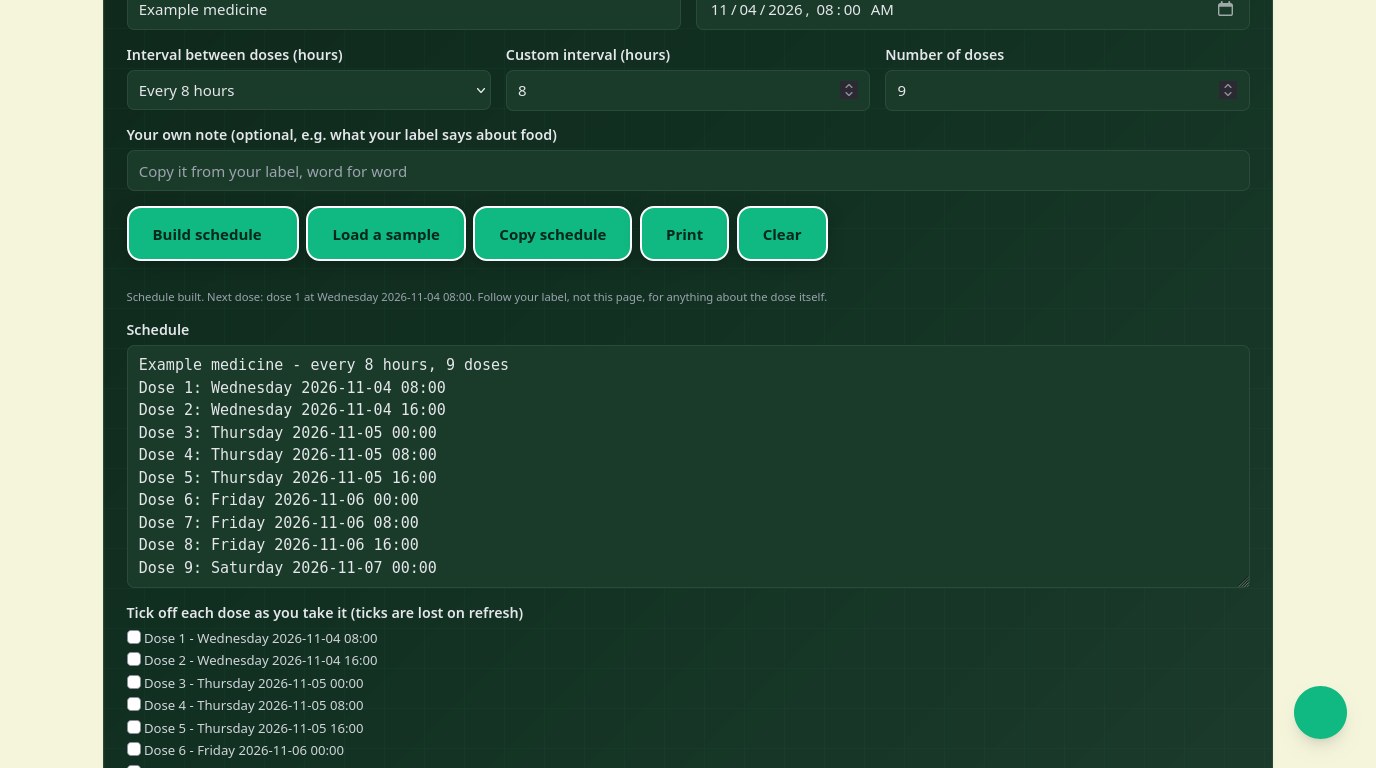
Most missed doses are not refusals, they are memory failures. A dose every 8 hours means 3 doses a day, and the third one lands at a different time every day once a single dose slips by an hour. The free Cubbbix Medicine Timing Planner builds the full schedule from a first dose time and an interval, shows every dose date and time, and lets you tick each dose off as you take it, so you never have to do the arithmetic or wonder whether you already took one.
The interval comes from your label, and it is not a free choice. Intervals exist because a medicine's level in the body falls over time: too long a gap and the level drops below the useful range, too short a gap and the next dose stacks on top of the last. That is also why a missed dose is not fixed by doubling the next one unless the label says so. The planner only counts time. It never suggests a medicine, a dose amount or an interval, and it does not check interactions or food instructions. Those come from your label or pharmacist, and the page says so in a red banner before the form.
Figure 1: One interval, counted forward, gives every dose time. No arithmetic, no guessing.
Every 8 hours is not 3 times a day
An interval and a frequency are different instructions, and confusing them is a common error. Every 8 hours means doses 8 hours apart around the clock, including the night, unless the label says otherwise. Three times a day usually means morning, afternoon and evening while awake. The planner asks for an interval in hours and shows every dose time, rather than assuming a daytime pattern, so a night dose shows as a night dose and you can ask your pharmacist how to handle it instead of discovering it at 2 in the morning.
Dose times that fall in the night deserve that question. If your label says to take a dose only while awake, that instruction beats the schedule, and waking to take a dose is not something a planner should talk you into. Ask the pharmacist how the night gap is meant to work, and write their answer in the planner's own-note box, copied from the label word for word.
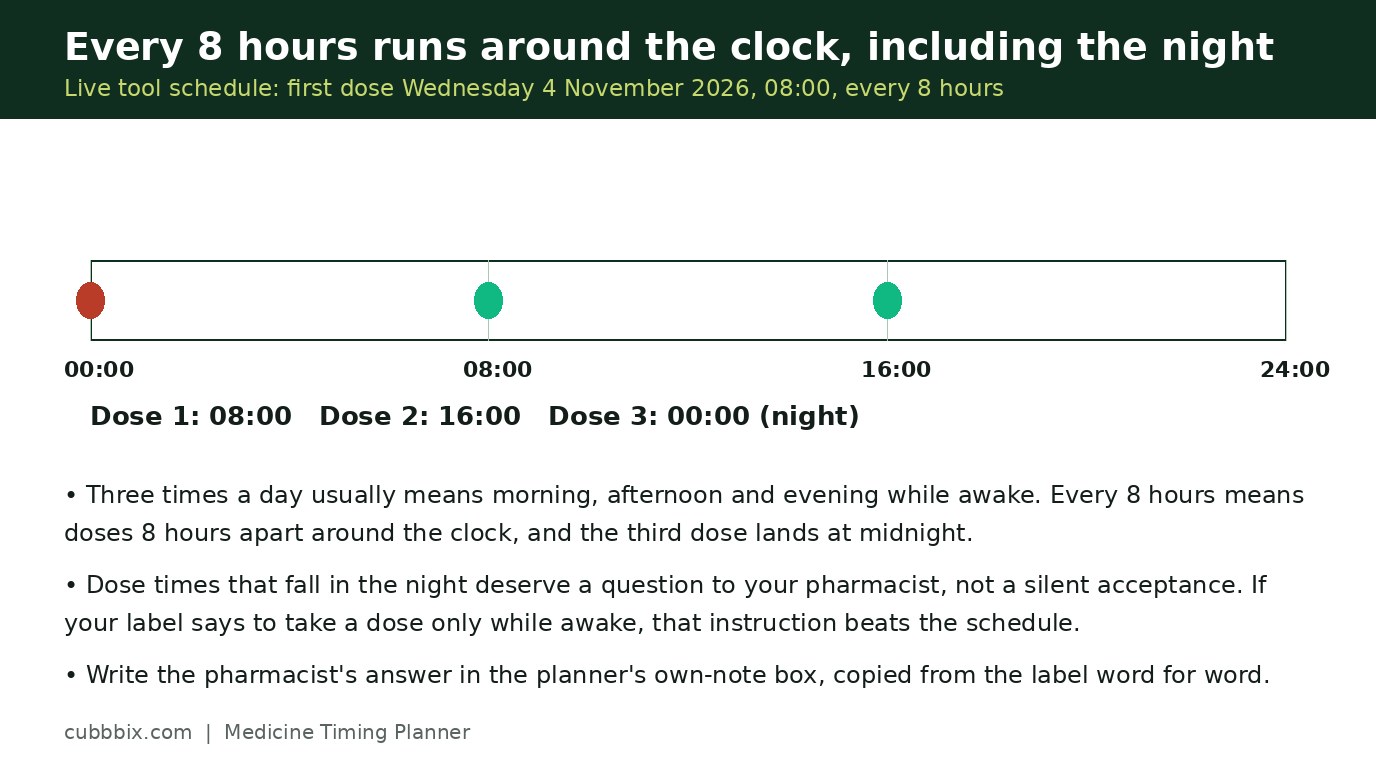
Figure 2: An interval runs around the clock. A frequency runs while you are awake. They are not the same instruction.
Paper beats memory, and an alarm beats the page
The checklist on the page is not saved anywhere: closing the tab or refreshing clears the ticks, which is why the page has copy and print buttons. A printed schedule on the fridge does the same job for a carer, who can see at a glance which dose is due and which is done. The page is also not an alarm: it cannot sound while the tab is closed, so for doses you must not miss, set a phone alarm for each dose time as well, and keep the printout where the doses are actually taken, not only on a screen.
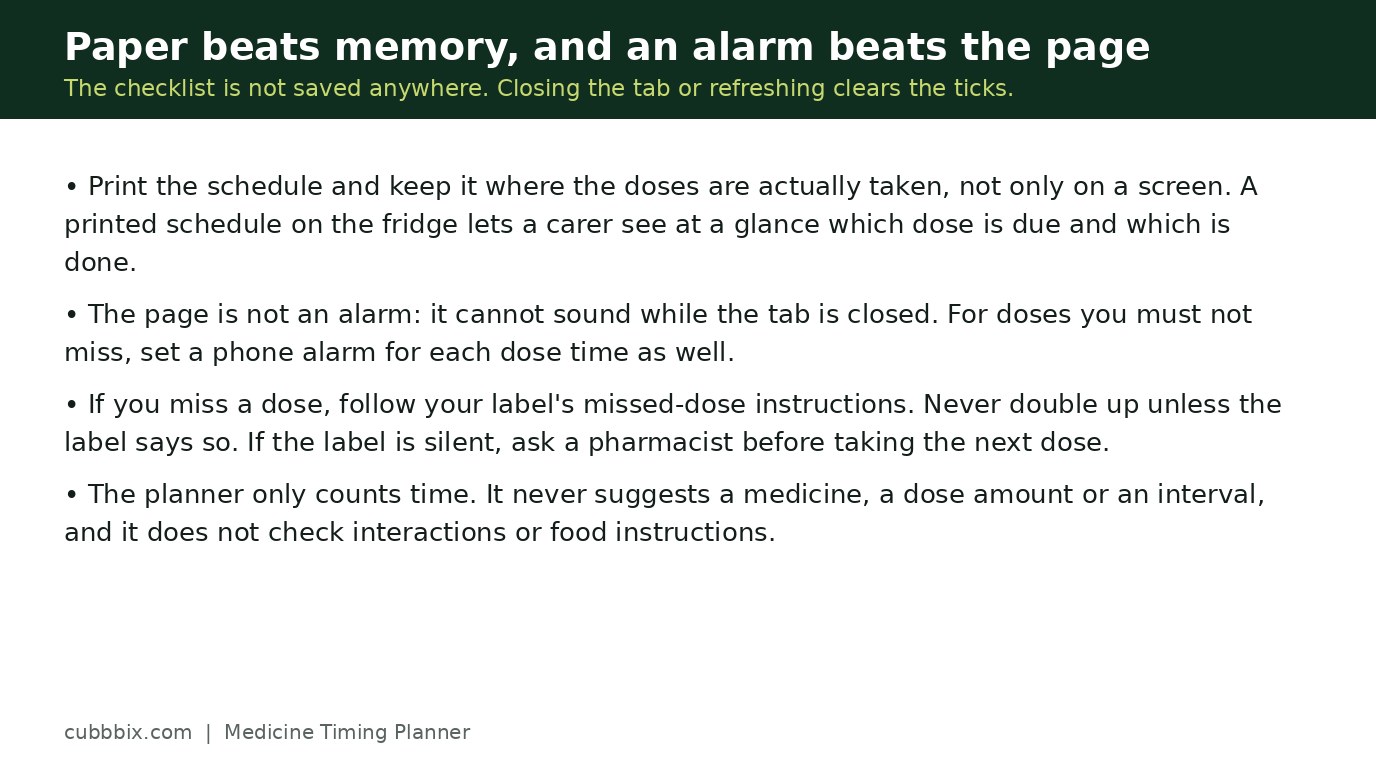
Figure 3: Print the schedule, set phone alarms, and keep both where the doses are taken.
Questions people ask
Does the planner tell me what dose to take?
No. It never suggests a medicine, a dose amount or an interval. You type the interval from your own label, and the page only counts the times.
What should I do if I miss a dose?
Follow your label's missed-dose instructions. Never double up unless the label says so. If the label is silent, ask a pharmacist before taking the next dose.
Is my medicine information uploaded anywhere?
No. Everything runs in your browser. Nothing you type leaves your device, and nothing is stored on a server.


Was this article helpful?
Comments
Loading comments...