How to find sunrise, sunset, twilight and golden hour for any place and date

TL;DR
Sunrise, sunset, solar noon, day length, civil, nautical and astronomical twilight and golden hour for any place and date, calculated with the NOAA method.
Table of Contents
Sun times for any place in 30 seconds
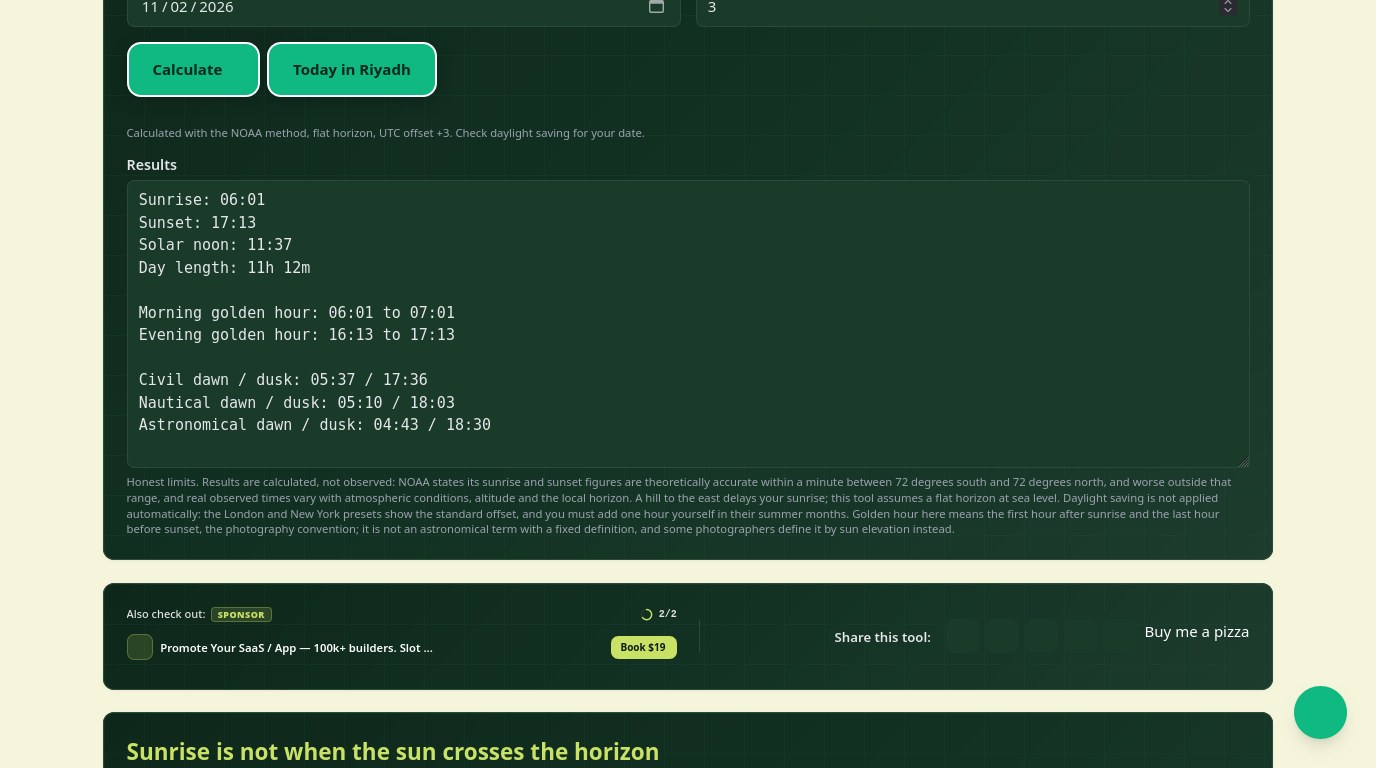
Sunrise, sunset, solar noon, day length, the three twilights and both golden hours, for any place and date: the free Cubbbix Sunrise, Sunset and Golden Hour Calculator works them out with the NOAA solar position method, the same maths behind NOAA's own solar calculator. Pick a preset city or type your own coordinates, set the date, check the UTC offset, and press Calculate. Nothing leaves your device.
Sunrise is not when the sun crosses the horizon. It is defined as the moment the sun's upper edge appears over a flat horizon, which happens while the sun's centre is still 0.833 degrees below the horizon: half a degree for the sun's own radius, plus about a third of a degree for atmospheric refraction bending the light around the earth's curve. That is why the zenith angle used is 90.833 degrees, not 90, and the same figure mirrored defines sunset. NOAA describes its figures as theoretically accurate within a minute between 72 degrees south and 72 degrees north, and real observed times vary with weather, altitude and hills on your horizon.
Figure 1: Sunrise is the sun's upper edge over the horizon, at a zenith of 90.833 degrees.
The three twilights, in plain terms
Everything else on the page follows the same idea with a different angle. Civil twilight ends when the sun's centre is 6 degrees below the horizon: still bright enough to read and work outside without lights. Nautical twilight ends at 12 degrees: the horizon is still visible at sea, so sailors could take star sights. Astronomical twilight ends at 18 degrees: the sky is dark enough for faint stars, and past that it is fully night. In summer at high latitudes the sun may never get 18 degrees down, so true night never arrives, and the page marks those events as not occurring instead of inventing a time.
Solar noon is the other anchor: the moment the sun is highest, which is rarely 12:00 on the clock. It shifts with your longitude inside your time zone and with the equation of time, the seasonal wobble caused by the earth's tilted axis and elliptical orbit, by up to about 16 minutes either way across the year. Day length is simply sunset minus sunrise, and it changes fastest near the equinoxes, by several minutes a day at mid-latitudes, and slowest near the solstices.
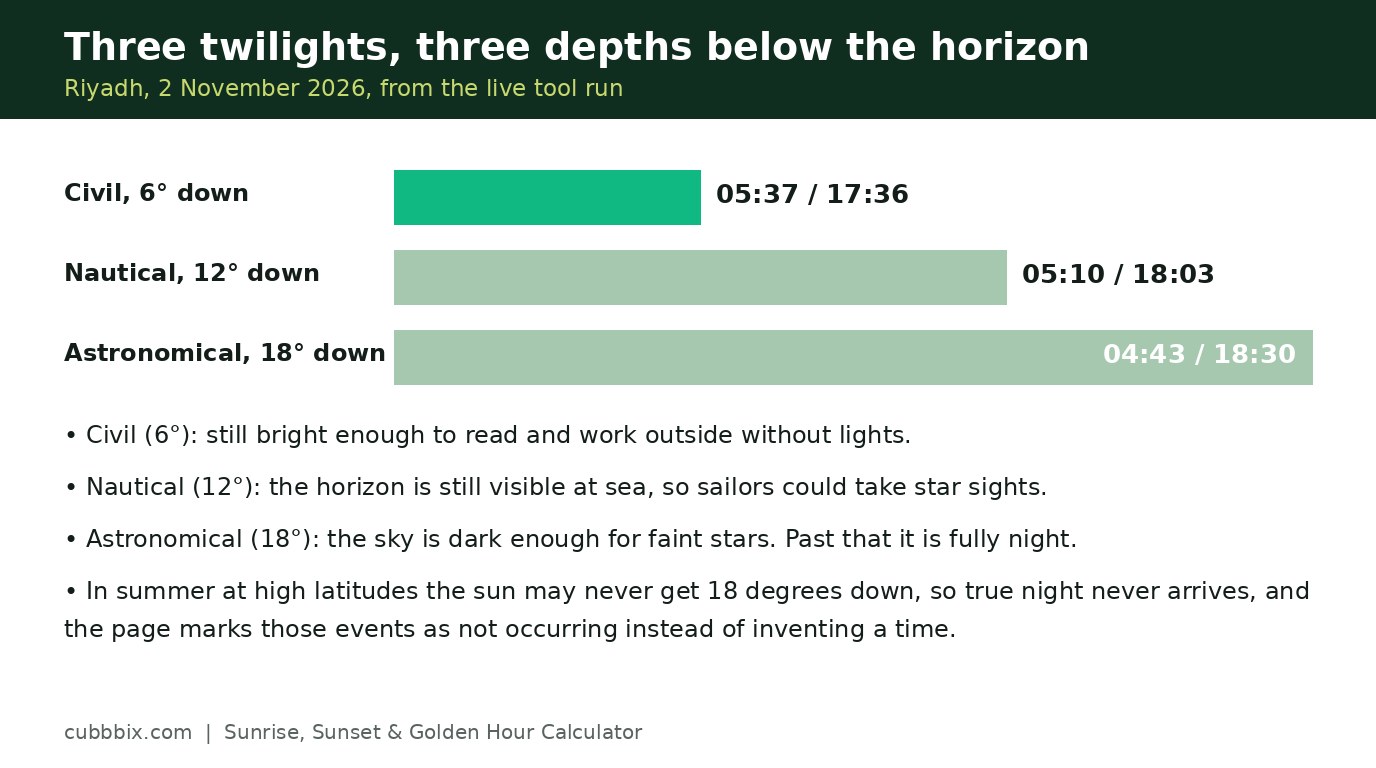
Figure 2: Civil 6 degrees, nautical 12 degrees, astronomical 18 degrees below the horizon.
Golden hour, and the daylight saving catch
Golden hour on this page means the first hour after sunrise and the last hour before sunset, the photography convention. It is not a fixed astronomical definition, and some photographers define it by sun elevation instead, usually below about 6 degrees, so the best light is in the first and last 20 minutes, when the sun is closest to the horizon. Plan to be in place before the hour starts, not at its middle.
Daylight saving is the one setting to check by hand. The tool does not apply it automatically, because the rules differ by place and change over time, and a wrong automatic rule would silently shift every time by an hour. The UTC offset is an editable input: set it to the offset in force on your date, adding one hour for London or New York in their summer months. A check against today's Riyadh times, sunrise 6:00 and sunset 17:12 on 2 November 2026, is a quick way to confirm the page agrees with a published source before you plan around it.
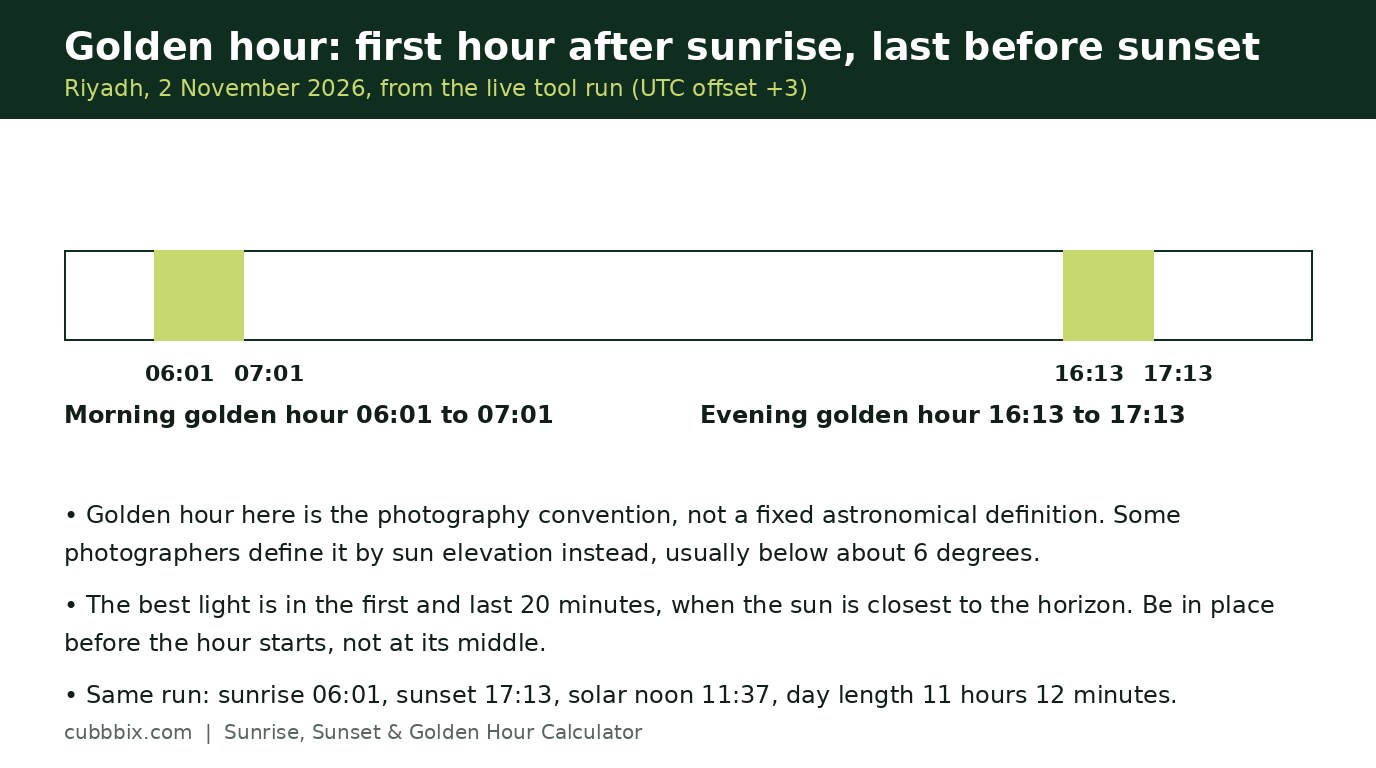
Figure 3: The first hour after sunrise and the last hour before sunset. Be in place early.
Questions people ask
How accurate are the sunrise and sunset times?
They use the NOAA solar position method, described by NOAA as theoretically accurate within a minute between 72 degrees south and 72 degrees north. Real observed times vary with weather, altitude and hills on your horizon.
What is golden hour here?
The first hour after sunrise and the last hour before sunset, the photography convention. Some photographers define it by sun elevation instead, usually below about 6 degrees.
Why does the tool not apply daylight saving automatically?
Daylight saving rules differ by place and change over time. The UTC offset is an editable input: set it to the offset in force on your date.


Was this article helpful?
Comments
Loading comments...