How much water should you drink a day, and what counts toward it

TL;DR
Work out a daily water target from weight, climate and exercise, next to the National Academies reference intakes. Editable factors, glasses count.
Table of Contents
Your daily water target in 30 seconds
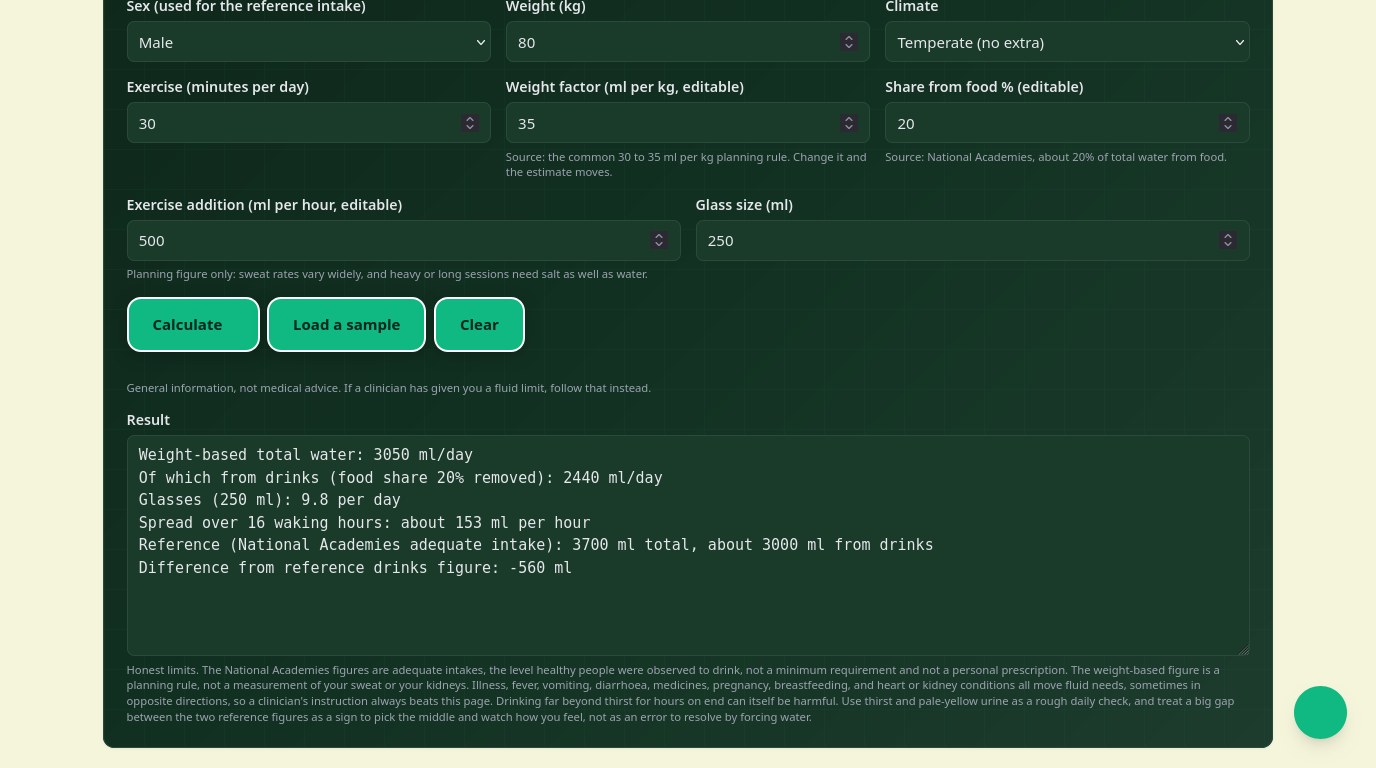
The honest answer to how much water you should drink is two reference points, not one number. The US National Academies adequate intake for total water is 3.7 litres a day for men and 2.7 litres for women, counting all drinks and food. The weight-based planning rule says 30 to 35 ml per kg of body weight a day. The free Cubbbix Daily Water Intake Calculator shows both, adjusts for climate and exercise, and turns the result into a glasses count, so you can see where the two references agree and where they differ.
Total water is the part most people miss. About 20% of daily water normally comes from food, which leaves about 3.0 litres of drinks for men and 2.2 litres for women under the National Academies figures. Tea, coffee, milk, juice and soup all count toward the total, so counting only plain water overstates what you still need. The page subtracts the food share before counting glasses, so the glasses figure is glasses of drinks, not glasses on top of everything you ate and drank.
Figure 1: Total water counts drinks and food. The glasses count is what remains after the food share.
Eight glasses is a reminder, not a requirement
Eight 250 ml glasses give 2 litres, which sits below the men's reference and near the women's drinks figure, and it ignores body weight, climate and exercise entirely. An 80 kg adult at 35 ml per kg gets 2,800 ml of total water before any climate or exercise addition, which is close to the women's reference and below the men's. That gap is not an error in either figure: both are population observations, and your own figure sits somewhere between them depending on your size, your weather and your day.
Heat and exercise add editable amounts: 500 ml for hot weather, 1,000 ml for very hot or humid weather, and 500 ml per hour of exercise. Those additions are editable because sweat rates differ by an order of magnitude between people, and a fixed addition would pretend otherwise. Short sessions in temperate weather need far less than the default, and long sessions in heat need salt as well as water.
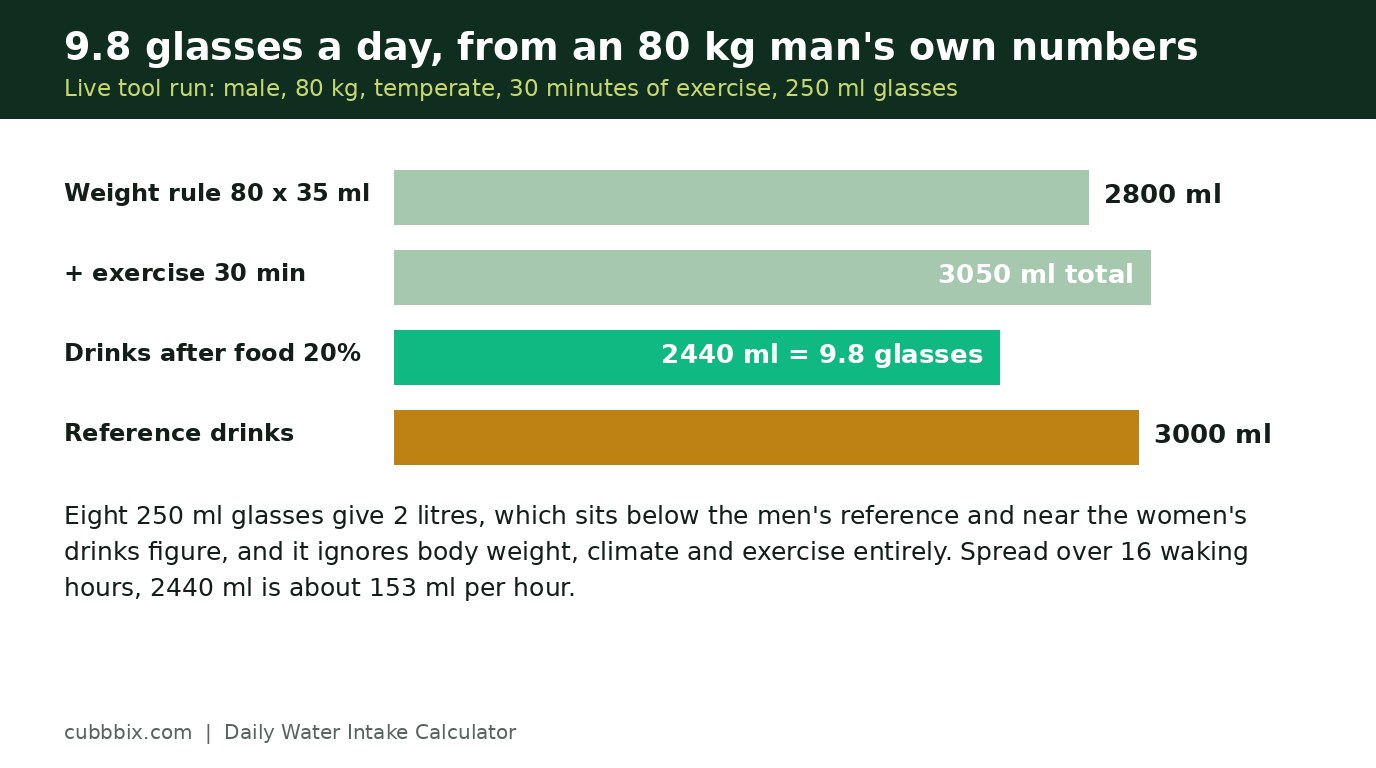
Figure 2: Eight glasses is 2 litres. The published references are higher, and they move with weight and weather.
When more water is the wrong answer
Some conditions restrict fluids, some medicines change salt balance, and drinking far beyond thirst for hours on end can dilute blood salt levels, which is dangerous and a known risk in long endurance events. If a clinician has given you a fluid limit, or you are ill, pregnant or breastfeeding, this page's number does not apply. The National Academies pregnancy figure is 3.0 litres of total water and breastfeeding 3.8 litres, but those are population figures too, and your clinician's figure wins. Drink to thirst plus a plan for exercise, not to a forced total.
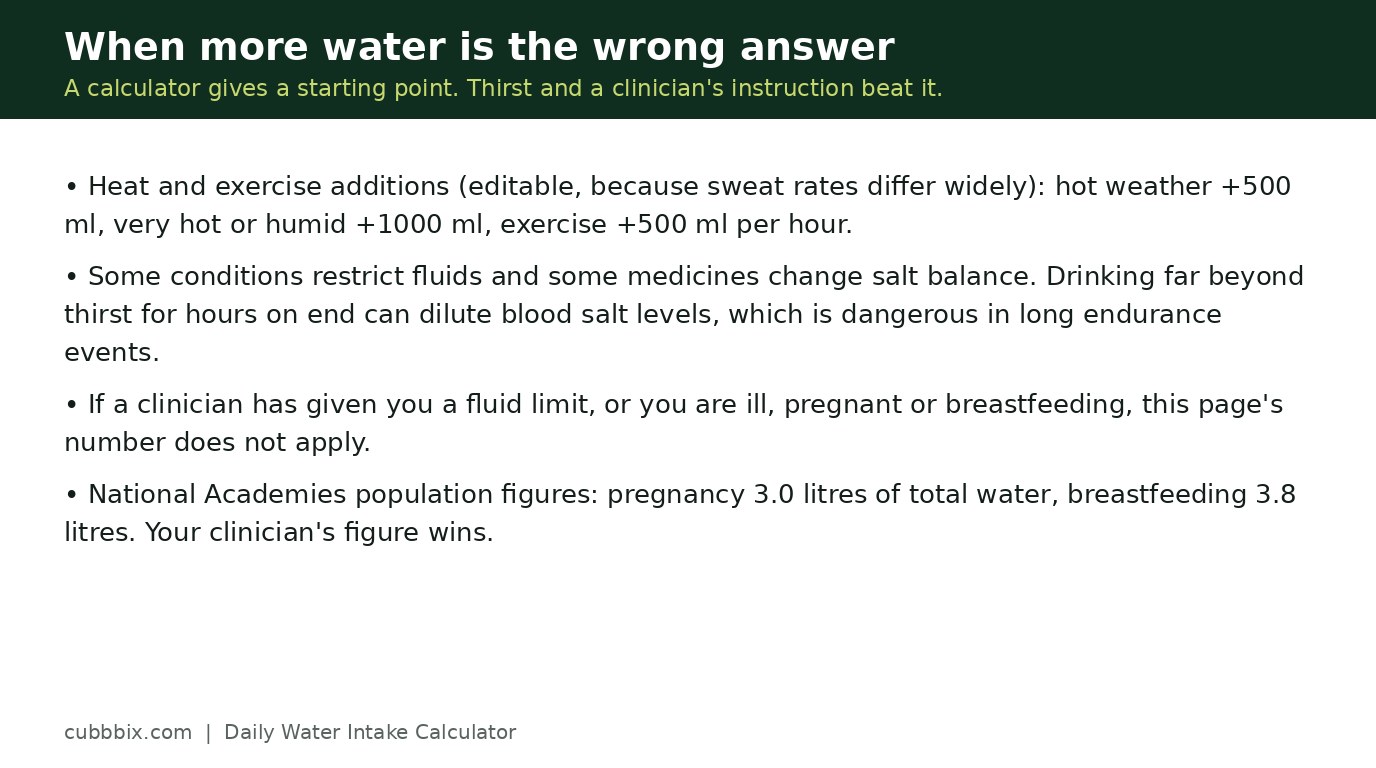
Figure 3: A calculator gives a starting point. Thirst and a clinician's instruction are the checks that beat it.
Questions people ask
Do tea and coffee count toward water intake?
Yes. Total water counts every beverage and the water in food. Caffeinated drinks still hydrate, and the page's drinks figure already subtracts the food share.
Why do the two reference figures differ?
The National Academies figure is a population observation for a sex, and the weight rule scales with body size. A lighter adult lands below the men's reference, a heavier one above it. Both are starting points, not prescriptions.
Is my data uploaded anywhere?
No. The calculation runs in your browser. Nothing leaves your device.


Was this article helpful?
Comments
Loading comments...