US Midterm Elections 2026: What Today's Vote Decides for AI, Crypto and Tech

TL;DR
Americans vote today, November 3, 2026, for all 435 House seats, 35 Senate seats and 36 governorships. Here is what the result means for AI rules, crypto law, data centers and tech stocks.
Table of Contents
Executive Briefing: US Midterm Elections, November 3, 2026
Americans vote today, November 3, 2026, in midterm elections that decide control of Congress for the last two years of Donald Trump's presidency. Every one of the 435 House seats is on the ballot, along with 35 Senate seats and 36 governorships. The cost of living tops voter concerns, with fuel, housing and health care costs squeezing household budgets. For the AI, crypto and tech industries, the vote decides something narrower and just as concrete: which party writes the rules on AI oversight, crypto market structure and data center growth, and which party chairs the committees that can summon tech executives to hearings.
One fact frames everything that follows. Trump stays president whatever happens tonight. He can veto any bill Congress passes, and overriding a veto needs two thirds of each chamber. The midterms do not hand any party the power to force tech laws through on its own. They hand the winning party control of the calendar, the committees and the investigations, and that control shapes what gets a vote in 2027 and 2028.
Figure 1: Voters choose a new Congress today. The winners set the agenda for AI rules, crypto law and tech oversight through 2028.
What is on the ballot today
Republicans hold both chambers going into today, but by small margins. In the House, Republicans hold 219 seats to 214 for Democrats, with 2 seats vacant in Florida and Texas. All 435 seats are contested because House terms last two years. In the Senate, Republicans hold 53 seats to 47. Thirty-five Senate seats are contested, including special elections in Florida and Ohio to fill seats vacated by Secretary of State Marco Rubio and Vice President JD Vance. Democrats need a net gain of 4 Senate seats to reach 51. A 50-50 Senate stays in Republican hands because Vance casts tie-breaking votes.
The scale of this election is large by any measure. More than 54 million ballots were already cast before Election Day, according to the University of Florida Election Lab tracker. Political advertising is on track to hit a record 11.6 billion dollars. Elon Musk, who runs Tesla and SpaceX, is the top individual donor at 446 million dollars, followed by Uline founders Elizabeth and Richard Uihlein at 150 million dollars. Thirteen states are also voting on whether to ban new data centers, which have spread fast in the AI buildout and raised local fights over power use, water and noise. California votes on a wealth tax. In total, 145 statewide ballot measures are on ballots across the country.
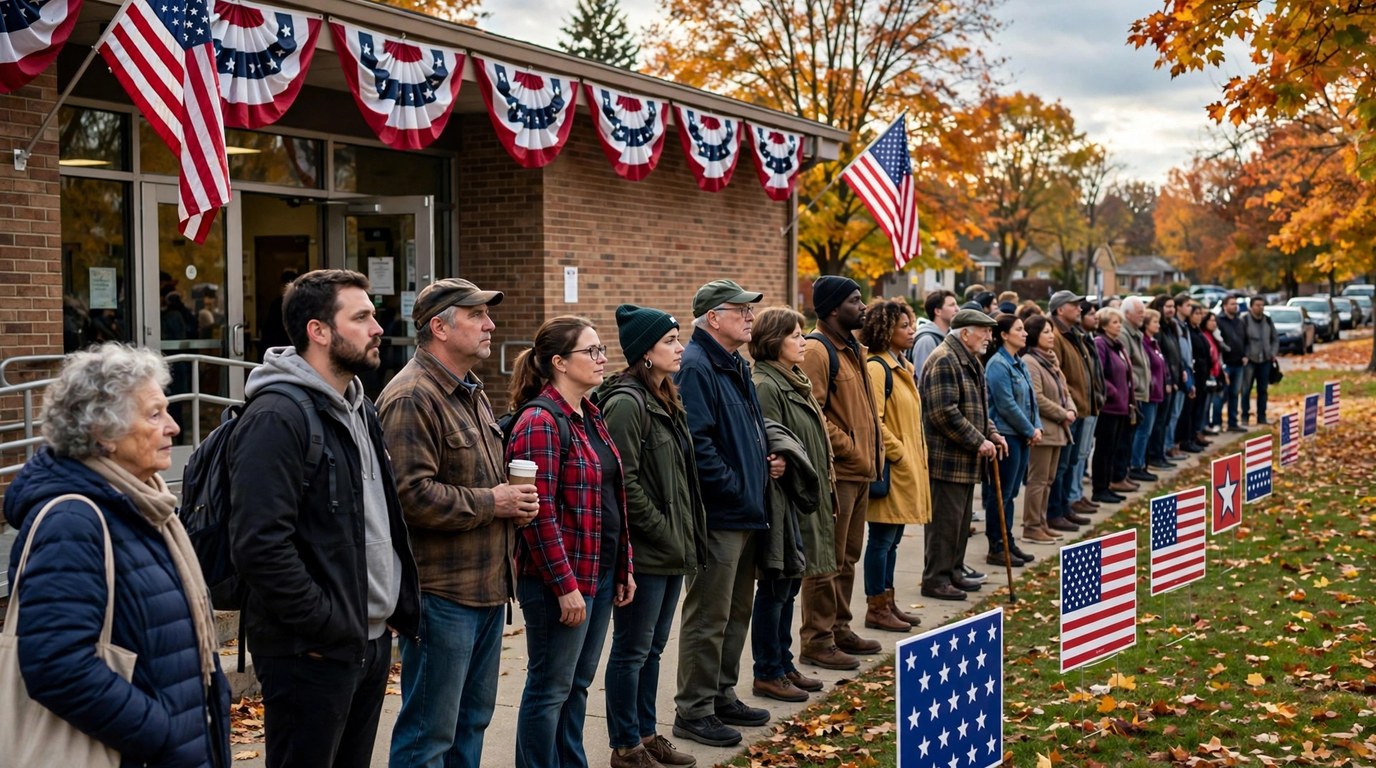
Figure 2: More than 54 million Americans had already voted before Election Day. Polls close state by state, with the last ones in Hawaii and Alaska closing between midnight and 1 am Eastern.
AI: the fight over who writes the rules
AI regulation is now a central midterm issue, and the split runs through both parties. Senior figures in both parties want AI regulated, while Trump has rejected the idea and issued an executive order limiting state AI regulation. That order put pressure on Congress and state legislatures and pushed the question into the courts. The next Congress decides whether federal law overrides state AI laws or lets states keep writing their own. That single choice matters more for AI companies than any one bill, because state laws in places like New York and California already set transparency and safety requirements that companies must meet market by market.
The AI industry is spending heavily to shape that answer. Leading the Future, a pro-AI super PAC backed by venture firm Andreessen Horowitz and OpenAI president Greg Brockman, raised about 100 million dollars, and reported figures put its total near 125 million dollars by the end of 2025, with 10 million dollars spent opposing state-level AI legislation. Meta launched two more super PACs, the American Technology Excellence Project and META California, to back candidates who put innovation ahead of caution. Crypto, AI and online betting companies together account for over half of all corporate-backed super PAC spending this cycle. The spending shows the industry expects Congress, not the White House alone, to settle the federal-versus-state question.
Data centers are the local side of the same fight. Voters in many areas worry about electricity costs, water supplies and jobs as data center construction spreads. Thirteen states are voting on data center bans today, and local governments already face pressure to block new sites. On October 29, Democratic lawmakers Maxine Waters and Greg Casar introduced a resolution opposing federal bailouts for AI companies if an AI market bubble collapses, after weeks of market worry about high AI valuations and debt-funded data center expansion. Morgan Stanley's head of US public policy research, Ariana Salvatore, put the timeline plainly: the midterms matter less for immediate restrictions on data centers and more for laying the groundwork for legislation toward that end in 2029. A Democratic Congress would increase oversight pressure on AI financing and on the largest AI spenders, including Alphabet, Meta, Microsoft and chipmaker Nvidia, even if a presidential veto blocks new laws.
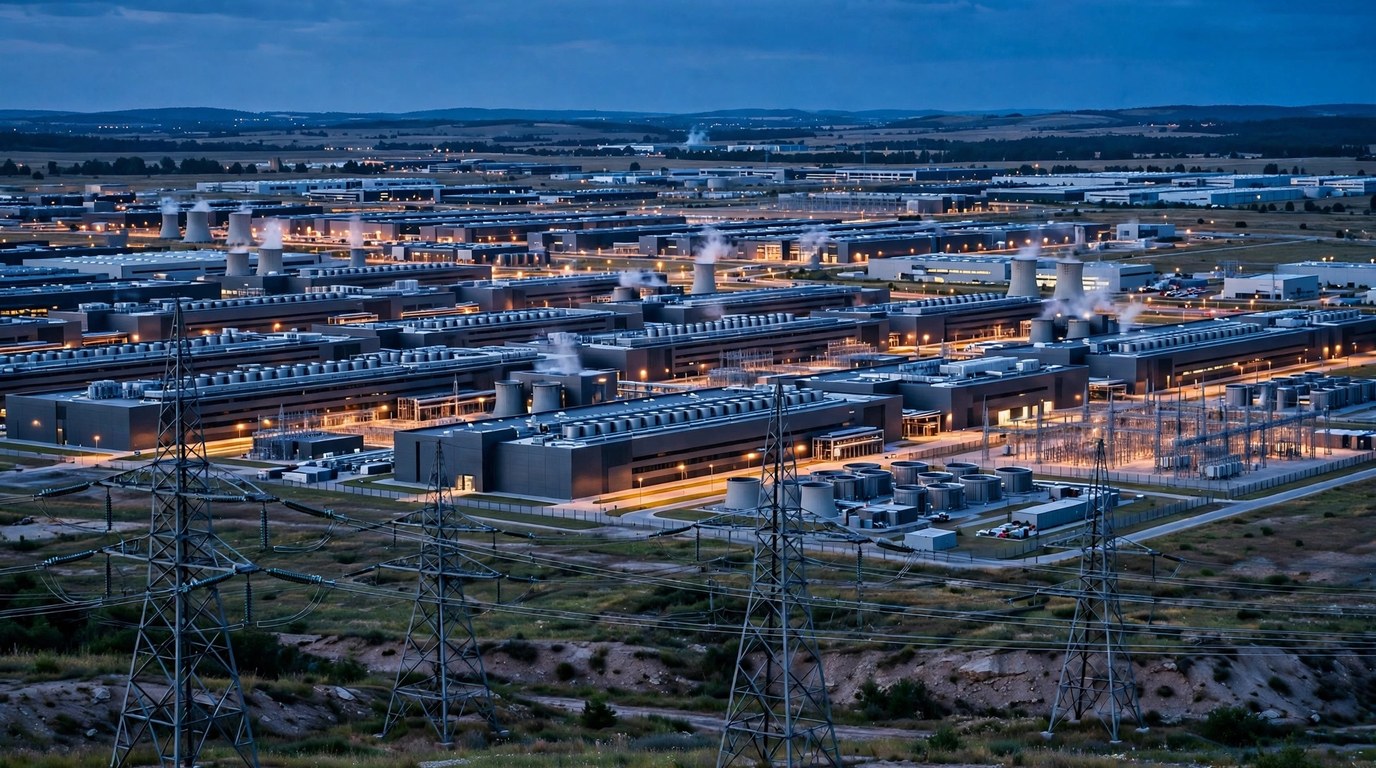
Figure 3: Data centers sit at the center of the AI debate. Voters weigh jobs and investment against power bills, water use and local disruption, and 13 states vote on bans today.
Crypto: one bill passed, the big one stalled
Crypto has one finished law and one stalled bill, and tonight decides which one gets company. The GENIUS Act, which set a federal framework for stablecoins, already passed. The CLARITY Act, which would set the wider market structure for digital assets, failed to advance in the Senate on September 15, 2026. It received 49 votes in favor and 50 against, short of the 60 needed. All Democrats and 4 Republicans opposed advancing it. Stocks such as Coinbase and Circle fell when the bill was blocked. The core dispute is which regulator takes charge: the Securities and Exchange Commission or the Commodity Futures Trading Commission, and how exchanges, token issuers and digital asset businesses get treated under each.
The crypto industry built its political machine for exactly this fight. Fairshake, the industry's largest super PAC, raised over 190 million dollars in 2025, with contributions from Ripple and Andreessen Horowitz, using the playbook that helped pass the GENIUS Act. A Democratic Congress would make CLARITY negotiations harder, since Democrats blocked the bill in September and would chair the committees handling it. Crypto firms would also face more heat in hearings, partly because of the industry's close ties to the Trump family. For exchanges and token issuers, the practical effect of delay is continued uncertainty: without a market-structure law, institutional investors stay cautious and US-based companies keep planning around unclear rules. A Republican hold would keep the lighter-touch path open, though the 60-vote Senate bar means no crypto bill passes without cross-party support either way.
Figure 4: Stablecoin rules are law. Wider crypto market rules are not. The CLARITY Act failed 49 to 50 in September, and tonight's Congress decides whether it gets revived.
Tech stocks and the rest of the tech agenda
Markets are already pricing tonight's result into tech stocks. Wall Street expects Democrats to win at least one chamber, and traders have braced for a volatile ride with AI oversight, defense spending and crypto legislation on the table. A basket of stocks tied to Republicans fell hard after an August peak and lagged the S&P 500 badly. The AI trade drove stock markets for years, and a strong Democratic showing could dent it further if investors read the result as public appetite for AI regulation. Prediction markets gave Democrats around a 70 percent chance of winning both chambers before Election Day. Those are market odds, not results, and they move fast once real counts arrive.
Beyond AI and crypto, the next Congress inherits several tech fights that got little airtime in campaign ads. Privacy legislation stalled during Trump's second term, while pressure grew for encryption backdoors. Section 702 of the Foreign Intelligence Surveillance Act lapsed in June, with collection continuing under court approvals and authorization running to March 2027. The next Congress decides whether to renew it and whether to add a warrant requirement for domestic searches. Resistance to Flock automated license-plate cameras and other surveillance tools kept building in local campaigns. Big banks, defense contractors and large tech firms all face tougher committee scrutiny under a Democratic Congress. None of these issues gets settled tonight. Tonight decides who controls the rooms where they get debated.
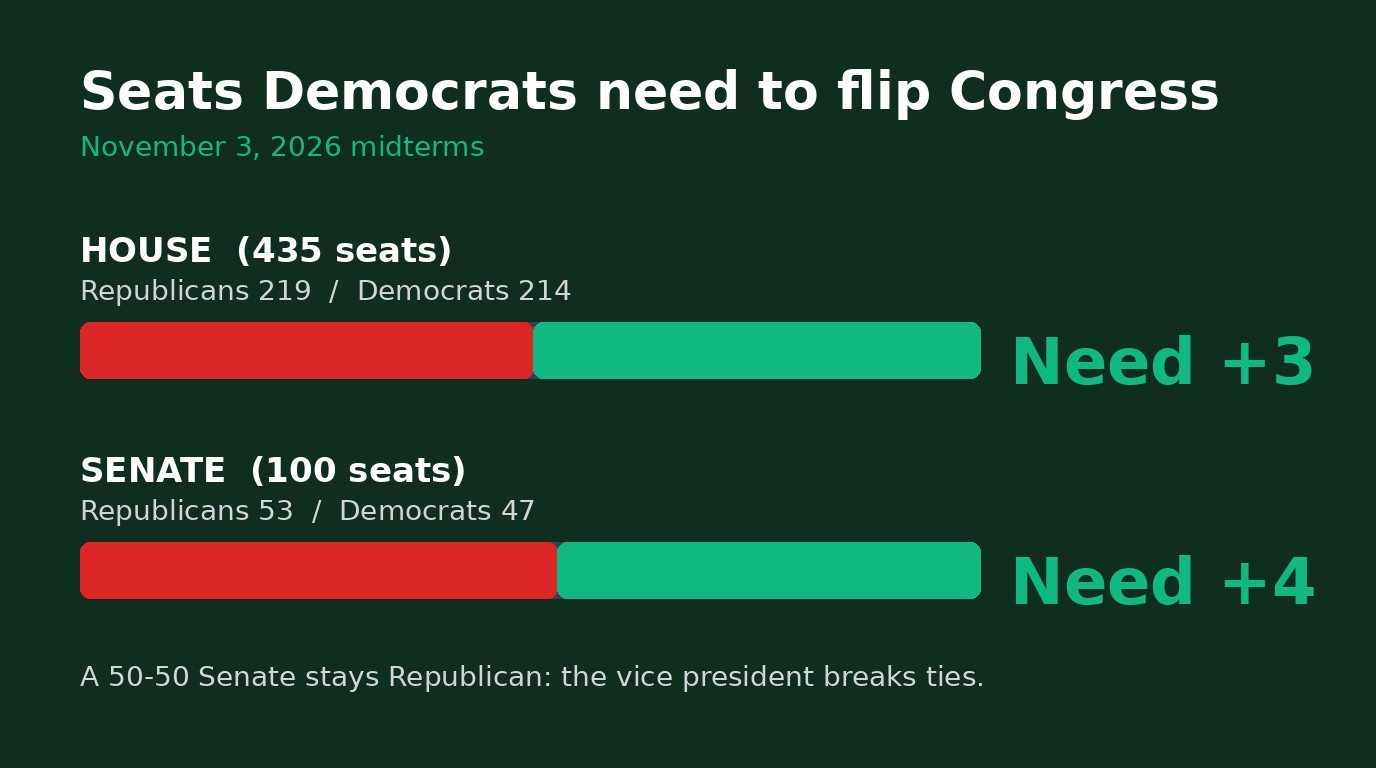
Figure 5: The margins are small. Democrats need a net gain of 3 House seats and 4 Senate seats. A 50-50 Senate stays Republican because the vice president breaks ties.
What to watch after the polls close
First results arrive after the first polls close at 6 pm Eastern, but close races can take days as mail-in and provisional ballots get counted. Final tallies in tight states can take days or weeks. Three things matter more than the first headlines. First, the committee chairs: the people who run the House Financial Services, Energy and Commerce, and Judiciary committees set the hearing calendar for AI and crypto. Second, the first bills: whether CLARITY gets a new push or stays parked tells you how serious the new Congress is about finishing crypto rules. Third, the state ballot measures on data centers: a wave of local bans would slow AI infrastructure even without any federal law. Election rules are also tightening in parallel: Pakistan proposed a ban on deceptive election deepfakes on October 25, 2026, and the EU bans AI systems that generate non-consensual intimate imagery from December 2, 2026, as covered in our deepfake bans post. The US vote tonight is about who writes the next set of rules. The rules themselves get written in 2027.
Frequently asked questions
When will the 2026 midterm results be known?
First results arrive after polls close at 6 pm Eastern on November 3, 2026. Clear races get called on election night. Close races can take days, and final tallies in tight states can take days or weeks as mail-in and provisional ballots get counted.
Does the president change if his party loses Congress?
No. Trump remains president until January 2029 whatever happens tonight. A Democratic House could block legislation, run investigations through its committees and, if it chose, impeach the president, but removal needs two thirds of the Senate. A Democratic Senate could block nominees, including federal judges.
What is the CLARITY Act?
The CLARITY Act would set the wider market structure for digital assets in the US, including which regulator oversees crypto markets and how exchanges and token issuers get treated. It failed to advance in the Senate on September 15, 2026, by 49 votes to 50, short of the 60 needed.
What is the GENIUS Act?
The GENIUS Act set a federal regulatory framework for stablecoins, which are cryptocurrencies pegged to assets such as the dollar. It already passed. Stablecoin rules are settled law. Wider crypto market rules are still open, and that gap is what the CLARITY Act would fill.
Can Congress force AI rules past a presidential veto?
Only with two thirds of each chamber, which neither party holds. In practice, a president who opposes AI regulation can block new federal AI laws. Congress still shapes AI policy through committee hearings, budget decisions, state-law debates and the groundwork for future legislation.
Do state data center bans matter if Congress does nothing?
Yes. Thirteen states vote on data center bans today, and local limits on power, water and land use slow construction regardless of federal law. A federal preemption law could override state rules, but without one, state and local decisions set the pace of AI infrastructure growth.


Was this article helpful?
Comments
Loading comments...